https://convergecfd.com/press-feed<![CDATA[Convergent Science Press Feed]]>2026-03-23T10:54:56+00:00<![CDATA[C3 RELEASES REDUCED CHEMICAL MECHANISMS FOR COMPUTATIONAL FLUID DYNAMICS SIMULATIONS OF ALTERNATIVE FUELS]]>https://convergecfd.com/39664Madison, WisconsinㅡMarch 23, 2026ㅡThe Computational Chemistry Consortium (C3) has published two reduced chemical mechanisms, C3MechLite and C3MechCore, based on their detailed kinetic model for surrogate fuels, C3MechV4.0.1. C3 is led by Convergent Science, with a research team comprised of chemical kinetic experts from the University of Galway, Lawrence Livermore National Laboratory, Politecnico di Milano, and RWTH Aachen University. In addition to the C3 team, researchers from the China University of Mining and Technology and McGill University contributed to the development of C3MechLite and C3MechCore. The reduced chemical mechanisms are tailored for computational fluid dynamics (CFD) simulations of reacting systems.
C3MechLite contains 61 species and 519 reactions. The reduced mechanism can predict the combustion characteristics of hydrogen, carbon monoxide, ammonia, methane, natural gas, nitrogen oxides, and their mixtures for a wide range of conditions.
“We wanted to create a reduced mechanism that is comparable in size to GRI-Mech, but with chemistry that more accurately predicts fuel reactivity, particularly at gas turbine- and engine-relevant conditions of temperature and pressure,” says Professor Henry Curran, C3 Technical Director. “We also expanded the fuels that this compact mechanism will cover. C3MechLite is a predictive mechanism for use in CFD for the combustion of zero-carbon, low-carbon, and carbon-neutral fuels—including hydrogen, ammonia, syngas, and natural gas.”
C3MechCore contains 118 species and 1,006 reactions. This mechanism includes all of the species in C3MechLite and has been additionally validated for methanol, ethanol, dimethyl ether, ethane, and propane. These species are additional natural gas components as well as common biofuels and alternative diesel fuels.
C3MechLite and C3MechCore are structured as integrated component libraries, using a block approach that allows users to customize the mechanism and further reduce its size. This helps optimize the computational efficiency of the mechanism for specific use cases without incurring a loss of accuracy.
“We’re very excited for the combustion community to have access to these reduced mechanisms,” says Dr. Kelly Senecal, Co-Founder and Executive Director of C3. “The detailed mechanism, C3MechV4.0.1, is great because it’s so comprehensive, but using such a large mechanism in a CFD simulation isn’t feasible. C3MechLite and C3MechCore are ready to go right out of the box for use in 3D CFD simulations, which will help streamline the process for researchers to study combustion systems with alternative fuels.”
C3MechLite and C3MechCore are available to download for free on the C3 website. In addition, the details of the formulation and validation of the reduced mechanisms have been published in the journal Combustion and Flame.
About C3
The Computational Chemistry Consortium brings together industry, academic, and government partners. Through knowledge sharing, recurring meetings, and financial support, the consortium is dedicated to providing the most accurate and comprehensive computational chemistry combustion and emissions models, tools, and mechanisms to the combustion industry. For more information about C3, please visit fuelmech.org.
]]>
2026-03-23T10:54:56+00:00<![CDATA[C3 RELEASES UPDATED CHEMICAL KINETIC MECHANISM WITH EMPHASIS ON ALTERNATIVE FUEL CHEMISTRY]]>https://convergecfd.com/39660Madison, WisconsinㅡMarch 5, 2026ㅡThe Computational Chemistry Consortium (C3) has published an updated
version of their detailed kinetic model for surrogate fuels, C3MechV4.0.1. C3 is led by Convergent Science, with a
research team comprised of chemical kinetic experts from the University of Galway, Lawrence Livermore National
Laboratory, Politecnico di Milano, and RWTH Aachen University. Version 4.0.1 of C3Mech builds on the previous
version, C3MechV3.3, adding and refining chemistry for zero-carbon, low-carbon, and carbon-neutral fuels.
C3MechV4.0.1 contains 4,983 species and 21,653 reactions. A variety of new species were added, including ammonia,
carbonate chemistry for battery solvent modeling, cyclopentane, cyclohexane, xylene, and alpha-methyl naphthalene.
The validation for the updated mechanism also included a particular emphasis on fuel mixtures, such as ammonia
blends with hydrogen, methane, methanol, and n-heptane, as well as hydrogen/n-decane and
methane/n-decane mixtures.
In addition to the new species, C3Mech has continued to be refined to improve the accuracy of the mechanism for
hydrogen, syngas, natural gas, gasoline, and diesel surrogates.
“For each new version of C3Mech, not only are we adding species, but we’re constantly updating the rate constants
for reactions already present to make the mechanism more accurate and predictive,” says Professor Henry Curran, C3
Technical Director. “As we work to increase efficiency and reduce emissions, we’re pushing the bounds of
predictability—we’re simulating conditions that haven’t been studied before. But when our mechanisms are used in
those conditions, they’re still predictive because of our efforts to use accurately derived rate constants. Those
improvements are a big part of what makes version 4.0.1 better than version 3.3.”
All published versions of C3Mech are made freely and publicly available, a practice that is a core tenet of the
consortium.
“Our goal when we founded C3 was to help support global combustion research by making the models we developed
widely available,” says Dr. Kelly Senecal, Co-Founder and Executive Director of C3. “Sharing these kinds of
innovative tools benefits everyone because they offer a valuable pathway to developing more efficient and more
sustainable transportation and energy technologies. The updated version of C3Mech will allow researchers around the
world to study a broader range of renewable fuels and fuel blends more accurately.”
C3MechV4.0.1 is now available to download on the C3 website. In addition, the details of the formulation and
validation of C3MechV4.0.1 have been published in the journal Applications in Energy and Combustion Science.
Computational fluid dynamics simulation of combustion in a gas turbine, run with CONVERGE CFD software.
About C3
The Computational Chemistry Consortium brings together industry, academic, and government partners. Through
knowledge sharing, recurring meetings, and financial support, the consortium is dedicated to providing the most
accurate and comprehensive computational chemistry combustion and emissions models, tools, and mechanisms to the
combustion industry.
For more information about C3, please visit fuelmech.org.
]]>
2026-03-05T07:59:34+00:00<![CDATA[Dr. Kelly Senecal Receives 2025 Luminary Award From the University of Wisconsin Alumni Association]]>https://convergecfd.com/39655Madison, WisconsinㅡDecember 4, 2025ㅡDr. Kelly Senecal, Co-Founder of Convergent Science, recently received
the 2025 Luminary Award from the University of Wisconsin Alumni Association. The Luminary Award recognizes alumni
who have demonstrated exceptional achievements in the areas of leadership, discovery, progress, and service. Senecal
received the award for his role in developing the computational fluid dynamics (CFD) software CONVERGE, which
changed the way engineers develop more efficient and sustainable machines.
Dr. Kelly Senecal, Co-Founder and Owner of Convergent Science
Senecal received his master’s degree and Ph.D. in mechanical engineering from the University of Wisconsin-Madison
in 1997 and 2000, respectively. In 1997, he co-founded Convergent Science with several UW-Madison classmates.
Convergent Science develops and supports CONVERGE, a CFD software package that eliminates the time-consuming task of
manually creating a computational mesh through its novel autonomous meshing technology. Removing this step from the
simulation process enabled CFD to become an integral part of the design process in many industries, including the
propulsion, energy, and marine sectors. Convergent Science remains headquartered in Madison, Wisconsin, with strong
ties to the university.
“I loved my time at UW-Madison,” says Senecal. “It’s where I discovered my passion for CFD and where I met my
fellow Convergent Science co-founders. It’s where we learned the skills we needed to write our own CFD code and
create something truly unique in the industry at that time. It’s an honor to receive this award from an institution
that means so much to me, and I’m grateful that I can continue to be involved in this wonderful community.”
In addition to his role at Convergent Science, Senecal is a visiting professor at the University of Oxford and the
Co-Founder and Executive Director of the Computational Chemistry Consortium (C3). He is a Fellow of the Society of
Automotive Engineers (SAE), the American Society of Mechanical Engineers (ASME), and the Combustion Institute (CI).
He is also the recipient of the 2019 ASME ICE Award, the 2023 SAE John Johnson Diesel Engine Research Medal, the
2023 ASME Dedicated Service Award, and the 2025 ASME Soichiro Honda Medal.
Senecal is an advocate for science-based, technology-neutral solutions to reduce emissions from the transportation
sector. He regularly speaks at international conferences and meets with engineers, policymakers, and students to
discuss practical strategies to create a more sustainable future. His award-winning book, Racing Toward Zero: The
Untold Story of Driving Green, proposes a diverse technology portfolio including both internal combustion engine and
electrified vehicles as the fastest way to reduce emissions.
]]>
2025-12-04T13:18:59+00:00<![CDATA[Convergent Science Enhancing CONVERGE’s Autonomous Meshing CFD Technology With NVIDIA GPUs]]>https://convergecfd.com/38899CONVERGE simulation of an industrial mixing tank.
Madison, Wisconsin—November 18, 2025—Convergent Science is excited to announce an enhanced partnership with NVIDIA Corporation to enhance autonomous meshing, a core CONVERGE technical capability, with NVIDIA accelerated computing.
In typical computational fluid dynamics (CFD) tools, discretizing the simulation domain into a computational mesh represents an onerous, hands-on engineering task. In CONVERGE, the domain is discretized autonomously—the simulation engineer describes where, when, and how resolution is required, then hands the meshing task off to the CFD solver. Throughout the simulation, CONVERGE dynamically refines or coarsens the mesh depending on the local flow conditions. Combining CONVERGE autonomous meshing with NVIDIA GPUs speeds simulation timeframes, accelerating engineering analysis and allowing the practical study of larger design spaces.
Explains Dr. Kelly Senecal, Owner and Vice President of Convergent Science, “For many years, we have been incrementally adding GPU solver support in CONVERGE. Because our meshes change dynamically throughout the simulation, porting our autonomous meshing technology in a computationally efficient manner has represented the biggest challenge. We now have a path forward, and we are excited to combine our world-class CFD technology with NVIDIA’s world-class GPU development experts to bring our autonomous meshing capability, and our entire CONVERGE CFD solver, to the GPU computing ecosystem.”
]]>
2025-11-19T11:18:46+00:00<![CDATA[DR. KELLY SENECAL RECEIVES ASME 2025 SOICHIRO HONDA MEDAL]]>https://convergecfd.com/38898Madison, Wisconsin – June 24, 2025 Dr. Kelly Senecal, Co-Founder of Convergent Science, was recently awarded the 2025 Soichiro Honda Medal by the American Society of Mechanical Engineers (ASME). The Soichiro Honda Medal recognizes individuals for outstanding achievements or contributions in developing improvements for personal transportation. Senecal was nominated for his role in developing widely used simulation tools for transportation applications and his advocacy for practical solutions for cleaner mobility.
Dr. Kelly Senecal, Co-Founder and Owner of Convergent Science
Senecal is a co-founder and owner of Convergent Science, a leading computational fluid dynamics (CFD) company that develops and supports CONVERGE CFD software. One of the original developers of CONVERGE, Senecal helped pioneer the software’s hallmark autonomous meshing technology, which drastically reduced the manual hours required to run CFD simulations and turned CFD into a valuable tool for analysis-led design. He also played a significant role in developing and implementing many of the initial spray and combustion models that enabled accurate analyses of internal combustion engines. Subsequently, he has helped oversee and direct the development of models for other personal transportation systems, including electric motors and battery packs. Senecal’s company has recently started incorporating machine learning tools into CONVERGE, taking advantage of modern technologies to enable rapid and cost-effective optimization studies. Overall, CONVERGE has allowed automotive companies to make unprecedented technological advances while saving hundreds of millions of dollars.
Furthermore, Senecal is the co-founder and director of the Computational Chemistry Consortium (C3), a collaboration between industry, academic, and government partners to develop detailed chemical kinetic mechanisms for both conventional and alternative fuels. Recent work has focused on improving chemistry for zero- and low-carbon fuels, such as hydrogen and ammonia, as well as developing chemical mechanisms for lithium-ion batteries. C3 publicly releases its mechanisms, providing researchers around the world with powerful tools to develop more sustainable transportation systems.
In addition to his technical contributions, Senecal is a vocal advocate for practical, technology-neutral solutions to reduce emissions from personal transportation. His award-winning book, Racing Toward Zero: The Untold Story of Driving Green, discusses how embracing a diverse set of propulsion technologies-internal combustion engine, hybrid, and fully electric vehicles-could offer the fastest path to cleaner mobility. Senecal regularly provides keynote addresses at international conferences and speaks on this topic to engineers, policymakers, and students. He actively supports continued funding for research and development of personal transportation technologies.
“Over the years, the Soichiro Honda Medal has been given to influential and brilliant engineers, and it’s an incredible honor to join their ranks,” says Senecal. “This award inspires me to continue pushing for a pragmatic approach to emissions reduction and to further improve the simulation tools manufacturers need to develop advanced, sustainable transportation systems.”
]]>
2025-06-24T10:27:49+00:00<![CDATA[CONVERGE CFD SOFTWARE ADVANCES SIMULATION TECHNIQUES FOR AEROSPACE, AUTOMOTIVE, ENERGY INDUSTRIES WITH RELEASE OF VERSION 5]]>https://convergecfd.com/38896Madison, WisconsinㅡMay 22, 2025ㅡConvergent Science recently released CONVERGE 5, a new major version of their CONVERGE CFD software. The new version offers expanded modeling options for a wide range of industries and applications, as well as new solver enhancements and pre-processing capabilities.
CONVERGE 5 includes many new models and features targeted to benefit certain application areas. The solver contains a new real-fluid model that can accurately represent fluids in both their gaseous and liquid states using a single equation of state. This capability is crucial for capturing the complex mixing and combustion dynamics within liquid rocket combustors. Version 5 additionally contains a variety of new modeling capabilities for electrical systems, such as battery packs, fuel cells, and electric motors. The new capabilities include models for electrochemistry, short-circuit events, and novel cooling strategies. In addition, CONVERGE 5 offers enhanced capabilities for internal combustion engines, including hydrogen engine simulations and knock prediction. The new version also introduces new models and features for urea/SCR aftertreatment systems, pumps and compressors, wind farms, oil & gas applications, gas turbine combustors, and biomedical applications.
In addition to the application-focused capabilities, CONVERGE 5 offers several new general solver enhancements. The new version includes a limited GPU solver that allows users to run basic CFD simulations on GPUs from any vendor. The new 1D flow solver can model flows in pipes or channels and can be coupled with the 3D flow solver to accelerate system-level simulations. Moreover, the Under-Relaxation Steady (URS) solver and the sealing capabilities in CONVERGE have been enhanced to improve stability and performance across application areas.
CONVERGE simulation of a hydrogen-fueled microturbine.
CONVERGE Studio, the graphical user interface for the software, includes a new machine learning (ML) tool and a new CAD Editor module. The ML tool enables users to conduct rapid optimization studies based on advanced ML techniques. The CAD Editor contains a variety of tools for manipulating and modifying CAD geometries directly in CONVERGE Studio.
“With each major version of CONVERGE, we work to push the boundaries of what’s possible in CFD,” says Keith Richards, Co-Owner and Vice President of Convergent Science. “CONVERGE 5 greatly expands the capabilities and enhances the performance of the solver, providing our customers with access to more powerful tools to advance technology in their industry.”
]]>
2025-05-22T10:00:49+00:00<![CDATA[CONVERGENT SCIENCE CREATES NEW EXTENSION TO THE CGNS FORMAT TO ALLOW FOR THE EXPORT OF PARTICLE DATA]]>https://convergecfd.com/36544Madison, WisconsinㅡJanuary 21, 2025ㅡThe CFD General Notation System (CGNS) is a standardized file format system for the storage and retrieval of CFD output files. CFD engineers can store their files in CGNS format, allowing their data to be read and interpreted by many post-processing tools, which enables the visualization of raw data.
Until recently, the CGNS platform lacked documentation on particle data. As such, if CFD results included particle-laden flows or data created using a Lagrangian modeling approach, a different file format was required for exporting the data for post-processing. As a result, some CFD solvers could not use CGNS and instead exported their files in a proprietary format.
In May 2024, Convergent Science proposed an extension to the CGNS format to remediate this limitation by enabling the export of particle data. The company compiled the appropriate modifications to the three components of the CGNS: the SIDS (Standard Interface Data Structures), the MLL (Mid-Level Library), and the FMM (File Mapping Manual). The proposal was accepted, and the new CGNS platform now includes nodes with precise definitions for information related to particle data.
CONVERGE simulation of a spray jet in crossflow, which can now be exported to CGNS.
“We first realized a need for this extension when our users wanted to export CONVERGE results in the CGNS format,” said Alexandre Minot, Principal Engineer at Convergent Science, who spearheaded the proposal. “However, before we could extend that option to our users, we needed CGNS to have the ability to export Lagrangian data, since many CONVERGE simulations include sprays. By fixing this problem and creating this extension, we are underscoring our commitment to leading the CFD industry forward.”
For more details about the new CGNS extension, read this blog post on the Convergent Science website.
]]>
2025-01-21T11:00:00+00:00<![CDATA[DR. KELLY SENECAL RECEIVES 2024 ASME DEDICATED SERVICE AWARD]]>https://convergecfd.com/36997Dr. Kelly Senecal, Co-Founder and Owner of Convergent Science
Madison, WisconsinㅡOctober 22, 2024ㅡDr. Peter Kelly Senecal, Co-Founder of Convergent Science, was awarded the ASME Dedicated Service Award at the 2024 ICE Forward conference. Since 1983, the Dedicated Service Award has honored unusual dedicated service to the Society, shown through outstanding performance and demonstrated leadership, in addition to prolonged and committed devotion, enthusiasm, and loyalty. Senecal was nominated for this distinction by the Technical & Engineering Communities sector for his decade-long service.
Senecal exemplifies exceptional commitment to ASME through his various leadership roles and initiatives over more than a decade. As recipient of the 2019 ASME ICE Award, he has made invaluable contributions to the internal combustion engine (ICE) community. His award-winning book, Racing Toward Zero: The Untold Story of Driving Green, contends that despite the popularity and governmental support behind electric vehicles, there’s still plenty of life ahead for ICE and hybrid vehicles. In episode 80 on ASME’s podcast, Senecal describes how ICEs have and will continue to power cars and trucks in the past, present, and future. In 2022, he took on the pivotal role of ASME ICE Forward Conference Chair and is now serving as the Chair of ASME’s ICE Division. In addition to being an ASME Fellow, Senecal founded the webinar series, “The Future of the Internal Combustion Engine,” a visionary effort to foster discussions and communications among leaders in the field. His dedication to inclusivity is evident in his initiation of the Women in ICE (WICE) committee. Throughout his tenure at ASME, Senecal has given countless keynotes and panel presentations, which continue to inspire and engage his audience, solidifying his continued status as a prominent figure in the transportation sector.
Senecal is a co-founder, owner, and vice president of Convergent Science, a leading computational fluid dynamics (CFD) company that develops and supports CONVERGE CFD software. Today, CONVERGE is extensively used by industries, governmental agencies, and academic institutions around the world to model not only ICEs, but many other applications, including electric motors, gas turbines, aftertreatment systems, rocket engines, and much more.
Senecal is the Co-Founder and Director of the Computational Chemistry Consortium (C3), which brings together industry, government, and academia to create a comprehensive and detailed repository for fuel combustion chemistry.
Believing innovation and education go hand in hand, Senecal is deeply committed to both research and teaching. He is a visiting professor at the University of Oxford and an adjunct professor at the University of Wisconsin-Madison.
“It is a great joy to receive the ASME Dedicated Service Award,” says Senecal. “And it brings me even greater joy to have been connected to ASME since my graduate school years. Since then, ASME has fostered equity in engineering and advanced engineering solutions that lead to a more sustainable world. It is a great honor to have been a part of that transformative journey, and I look forward to contributing to the future of engineering with ASME.”
]]>
2024-10-22T01:19:25+00:00<![CDATA[KEITH RICHARDS RECEIVES 2024 ASME ENGINE IMPACT AWARD ]]>https://convergecfd.com/37009Keith Richards, Co-Founder and Owner of Convergent Science
Madison, WisconsinㅡOctober 22, 2024ㅡ Keith Richards was awarded the ASME Engine Impact Award at the 2024 ICE Forward conference. This ICE Division award honors internal combustion engine and aftertreatment system research and development toward a commercial product. Richards was chosen for this distinction as a testament to his significant contributions to the internal combustion engine (ICE) community and to acknowledge his many achievements in the field.
“It is a great honor to receive the ASME Engine Impact Award. I’ve dedicated much of my career to developing software and models that help engineers analyze and improve engines,” says Richards. “Typically, I prefer to be hidden in the backend of operations, but I am immensely grateful to receive this recognition. It recognizes my efforts, but it’s also a reflection of the incredible support I’ve received from my colleagues, partners, and mentors. Receiving this award is definitely the result of a collective journey, and I am grateful to everyone who has been a part of it.”
Richards is a co-founder, co-owner, and vice president of Convergent Science, a leading computational fluid dynamics (CFD) company that develops and maintains CONVERGE CFD software. CONVERGE is used by engine companies around the world to design more efficient and sustainable engine technologies. As one of the principal developers of CONVERGE, Richards has played a significant role in the initial development and implementation of the software’s unique autonomous meshing feature. Today, he continues to oversee much of the development and maintenance for the CONVERGE code. His expertise includes numerical methods, detailed chemistry, rapid grid generation, engine intake simulations, and high-performance computing.
A strong advocate of the interconnectedness of innovation and education, Richards is dedicated to both research and teaching. In addition to his leadership of an international CFD company and publication of numerous high-impact scientific papers, he is also an adjunct professor at the University of Wisconsin-Madison, where he imparts essential skills and knowledge to his students. Richards strives to be an exemplary role model for the next generation of CFD researchers and engineers.
“This award speaks to how far we’ve come since we started out in that broom closet in the ‘90s,” Richards says. “Since then, Convergent Science and ASME have both empowered engineers around the world to build a more equitable and sustainable future. It is a great honor to have been able to be a part of that transformative journey, and I look forward to contributing to the future of engineering with ASME.”
]]>
2024-10-22T01:01:00+00:00<![CDATA[DR. KELLY SENECAL ELECTED TO THE COMBUSTION INSTITUTE BOARD OF DIRECTORS]]>https://convergecfd.com/36540Dr. Kelly Senecal, Co-Founder and Owner of Convergent Science
Madison, WisconsinㅡAugust 28, 2024ㅡDr. Kelly Senecal, Co-Founder and Owner of Convergent Science, was recently elected to The Combustion Institute’s Board of Directors. The Combustion Institute is an international non-profit organization that promotes combustion research and technology development. Senecal was elected because of his significant contributions to the combustion community through the development of the CONVERGE computational fluid dynamics (CFD) software and his advocacy for continued investment in combustion research.
“I am a strong supporter of The Combustion Institute and their mission to advance combustion science and technology,” said Senecal. “It’s an honor and a privilege to serve on the Board of Directors and have a chance to help shape the future of combustion research.”
Throughout his career, Senecal has been actively involved in the field of combustion. He co-founded Convergent Science and was one of the original developers of CONVERGE, which is used worldwide to simulate reacting flows and combustion devices, along with many other applications. He is the director and co-founder of the Computational Chemistry Consortium (C3), which develops detailed chemical kinetic mechanisms to support research efforts into conventional and alternative fuels.
Senecal is an outspoken advocate for incorporating combustion technologies into future solutions for more sustainable transportation and energy sectors. He has given invited talks around the globe to educate students, engineers, and policymakers on a pragmatic and balanced approach to transportation decarbonization strategies. Senecal co-authored a book on this topic titled Racing Toward Zero: The Untold Story of Driving Green, which won the 2022 Independent Press Award for Environment.
Senecal was elected a Fellow of The Combustion Institute earlier this year, and he is also a Fellow of the Society of Automotive Engineers (SAE) and the American Society of Mechanical Engineers (ASME). He is a visiting professor at the University of Oxford and the chair of the executive committee of the ASME Internal Combustion Engine Division. Senecal was a 2023 recipient of the SAE John Johnson Diesel Engine Research Medal and the 2019 recipient of the ASME ICE Award.
]]>
2024-08-28T09:43:15+00:00<![CDATA[Next Generation of AMD Nodes Now Available on CONVERGE Horizon]]>https://convergecfd.com/36451Madison, WisconsinㅡAugust 14, 2024ㅡCONVERGE Horizon, a high-performance cloud computing platform from Convergent Science, is now offering a new hardware option: fourth-generation AMD EPYCTM processors. This node type, called BM-AMD-192, is the successor to the third-generation BM-AMD-128 nodes already available on CONVERGE Horizon.
The BM-AMD-192 nodes feature 192 cores and 2304 GB of memory. Their AMD EPYC 9J14 processors are significantly faster than the previous generation’s AMD EPYC 7J13 processors. For users of CONVERGE Horizon, this new node type can substantially reduce runtime for computational fluid dynamics (CFD) simulations.
For example, a Sandia hydrogen direct-injection internal combustion engine simulation demonstrated a 50% speedup when run on a BM-AMD-192 node compared to a BM-AMD-128 node. The simulation used the SAGE detailed chemistry solver and Reynolds-Averaged Navier-Stokes turbulence modeling and had a maximum cell count of over 5 million.
CONVERGE simulation of the Sandia hydrogen direct-injection engine.
“We’re pleased to be expanding our hardware options on CONVERGE Horizon,” says Keith Richards, co-founder and owner of Convergent Science. “We want to provide our customers access to the latest and greatest computing resources out there, so they can turn around their simulation results faster, accelerate their design process, and ultimately get new products to consumers more quickly.”
]]>
2024-08-14T08:34:25+00:00<![CDATA[CONVERGENT SCIENCE RELEASES ENHANCED VERSION OF ITS CLOUD COMPUTING PLATFORM]]>https://convergecfd.com/36137Madison, WisconsinㅡJune 4, 2024ㅡConvergent Science, creator of CONVERGE CFD software, recently released a new, upgraded version of its cloud computing platform, CONVERGE Horizon. In 2022, the company released the first version of CONVERGE Horizon to provide users of its CFD software convenient and affordable access to top-of-the-line computing hardware in the cloud.
The upgraded platform offers an enhanced user interface, additional hardware options, and a variety of new features. The new platform makes it easier for users to submit and monitor jobs and provides access to real-time billing and usage data. Additionally, users now have the ability to choose different data centers in which to store files and run jobs. The new platform provides up-to-date information on the hardware availability at each data center, enabling users to ensure they can quickly and reliably get access to the nodes they need for their simulations. The upgraded version of CONVERGE Horizon streamlines the setup process for organizations to get up and running on the platform and offers expanded collaborative capabilities with the ability to group users within an organization onto teams with shared storage spaces.
The new release of CONVERGE Horizon also features expanded CONVERGE licensing options. Users have the opportunity to access CONVERGE licenses on demand, paying for only the software required for their current simulation workload. If an organization already has a conventional CONVERGE license hosted on an on-premise server, team members can check out licenses from that server to run jobs on CONVERGE Horizon. Organizations additionally have the option to host a conventional CONVERGE license directly on CONVERGE Horizon if they do not have on-premise servers. These flexible licensing options cater to organizations of all sizes with different levels of CFD usage.
CONVERGE Horizon offers both a web interface and a command-line interface to suit the preferences of different users. Furthermore, users can choose from different node types to meet the needs of their jobs, whether they have a small case with a high memory requirement or they want to take advantage of CONVERGE’s excellent parallel scaling to run a large job on multiple nodes.
“Our primary goal at Convergent Science is to help our clients run game-changing CFD simulations,” says Keith Richards, Co-Founder and Owner of Convergent Science. “Being able to access both software and hardware through a single vendor makes it that much easier for our clients to receive the tools and support they need to achieve their engineering goals. This new version of CONVERGE Horizon offers a significantly upgraded user experience and new features that allow users more hardware and software options and more control over their simulations.”
]]>
2024-06-04T09:40:49+00:00<![CDATA[DR. KELLY SENECAL RECEIVES SAE JOHN JOHNSON DIESEL ENGINE RESEARCH MEDAL]]>https://convergecfd.com/36012Kelly Senecal Co-Founder and Owner of Convergent Science
Madison, Wisconsin—April 17, 2024—Dr. Kelly Senecal, Co-Founder of Convergent Science, was awarded the SAE John Johnson Diesel Engine Research Medal at the 2024 WCX World Congress Experience. The Medal recognizes prominent leaders in the automotive community who have contributed significantly to the advancement of diesel engine technology.
Senecal is a co-founder and owner of Convergent Science, a leading computational fluid dynamics (CFD) company that develops and supports CONVERGE CFD software. Senecal was one of the original creators of CONVERGE, and he implemented the initial spray and combustion models used for diesel engine simulations into the software. He went on to improve these models, increasing their accuracy and reducing their computational cost. CONVERGE is used widely by industry, government organizations, and academic institutions around the world to model diesel engines, among many other applications.
Throughout his career, Senecal has advanced the state-of-the-art in diesel engine simulations, pioneering the use of detailed chemistry as a direct combustion model, developing and implementing new Lagrangian spray models, and demonstrating grid convergence in Lagrangian diesel spray simulations for both RANS and LES. He developed best practices for RANS and LES diesel engine simulations that enabled manufacturers to adopt analysis-led design processes, resulting in significant cost savings. In addition, Senecal introduced cutting-edge genetic algorithm (GA) optimization techniques for diesel engine design and established a framework to couple GA optimization with CFD simulations. This work was recognized by international news outlets, including TheNew York Times and England’s The Sunday Times.
Senecal is the co-founder and director of the Computational Chemistry Consortium (C3), which brings together industry, government, and academic partners to develop and improve chemical kinetic mechanisms with the goal of advancing sustainable propulsion technology. The first version of the C3 mechanism, released in December 2021, includes chemistry to accurately model the combustion and emissions of compression ignition engines.
A longtime member of SAE, Senecal has published dozens of SAE journal articles, chaired many SAE technical conference sessions, authored several SAE Update articles, and given keynote addresses at numerous SAE events. Furthermore, he published his award-winning book, Racing Toward Zero: The Untold Story of Driving Green, through SAE International. In 2018, Senecal was elected an SAE Fellow, SAE International’s highest grade of membership.
“I am very honored to receive the SAE John Johnson Diesel Engine Research Medal,” says Senecal. “Anyone who knows me knows that I am passionate about engines, and much of my career has been dedicated to creating tools to improve them. This medal is particularly meaningful to me because I started my career working on diesel engines back in graduate school. It’s incredible to see how that work, and the work of brilliant engineers around the world, is continuing to push the bounds of innovation for diesel engine technology. I look forward to carrying on my advocacy for diesel engine research—there’s still a lot of progress to be made.”
]]>
2024-04-17T16:01:52+00:00<![CDATA[CONVERGE CFD SOFTWARE OFFERS ENHANCED SPEED & ACCURACY WITH THE RELEASE OF VERSION 4]]>https://convergecfd.com/35780Madison, WisconsinㅡApril 4, 2024ㅡConvergent Science recently released CONVERGE 4, a new major version of their CONVERGE CFD software. Version 4 includes several new solver options that increase simulation speed and accuracy, a host of new modeling capabilities, and a variety of new tools that expand the software’s functionality and improve user experience.
CONVERGE 4 introduces a new steady-state solver that offers up to 100 times speedup for certain steady-state simulations compared to the previous solver. For cases with axisymmetric characteristics, a new 2D axisymmetric solver can provide improved spatial accuracy at a substantially reduced computational cost compared to a sector or full geometry approach. Version 4 also includes a new technique called cross-stream synchronization that can accelerate transient simulations in which the time-scales are very different for different regions of the domain, for example, in some conjugate heat transfer cases.
Centrifugal pump simulated with the new Under-Relaxation Steady (URS) solver available in CONVERGE 4.
The modeling capabilities of CONVERGE have been significantly expanded in version 4. CONVERGE’s combustion models have been augmented to more effectively simulate alternative fuels such as hydrogen and ammonia and to more accurately capture spark ignition. The SAGE detailed chemistry solver can now be used to solve liquid-phase chemistry, applicable to problems including carbon sequestration and ocean acidification, and solid-phase chemistry, useful for modeling wildfires and battery reactions during thermal runaway.
For multi-phase simulations, CONVERGE 4 includes enhanced boiling and cavitation models as well as a new Multi-Fluid Multi-Field model that allows you to model multiple interspersed phases. These new models are beneficial for multi-phase applications in the marine sector and oil and gas industry, among others. In version 4, a variety of tools for wind and wave specification—crucial for conducting realistic offshore simulations—have also been integrated into the software.
CONVERGE 4 additionally contains a variety of new discrete phase models for phenomena including condensation and urea deposit growth in aftertreatment systems, along with the capability to model parcels in multiple reference frame simulations. The electric potential solver has been enhanced in version 4 to allow you to solve for a pair of coupled electric potential fields, which is valuable for battery simulations. Furthermore, CONVERGE 4 offers a thin-gap model for simulating lubrication systems and sealing with leakage, as well as new rotor models for efficiently simulating applications such as wind turbines and quadcopter drones.
In addition to the new modeling capabilities, a variety of pre- and post-processing enhancements have been incorporated into version 4. CONVERGE Studio, the graphical user interface for CONVERGE, now includes a customized version of ParaView as a built-in module. The ParaView module has been tailored for CONVERGE users’ needs, providing a seamless solution for data analysis and visualization. For pre-processing, users now have the option to create custom case setup panels, which display a user-defined subset of case setup inputs and parameters. Advanced users can generate these custom panels, which then offer a much simpler interface for end users who may not be CFD experts.
According to Keith Richards, Co-Owner and Vice President of Convergent Science, “CONVERGE 4 offers an array of new capabilities that allow users to simulate a broader range of applications with greater accuracy and faster turnaround time. We’re excited for our customers to experience the benefits of this new version, which should enhance the user experience for clients across all market segments.”
]]>
2024-04-04T07:57:57+00:00<![CDATA[DR. KELLY SENECAL ELECTED FELLOW OF THE COMBUSTION INSTITUTE]]>https://convergecfd.com/35158Kelly Senecal Co-Founder and Owner of Convergent Science
Madison, WisconsinㅡMarch 6, 2024ㅡDr. Kelly Senecal, Co-Founder of Convergent Science, has been elected a Fellow of The Combustion Institute. This honorific recognizes members of the international combustion community for their outstanding contributions to combustion, in research or in applications. Senecal was elected for his significant contributions to computational fluid dynamics (CFD) modeling of internal combustion engines and reacting flows by developing the CONVERGE software.
“I am honored to be recognized by such a prestigious organization,” said Senecal. “Combustion is a fundamental process that underlies much of the technology that has powered—and will continue to power—our world. I have dedicated my career to developing tools that help us better understand the combustion process and enable us to investigate new methods and fuels to create the sustainable combustion technologies of the future. It is very rewarding to see that this work is making a difference in the combustion community.”
Senecal is a co-founder and owner of Convergent Science and one of the original developers of CONVERGE, which is used around the world to simulate internal combustion engines and reacting flows, among many other applications. In addition, he is a visiting professor at the University of Oxford and the director and co-founder of the Computational Chemistry Consortium (C3). C3 brings together industry, academic, and government partners to refine existing computational chemistry tools and to develop new models, tools, and mechanisms. In 2021, C3 released a first-of-its-kind, publicly available detailed chemical kinetic mechanism for surrogate fuels. This mechanism is providing researchers unprecedented insight into the combustion characteristics of both conventional and alternative fuels.
An internationally recognized expert on propulsion technology, Senecal is an advocate for embracing a pragmatic approach to transportation decarbonization. He has given invited talks around the globe to educate students, engineers, and policymakers alike on how we can reach a sustainable transportation future. Senecal co-authored a book on the topic titled Racing Toward Zero: The Untold Story of Driving Green, which won the 2022 Independent Press Award for Environment.
Senecal is also a Fellow of the Society of Automotive Engineers (SAE) and the American Society of Mechanical Engineers (ASME). He is the current chair of the executive committee of the ASME Internal Combustion Engine Division, a member of the board of advisors for the Central States Section of the Combustion Institute, and the 2019 recipient of the ASME ICE Award.
]]>
2024-03-06T16:14:22+00:00<![CDATA[CONVERGENT SCIENCE EMBRACES GROWTH WITH NEW HEADQUARTERS EXPANSION]]>https://convergecfd.com/34494Madison, WisconsinㅡFebruary 1, 2024ㅡThree years ago, Convergent Science first recognized a need for a new office space to accommodate the expanding employee base in its current headquarters. In 2022, construction commenced on a second building in Madison, Wisconsin. Now, Convergent Science opens the doors to the expansion of their World Headquarters. “The goal of this new building was to ensure each of our employees has their own individual office to work in,” said Kelly Senecal, Co-Owner and Vice President of Convergent Science. “Now that it’s complete, we’re excited to cut the ribbon and move into this new space.”
With the incorporation of this new building, Madison Headquarters will include 150 offices, with a combined square footage of 55,280 ft2. The new facility also features a recording studio, a fitness room, a training room for CONVERGE users, and more accommodations for bikes, including an indoor bike rack. Having a dedicated recording studio will enable the company to more easily create consistent, high-quality audio and visual materials.
The plan: An exterior rendering of the new building in Madison, Wisconsin.The construction process in its early phases.The result: The new building as employees officially move in.
Keith Richards, Co-Owner and Vice President of Convergent Science, said, “Several of our employees expressed excitement about moving into their new offices, as well as the new fitness room which provides an opportunity for them to exercise throughout the workday.” Convergent Science is excited to embark on this new journey of growth and innovation with the inauguration of this new facility.
]]>
2024-02-01T01:18:44+00:00<![CDATA[FIRST HYDROGEN FOR SUSTAINABLE MOBILITY FORUM TAKING PLACE IN TORINO]]>https://convergecfd.com/13719Madison, Wisconsin—September 29, 2023—Convergent Science and SAE International Torino Section are jointly hosting the first Hydrogen for Sustainable Mobility Forum at Politecnico di Torino on October 17–18, 2023. This two-day event will focus on the potential of green hydrogen as a fuel for sustainable transportation systems.
The forum will feature technical presentations on the development of next-generation hydrogen internal combustion engines and other hydrogen technologies. Attendees will hear from representatives of various organizations, including Intelligent Energy, Ferrari, Alpine Racing, Cummins, PUNCH Torino, and Gamma Technologies.
The first day of the forum will consist of a CONVERGE Application Workshop, a free event centered on the computational fluid dynamics (CFD) modeling of hydrogen engines, fuel cells, and storage systems. Technical experts will discuss their latest hydrogen CFD research, and Convergent Science engineers will demonstrate how CONVERGE CFD software can help overcome the challenges of hydrogen simulations.
“Green hydrogen has the potential to significantly reduce the carbon footprint of the transportation sector, and CFD is an invaluable tool for engineers to investigate and design innovative hydrogen technology,” says Rainer Rothbauer, general manager of Convergent Science GmbH, the company’s European branch. “CONVERGE in particular is capable of capturing the complex hydrogen physics—such as high-speed gas jets, fuel-air mixing, combustion, and shock waves—necessary to accurately predict and optimize the performance of hydrogen devices.”
The 1st International Workshop “H24ICE: Hydrogen as a Fuel for Internal Combustion Engines” will take place on the second day of the Hydrogen for Sustainability Forum. Organized by SAE International Torino Section, the workshop will open with a keynote address from Kelly Senecal, co-founder of Convergent Science. Following the keynote speech, a series of business-focused talks and technical presentations will provide a variety of perspectives on hydrogen engines for different market segments, including racing and high-performance, heavy-duty, and off-road applications.
Federico Millo, professor at Politecnico di Torino and organizer of the Hydrogen for Sustainable Mobility Forum, says, “We are going to address the challenges and opportunities of hydrogen as a fuel for internal combustion engines with a 360° view, from high-performance engines with Ferrari and Alpine Racing, to heavy-duty applications with Cummins and FPT Industrial, to the development of novel injection and combustion technologies, with an incredible lineup of international speakers. Moreover, attendees will have the unique opportunity to join a technical tour of PUNCH Tornino’s test facilities, currently the only ones in Italy capable of performing experimental investigations on hydrogen-fueled internal combustion engines.”
Details and registration for the Hydrogen for Sustainable Mobility Forum can be found at eventleaf.com/e/H2SMForum_2023.
]]>
2023-09-29T06:11:00+00:00<![CDATA[WVU USES CONVERGE TO DEVELOP HYDROGEN TECHNOLOGY TO DECARBONIZE FOOD & BEVERAGE INDUSTRY IN DOE-FUNDED PROJECT]]>https://convergecfd.com/13586Madison, Wisconsin—August 15, 2023—West Virginia University (WVU) has been selected for a $3 million grant by the U.S. Department of Energy to develop a hydrogen-fueled flex-fuel furnace to reduce CO2 emissions from the food and beverage industry. Current food and beverage thermal processing technologies rely on natural gas; phasing out the natural gas for an alternative fuel such as hydrogen could significantly reduce the industry’s carbon footprint.
The project is spearheaded by Hailin Li, a professor in the Department of Mechanical and Aerospace Engineering at WVU’s Benjamin M. Statler College of Engineering and Mineral Resources. The furnace his team is developing will be able to run on hydrogen, natural gas, or any combination of the two fuels.
“Hydrogen fuel is not widely available currently,” says Li. “We could wait until it is available, but changing the technology takes time. Or, we can prepare for hydrogen to come by creating a technology that can burn both hydrogen and natural gas. We can start changing the infrastructure but allow industry to continue to run on natural gas in the near-term. Then when hydrogen is more widely available, the same device can run on hydrogen.”
Li’s research team will use Convergent Science’s CONVERGE CFD software to aid in the design of the furnace. Specifically, CONVERGE will be used to develop the burner, the fuel delivery system, and a heat exchanger called an economizer. The economizer will recover waste heat from the exhaust gas and use it to preheat the incoming air to make the furnace more efficient.
Oak Ridge National Laboratory (ORNL) and the Gas Technology Institute (GTI) have partnered with WVU on this project. ORNL will focus on developing a burner for the furnace, and GTI will conduct final proof-of-technology demonstrations. Furthermore, two Morgantown businesses will participate: Mountaintop Beverage and Neighborhood Kombuchery. Li’s team will work with these businesses to ensure the new furnace will meet their needs and help them reduce carbon emissions.
“Any industry that burns natural gas might be interested in this technology, but one of our primary goals is to help local businesses,” says Li. “Overall, we want to promote the application of hydrogen and decarbonization in the industry.”
WVU participates in Convergent Science’s academic program, which provides CONVERGE licenses, training, and support to colleges and universities for academic research.
“This kind of project is exactly why we established our CONVERGE Academic Program,” says Daniel Lee, Co-Owner and Vice President of Convergent Science. “It’s a great example of how academic researchers are pushing the bounds of innovation, and we’re thrilled to support Dr. Li’s team. The technology they’re developing could make a huge impact in reducing CO2 emissions both in their local community and the food and beverage industry at large.”
]]>
2023-08-15T16:40:07+00:00<![CDATA[GLOBAL CONFERENCE ON DEVELOPING SUSTAINABLE TECHNOLOGY THROUGH SIMULATION TAKING PLACE IN SEPTEMBER]]>https://convergecfd.com/13456Madison, Wisconsin—August 1, 2023—Convergent Science, a leading provider of engineering simulation software, is virtually hosting the CONVERGE CFD Conference 2023 (CFD23) this fall from September 26–28. The theme of the conference is “Simulation for Sustainable Technology”, with a particular focus on how computational fluid dynamics (CFD) can help engineers develop cleaner, more efficient, and more effective technologies.
At CFD23, speakers from around the world will present their latest CFD research and discuss how simulation can help different industries overcome decarbonization challenges. The conference will feature technical sessions exploring key research and development areas in the automotive, aerospace, energy, and biomedical industries. In addition, Convergent Science engineers will lead workshops on how to achieve accurate simulation results for a variety of applications within each industry.
Mr. Ben Hodgkinson, Technical Director of Red Bull Ford Powertrains, will provide a keynote address at the event. Red Bull Ford Powertrains was founded to develop racing power units for Red Bull’s Formula One teams. In his keynote, Mr. Hodgkinson will discuss the motorsport industry’s efforts to decarbonize and the role CFD plays in developing new power units that run on sustainable fuels.
Offshore wind turbine simulated using CONVERGE’s implicit FSI approach and mooring model.
To make their conference accessible to all, Convergent Science is hosting the event virtually and waiving all registration fees. The technical sessions can be accessed live or on demand so that attendees in all time zones can participate.
CFD23 is a shift for Convergent Science, who typically hosts an annual conference for users of their CONVERGE CFD software. This year the conference has been redesigned to appeal to not just CONVERGE users, but anyone interested in simulation and the future of industrial technology.
“We want everyone to feel welcome at our event so that they can learn about the groundbreaking CONVERGE research being conducted around the globe,” says Kelly Senecal, Co-Owner and Vice President of Convergent Science. “Providing a chance for engineers and CFD enthusiasts to come together and learn from each other is the best way to generate novel ideas, spark innovation, and make strides toward a more sustainable future.” More information and registration for CFD23 can be found at uc.convergecfd.com/cfd23.
]]>
2023-08-01T06:03:00+00:00<![CDATA[CONVERGENT SCIENCE LAUNCHES NEW PROGRAM TO MAKE SIMULATION SOFTWARE ACCESSIBLE TO ALL]]>https://convergecfd.com/13319Madison, Wisconsin—June 8, 2023—Convergent Science, a leading provider of engineering design software, has launched a new program that expands access to cutting-edge simulation tools. Convergent Science develops and supports CONVERGE, a state-of-the-art computational fluid dynamics (CFD) software suite used by engineers around the world to model everything from engines to heart valves. The company’s new program, called the CONVERGE Explore Program, provides free software, training materials, and other resources designed to teach participants how to run CFD simulations. As a career development program, CONVERGE Explore software licenses cannot be used for commercial purposes.
Through the CONVERGE Explore Program, participants gain a valuable skill set to help them excel in their professional and academic pursuits. Because CFD software is widely used in the engineering community to design new technologies and improve existing products, employers seek out candidates with practical simulation experience. The CONVERGE Explore Program provides hands-on practice with a popular CFD software and opens the door to new employment and research opportunities.
“We are passionate about supporting both established and aspiring engineers in their careers,” says Kelly Senecal, Co-Founder and Owner of Convergent Science. “Engineers are pivotal in creating the technologies that we rely on every day, so when engineers thrive, society at large sees the benefits. The CONVERGE Explore Program is one way we can support engineers at all stages in their careers, providing the tools and resources they need to succeed.”
]]>
2023-06-08T03:41:24+00:00<![CDATA[Keynote Speaker to Propose Alternate Blueprint for Vehicle Decarbonization at the World Congress Experience in Detroit]]>https://convergecfd.com/12936Dr. Kelly Senecal, Co-Founder of Convergent Science and Visiting Professor at the University of Oxford
Madison, Wisconsin—April 5, 2023—Kelly Senecal, Co-Founder of Convergent Science and Visiting Professor at the University of Oxford, will push for alternative fuels to be part of future climate policy during an upcoming keynote address. Senecal will speak to industry experts, academics, and government researchers at SAE International’s 2023 World Congress Experience (WCX), April 18–20 in Detroit.
Combustion engine vehicles running on alternative fuels have the potential to be low carbon or even carbon neutral, particularly if they are hybridized. According to Senecal, policies that ban internal combustion engines in the coming decades are excluding a key technology that could accelerate the transition to sustainable transportation.
“Well-intentioned laws aimed at combating climate change are in reality doing more harm than good,” says Senecal. “Electric vehicles are a great technology for certain applications and geographical regions, but they face their own sustainability issues: dirty energy grids, scarce resources for manufacturing batteries, the human and environmental impacts of mining those resources, and higher consumer costs, to name a few.”
Carbon-free and carbon-neutral fuels can fill in the gaps, Senecal claims, by helping to decarbonize existing vehicle fleets, reducing the battery resource burden, and providing a clean alternative solution in regions where electric grids are still heavily reliant on fossil fuels.
This idea is already gaining traction, Senecal says, pointing to recent events in Europe. At the end of March, the European Commision struck a deal with Germany that will allow the sale of combustion engine vehicles running on synthetic e-fuels even after the EU’s zero-emission vehicle policy takes effect in 2035.
“This deal demonstrates that alternative fuels are not only viable, but can be an integral component of future sustainable transportation,” says Senecal. “Having a diverse set of tools at our disposal to tackle transport sector emissions only increases our chances of success.”
During his WCX keynote address on April 19, Senecal will elaborate on how diversity in transportation technologies can help us achieve carbon-neutrality and discuss how engineering software can facilitate the transition. Convergent Science is the creator of the computational fluid dynamics software package CONVERGE, which engineers use to design a range of transport technologies, including battery packs and electric motors for electric vehicles and engines that run on alternative fuels.
]]>
2023-04-05T10:57:00+00:00<![CDATA[Red Bull Powertrains Selects CONVERGE CFD Software to Design New F1 Racing Power Unit]]>https://convergecfd.com/12621
Madison, Wisconsin—February 21, 2023—Convergent Science is pleased to announce a new partnership with Red Bull Powertrains. The power unit manufacturer will use CONVERGE, Convergent Science’s industry-leading computational fluid dynamics software, to develop a new racing power unit that will debut in the 2026 season.
Red Bull Powertrains was created in 2021 to supply power units to Red Bull’s F1 teams. The engine under development will run on 100% sustainable fuel to meet the updated F1 regulations taking effect in 2026.
As a new company, Red Bull Powertrains is building its power unit from the ground up. Right out of the gate, the power unit needs to be a top-performing machine capable of winning races—an ambitious goal to achieve in the next three years. Convergent Science will support Red Bull Powertrains in an analysis-led design process of the engine’s combustion system, working to optimize fuel spray and combustion chamber parameters.
Red Bull Powertrains will apply CONVERGE’s detailed combustion models to predict the performance of various engine designs. With autonomous meshing, setting up new simulations with different geometry configurations in CONVERGE is simple and fast, allowing the engineering team to more quickly evaluate design options. The ease of use of CONVERGE has led to its adoption by not only engine makers and F1 teams around the world, but also manufacturers in a variety of industries, including electric vehicle systems, rotating machinery, and renewable energy infrastructure.
“We’re thrilled that Red Bull Powertrains has chosen CONVERGE to support the development of its next-generation racing engine,” said Kelly Senecal, co-founder and owner of Convergent Science. “We work hard to keep CONVERGE on the cutting-edge of simulation technology, and it’s exciting to see Red Bull Powertrains take advantage of our software’s advanced capabilities to design a best-in-class power unit in a few short years. We look forward to watching Oracle Red Bull Racing race in the coming seasons.”
Christian Horner, Oracle Red Bull Racing Team Principal and CEO, and CEO of Red Bull Powertrains, said, “The development of our power unit for the 2026 season is evolving day by day in our new Red Bull Powertrains factory, with a highly motivated group of engineers and mechanics. We continue to invest in people and facilities to bring competitive power units to the grid, and to achieve that target we need the best tools in every area. CONVERGE CFD undoubtedly meets that need and will help us to build a race-winning ICE. Their highly detailed combustion models enable us to visualise and simulate the inside of the cylinder during combustion, a process that will accelerate our development of a more powerful and efficient engine for the next generation of Formula 1.”
]]>
2023-02-21T03:42:00+00:00<![CDATA[Convergent Science Collaborates With Wabtec, Oak Ridge, and Argonne on Hydrogen-Powered Locomotives]]>https://convergecfd.com/12190Madison, Wisconsin—January 5, 2023—Convergent Science has partnered with Wabtec, a leading manufacturer of freight locomotives, and Oak Ridge and Argonne National Laboratories to research decarbonization strategies for the rail industry. The four-year project will focus on establishing the viability of hydrogen and other low- and no-carbon fuels for locomotive engines.
Current freight locomotives operate on diesel engines, which will need to be modified to be compatible with alternative fuels. The research team will develop hardware and control strategies for the engines so they can run on a combination of hydrogen and diesel or completely on hydrogen or other alternative fuels. Because locomotives have a long service lifetime—upward of 30 years—it is critical to develop solutions that can be applied to the existing fleet to reduce emissions in the near-term. In parallel, the teams will explore new technologies that can be implemented as current locomotives are phased out, which will help ensure decarbonization in the long-term.
“Getting to net-zero emissions by 2050 requires dramatic energy efficiency and emissions improvements in the overall transportation system, including railways, which are difficult to electrify,” says Dr. Muhsin Ameen, Senior Research Scientist at Argonne. “Hydrogen has been used in light-combustion engines but is still a very new area of research in railway applications.”
A Wabtec single-cylinder, dual-fuel locomotive engine was recently installed at Oak Ridge National Laboratory, where researchers will use it to conduct experimental tests with low-life-cycle carbon fuels. Convergent Science and Argonne National Laboratory will focus on running computational fluid dynamics (CFD) simulations of the engine using Convergent Science’s CONVERGE CFD software. Simulating the engine will provide insights that will inform the direction of experimental testing. In addition, the team will take advantage of machine learning techniques and Argonne’s high-performance computing facilities to speed up the development process.
“Each of the groups involved in the project has unique areas of expertise that complement one another,” says Dr. Tom Lavertu, Senior Engineer at Wabtec. “Bringing all these groups together will accelerate the research pace and knowledge gains to help develop solutions that will benefit the environment and that industry will want to adopt.”
This collaborative project exemplifies the synergistic relationship between U.S. national laboratories and industry, helping to translate fundamental research into commercially available solutions that contribute to society at large.
The project is funded by the Vehicle Technologies Office under the Department of Energy’s Office of Energy Efficiency and Renewable Energy, the Federal Railroad Administration, and Wabtec, with in-kind contributions from Wabtec and Convergent Science.
“We’re excited to be a part of this collaboration and to contribute our expertise in simulating hydrogen and alternative fuels,” says Dr. Kelly Senecal, Co-Owner and Vice President of Convergent Science. “This project has the potential to make a huge impact on carbon emissions from the rail industry and help bring us closer to our decarbonization goals.”
]]>
2023-01-05T05:31:49+00:00<![CDATA[HPC-Accelerated Development of Ultra-High Efficiency Hydrogen Propulsion Systems Wins 2022 HPCwire Award]]>https://convergecfd.com/12193Madison, Wisconsin—January 5, 2023—Convergent Science, Argonne National Laboratory, and Aramco Americas’ Detroit Research Center received the 2022 HPCwire Editors’ Choice Award for the Best Use of HPC in Industry. The three recipients were nominated for developing a high-fidelity, HPC-enabled, analysis-led design (ALD) process to accelerate the advancement of clean, high-efficiency propulsion systems.
The researchers from Convergent Science, Argonne, and Aramco Americas focused their efforts on hydrogen-powered propulsion systems. Hydrogen has garnered significant interest in recent years because of its potential to be used as a zero-carbon fuel in the transportation sector. The team’s goal was to establish an efficient ALD process for developing ultra-high efficiency hydrogen propulsion systems. This work is part of a larger effort known as the Initiative for Modeling Propulsion and Carbon-neutral Transportation (IMPACT) Consortium.
The team used CONVERGE to conduct high-fidelity computational fluid dynamics (CFD) studies and investigate different simulation phenomena, including hydrogen chemical kinetics, supersonic hydrogen jets, and fuel-air mixing.
CONVERGE simulations of hydrogen-air mixing using LES (left) and RANS (right) turbulence models, run by Dr. Bifen Wu at Argonne National Laboratory.
Accurate fuel chemistry is key to any hydrogen combustion simulation. Using 0D, 1D, and 3D simulations, the team identified shortcomings in existing hydrogen kinetic mechanisms and employed a Monte-Carlo sampling approach to optimize the reaction rate coefficients. The optimized hydrogen mechanism led to significantly improved predictions of in-cylinder pressures and heat release rates.
In addition, capturing hydrogen injection and fuel-air mixing is critical for accurate predictions of hydrogen combustion and emissions. The team tested different RANS and LES turbulence models to predict the mixture distribution in the combustion cylinder and various meshing strategies to capture the behavior of the hydrogen jet.
“Injecting hydrogen at very high pressures results in an underexpanded jet, meaning that the flow at the nozzle exit is supersonic,” says Dr. Roberto Torelli, Senior Research Scientist at Argonne. “This requires very fine meshes and very small time-steps to achieve an accurate solution, but this makes the simulation very expensive.”
For CFD to be an effective design tool for hydrogen propulsion systems, turnaround time on simulation results must be reasonable. By optimizing their meshing strategy, the team was able to reduce simulation runtime by more than 50%, while maintaining the accuracy of the solution. The team is also exploring innovative methods that could lead to another 80% runtime reduction to further improve the computational efficiency of hydrogen combustion simulations.
“The analysis-led design process we developed will expedite the adoption of clean, highly efficient hydrogen propulsion systems and enable an accelerated transition to a clean, low-carbon energy system,” says Dr. Yuanjiang Pei, Computational Modeling Team Lead at Aramco Americas.
The interdisciplinary team has worked together on previous projects with the aim of developing cleaner propulsion systems, for which they won HPCwire Awards in 2019, 2020, and 2021. Their prior research efforts have focused on combining HPC and artificial intelligence to accelerate the design of a highly efficient engine, using supercomputing to resolve micron-scale manufacturing defects in fuel injectors and achieve better mixing predictions, and applying HPC-enabled high-fidelity simulations to evaluate engine cold operations to reduce emissions.
“Collaborating with the brilliant engineers at Aramco Americas and Argonne has allowed us to make significant progress toward a more sustainable future,” says Dr. Kelly Senecal, Co-Owner and Vice President of Convergent Science. “We’re incredibly honored to receive this HPCwire Award, and I look forward to continuing our fruitful partnership.”
]]>
2023-01-05T05:30:36+00:00<![CDATA[Convergent Science Opens New Office in Houston]]>https://convergecfd.com/11780Madison, Wisconsin—Nov 1, 2022—25 years after the founding of the company, Convergent Science continues to expand its base of operations. The company has opened a new office in Houston, Texas, USA, to better serve local customers and expand its reach in the marine and energy industries.
The new home of Convergent Science Houston
“Convergent Science is constantly looking for new ways to interact more closely with our clients in market sectors such as oil and gas, energy, and marine,” says Daniel Lee, Vice President of Convergent Science. “Opening an office in Houston allows us to more effectively train and support these key markets and expand the value CONVERGE CFD software provides our customers.”
The company now has offices in Madison, Wisconsin; Detroit, Michigan; New Braunfels, Texas; Houston, Texas; Linz, Austria; Pune, India; and distributors worldwide.
Convergent Science’s Houston office will host employees from different teams across the company, including marketing, development, and sales. CONVERGE training will be held regularly at the Houston office, giving local members of industry a chance to learn about the software and interface with Convergent Science engineers.
“We work very closely with our customers,” says Kelly Senecal, Vice President of Convergent Science. “We don’t just support our customers; we have a partnership with our customers. We want to make sure that they get the most value out of our software and are able to solve their actual problems. Opening an office in Houston is a further step in that direction.”
]]>
2022-11-01T11:11:00+00:00<![CDATA[CONVERGENT SCIENCE LAUNCHES NEW CLOUD COMPUTING SERVICE OFFERING ADAPTABLE, COST-EFFECTIVE HARDWARE]]>https://convergecfd.com/11645
Madison, Wisconsin—September 21, 2022—Convergent Science has launched CONVERGE Horizon, a new cloud computing service with an emphasis on flexibility and affordability. The goal of CONVERGE Horizon is to provide easy access to computational resources for users of CONVERGE CFD software who are resource-limited or who do not have on-premise hardware. This new service offers a scalable, on-demand solution for running high-fidelity CFD simulations in the cloud.
Convergent Science partnered with Oracle Cloud Infrastructure (OCI) to provide discounted access to their bare metal servers through CONVERGE Horizon. These state-of-the-art servers use third-generation AMD EPYCTM processors in a configuration that has been optimized for the CONVERGE solver. OCI’s infrastructure employs isolated network virtualization to ensure the security of customer data. Users of CONVERGE Horizon will receive fast turnaround and optimal cost performance in a secure cloud environment.
“We are very excited to partner with Convergent Science to bring CONVERGE Horizon to the market powered by Oracle Cloud Infrastructure. OCI’s truly differentiated HPC offering provides the latest hardware coupled with ultra-low latency RDMA networking. Together, we are revolutionizing traditional deployment models by allowing customers to run large-scale simulations in a highly performant and cost-effective manner,” said Karan Batta, Vice President of Product for Oracle Cloud Infrastructure.
Users of CONVERGE Horizon will also have access to on-demand CONVERGE licenses. Purchasing software on demand is an attractive option for companies performing limited CFD studies or customers who need additional licenses for capacity computing applications (e.g., optimization or design of experiments studies). On-demand licenses offer access to the full CONVERGE package, including CONVERGE Studio, training, and support.
“We’re thrilled about this new product,” said Keith Richards, Co-Owner and Vice President of Convergent Science. “CONVERGE Horizon offers exceptional convenience and a favorable performance-to-cost ratio for our customers. Supplying affordable hardware is another way we can help our clients perform revolutionary simulations.”
Oracle Cloud Infrastructure (OCI) is a comprehensive platform of public cloud services that enables customers to build and run a wide range of applications in a scalable, secure, highly available, and high-performance environment. By revolutionizing core engineering and systems designed for cloud computing, OCI enables customers to not only solve problems they have with existing clouds, but also modernize their infrastructure. For more information about OCI, please visit www.oracle.com/cloud/hpc.
]]>
2022-09-21T05:42:00+00:00<![CDATA[DR. ERIC POMRANING NAMED SAE FELLOW]]>https://convergecfd.com/10527Dr. Eric Pomraning, Co-Owner and Vice President of Convergent Science
Madison, WisconsinㅡMar 1, 2022ㅡDr. Eric Pomraning, Co-Owner and Vice President of Convergent Science, has been named an SAE Fellow for his leading role in creating advanced computational fluid dynamics software and developing combustion and turbulence models that are widely used to design cleaner and more efficient propulsion systems. SAE Fellow, SAE International’s highest grade of membership, recognizes long-term members whose exceptional leadership, scientific achievements, and innovation have made a significant impact on society’s mobility technology.
“SAE International is the premier engineering organization for the automotive industry, an area in which I’ve worked for most of my professional life, so receiving this recognition is an incredible honor,” said Pomraning.
Pomraning is a founder and owner of Convergent Science and one of the original developers of CONVERGE CFD software. He led the development and implementation of many of the numerical algorithms, turbulence models, and combustion models in CONVERGE, which are used by engine makers around the world as a key design tool for improving internal combustion (IC) engines. During graduate school, Pomraning developed the dynamic structure large eddy simulation (LES) model, which provides highly realistic and predictive results for IC engine simulations. Two decades after the introduction of dynamic LES, it remains one of the most widely used turbulence models by the combustion community. In addition, Pomraning developed the Adaptive Mesh Refinement (AMR) algorithms in CONVERGE, which transformed reacting flow simulations for propulsion system optimization.
Pomraning has performed many first-of-their-kind engine simulations that have greatly impacted the automotive industry, such as using direct detailed chemistry to model combustion, showing grid convergence in Lagrangian spray calculations for both Reynolds-Averaged Navier-Stokes (RANS) and LES models, and demonstrating the ability of unsteady RANS (URANS) to predict cycle-to-cycle variability.
In addition to these achievements, Pomraning is heavily involved in the combustion community. He is a member of both SAE and ASME and an active contributor to many industry consortia, including the Computational Chemistry Consortium which he co-founded. He is an Adjunct Professor at the University of Wisconsin-Madison, where he teaches a graduate-level course in engine CFD, and he participates in many collaborations with global research institutes.
]]>
2022-03-01T06:47:15+00:00<![CDATA[DR. KELLY SENECAL NAMED ASME FELLOW]]>https://convergecfd.com/10719Kelly Senecal Co-Owner and Vice President of Convergent Science
Madison, WisconsinㅡFeb 11, 2022ㅡKelly Senecal, Co-Owner and Vice President of Convergent Science, has been named an ASME Fellow for his significant contributions and leadership to the international engineering community. ASME Fellow is the highest grade of membership of the American Society of Mechanical Engineers and recognizes long-term members for their outstanding engineering achievements.
“ASME is a world-renowned organization for promoting and advancing science and engineering,” Senecal said. “Receiving this recognition from them is truly an honor.”
Senecal is a co-founder and owner of Convergent Science and one of the original developers of the industry-leading CONVERGE CFD software. In addition, he is a visiting professor at the University of Oxford and the director and co-founder of the Computational Chemistry Consortium.
Senecal is internationally recognized as an expert on propulsion technology and an advocate for embracing a pragmatic approach to transportation decarbonization. He has given invited talks around the globe to educate students, engineers, and policymakers alike on how we can reach a sustainable transportation future. Recently, Senecal co-authored a book on the topic titled Racing Toward Zero: The Untold Story of Driving Green.
Senecal has received international recognition, including articles in The New York Times and England’s The Sunday Times, for his pioneering work on the use of CFD and genetic algorithms in the engine design process. Senecal is the author of the widely used Linearized Instability Sheet Atomization (LISA) spray breakup model, and he has authored more than 100 research papers, which have garnered nearly 5,000 citations.
]]>
2022-02-11T11:10:07+00:00<![CDATA[CONVERGE CFD SOFTWARE EXPANDS MULTI-PHYSICS CAPABILITIES WITH RELEASE OF VERSION 3.1]]>https://convergecfd.com/10549Lean direct injection gas turbine combustor post-processed automatically via in situ post-processing with ParaView Catalyst.
Convergent Science recently released CONVERGE 3.1, a new major version of their CONVERGE CFD software. The new version enhances CONVERGE’s modeling capabilities, offers a variety of new features, and enables more complex, advanced simulations.
Version 3.1 adds to CONVERGE’s physical modeling options. The software now supports implicit fluid-structure interaction (FSI) modeling, which increases the stability of the solver when simulating fluids and solids with similar densities or when simulating floating solid bodies. This option, along with the new wind/wave generation tools and the mooring model, allows users to simulate a broader range of offshore and marine applications. In addition, CONVERGE 3.1 features several new volume of fluid (VOF) modeling approaches for reducing numerical diffusion at fluid interfaces and separating phases or immiscible liquids under the influence of gravity.
Multi-stream simulations are another new feature of CONVERGE 3.1. With this capability, users can apply different physical models and solver settings to different regions of the domain, making complex multi-physics simulations possible with a simplified workflow.
CONVERGE can now be coupled with ParaView Catalyst to perform in situ post-processing of simulation results directly on the cluster. This reduces the storage space and time requirements for writing data to a disk, and eliminates all user time associated with post-processing the results at the end of the simulation.
CONVERGE 3.1 offers several additional enhancements, including moving inlaid meshes, the ability to have a wall move through an arbitrary number of cells in a time-step, and the capability to simulate solid particles.
“The improvements in CONVERGE 3.1 provide users with more options and greater flexibility for their simulations, while also simplifying their workflow,” said Keith Richards, Co-Owner and Vice President of Convergent Science. “These enhancements benefit customers across all market segments, from engines to emobility to renewable energy.”
Offshore wind turbine simulated using CONVERGE’s implicit FSI approach and mooring model.
]]>
2021-12-27T01:40:11+00:00<![CDATA[EVALUATION OF ENGINE COLD-START OPERATIONS WINS 2021 HPCWIRE AWARD]]>https://convergecfd.com/10486Madison, WisconsinㅡDec 15, 2021ㅡConvergent Science, Argonne National Laboratory, and Aramco Americas: Aramco Research Center – Detroit received the 2021 HPCwire Editors’ Choice Award for the Best Use of HPC in Industry. The three recipients were nominated for their work using high-performance computing (HPC)-enabled high-fidelity simulations to evaluate engine cold operations with the goal of improving combustion robustness and reducing emissions from propulsion systems.
In modern combustion vehicles, the majority of emissions are produced under cold-start conditions, when aftertreatment devices are not yet heated to their necessary working temperatures. In order to mitigate these emissions, the ignition and combustion processes at cold conditions must be well understood to develop innovative emission reduction solutions. Researchers from Convergent Science, Argonne, and Aramco Americas employed computational fluid dynamics (CFD) and HPC to accurately simulate the combustion process and improve combustion efficiency under cold operating conditions. With higher combustion efficiency, there is a more complete combustion event, which reduces the amount of some criteria pollutant emissions.
The team first worked to characterize model uncertainties induced by cold conditions using HPC-enabled high-fidelity CONVERGE simulations. Characterizing these uncertainties allowed the engineers to develop more accurate boundary conditions and physical models for cold operating conditions.
Next, the team used the carefully characterized physical models and boundary conditions to perform an accelerated design optimization study on the Theta supercomputer housed at the Argonne Leadership Computing Facility.
Spark plug ignition assistance-enhanced in-cylinder flame and combustion development in a heavy-duty GCI engine
“In our study, we are developing ignition assistances for a heavy-duty gasoline compression ignition (GCI) engine to ensure a reliable cold start,” said Yuanjiang Pei, Lab Scientist, Computational Modeling Team, Aramco Research Center – Detroit. “Through our design optimization study, we were able to achieve a 26% improvement in combustion efficiency at cold operating conditions for this engine.”
While the team looked specifically at a GCI engine, the framework they developed could be extended to other kinds of engines. Overall, this project laid a strong foundation for developing future low-climate-impact propulsion systems.
“This joint work with Aramco and Convergent Science on GCI cold start is a prime example of how the industry can leverage the HPC resources and expertise at DOE national laboratories to solve problems of national importance,” said Muhsin Ameen, Research Scientist, Argonne. “In addition to optimizing the engine design for GCI cold start, the lessons learned from this project have established best practices for modeling cold start in heavy duty engines.”
“Developing sustainable propulsion technologies is of the utmost importance, and improving internal combustion engine vehicles is one of the fastest ways to reduce emissions from the transportation industry,” said Kelly Senecal, Co-Owner and Vice President, Convergent Science. “We’re making great strides in that direction by collaborating with the brilliant engineers at Aramco and Argonne and making use of the cutting-edge technology available at Argonne’s facilities.”
Flame kernel initiation and velocity flow field near the spark gap
The interdisciplinary team has worked together on previous projects with the aim of developing cleaner propulsion systems. In 2019, the trio won a HPCwire Award for using HPC and artificial intelligence (AI) to accelerate the design of a clean, highly efficient engine and another HPCwire Award in 2020 for using supercomputers to resolve micron-scale manufacturing defects in fuel injectors resulting in significantly better mixing predictions.
“Our collaborative work is a great example of bridging fundamental and applied research aimed at reducing carbon emissions in the transportation sector,” said Ghaithan AlMuntasheri, Director, Research and Development, Aramco Americas.
]]>
2021-12-15T12:48:00+00:00<![CDATA[MACHINE LEARNING-DRIVEN DESIGN OPTIMIZATION TECHNOLOGY WINS 2021 HPCWIRE AWARD FOR ACCELERATING PRODUCT DESIGN & VIRTUAL PROTOTYPING]]>https://convergecfd.com/10483
Madison, WisconsinㅡDec 15, 2021ㅡConvergent Science, Argonne National Laboratory, and Parallel Works received the 2021 HPCwire Readers’ Choice Award for the Best Use of High Performance Data Analytics & Artificial Intelligence. The team was nominated for developing a scalable, automated, and adaptive machine learning-genetic algorithm (ML-GA) workflow and demonstrating its capability to significantly accelerate virtual prototyping for the optimization of an advanced heavy-duty internal combustion engine design.
Virtual prototyping allows engineers to perform a more comprehensive design optimization and save on the costs associated with building physical prototypes. However, for complex machines such as internal combustion engines, virtual design optimization can take up to several months due to the multitude of design parameters to consider and the computational expense of running many sequential simulations.
The ML-GA software technology, which also won a 2021 R&D 100 Award, was developed by scientists at Argonne National Laboratory to address these challenges. The ML-GA algorithm couples active learning, ensemble ML-driven surrogate models, and genetic algorithms with computational fluid dynamics (CFD) simulations within an end-to-end framework. By leveraging an ensemble ML technique, known as Super Learner, along with on-the-fly optimization of the ML hyperparameters, ML-GA markedly reduces the amount of simulation training data required for developing accurate ML surrogate models. In addition, ML-GA’s active learning feature intelligently selects the best possible design points to simulate during each successive design iteration. The result is that the ML-GA approach converges to the global design optimum much faster, while also lowering the number of CFD simulations required in the process.
Argonne scientists coupled the ML-GA approach with Convergent Science’s CONVERGE CFD software to perform a design optimization of a heavy-duty gasoline compression ignition (GCI) engine. The study included multiple control variables, such as fuel injection timing, fuel spray targeting, fuel injection pressure, injector geometry, and initial in-cylinder thermodynamics and flow conditions. The goal of the study was to maximize engine efficiency while adhering to emissions standards and the mechanical limits of the engine. The ML-GA approach sped up the optimization process by ten times compared to the current industry standard.
“ML-GA offers the capability to drastically shrink product design cycles and costs for industry,” said Research Scientist Pinaki Pal, who is leading the ML-GA development effort at Argonne. “If you are able to design a product in a much shorter time frame, you are also accelerating its market delivery and deployment.”
While the Argonne team demonstrated the ML-GA workflow on a GCI engine optimization problem, the approach can be used in a wide range of industries, from aerospace to manufacturing to oil and gas. To make the technology available for commercial use, ML-GA was integrated into Parallel Works’ HPC cloud platform. This integration and commercialization effort also recently won Argonne and Parallel Works the Federal Laboratory Consortium’s (FLC) Midwest Regional Award for Excellence in Technology Transfer.
“The Parallel Works team is excited about integrating the ML-GA technology from our collaboration with Argonne into our existing suite of workflow orchestration tools and hybrid HPC easy-access software. Our new Learner Works product family allows easy, scalable access for customers in government, industry, and academia to realize the cost-saving benefits of this novel machine learning technology,” said Parallel Works CEO, Michael Wilde.
The commercialized ML-GA technology within Parallel Works’ HPC platform offers exciting opportunities to CONVERGE users.
“There’s a lot of demand from our clients for optimization techniques, especially with the increasing availability and capability of computing resources,” said Dan Probst, Senior Principal Engineer at Convergent Science. “ML-GA is a really important technology because it offers such a significant speedup in the design optimization process, and it can benefit clients across a wide range of industries.”
The development and commercialization of ML-GA was funded by the U.S. Department of Energy (DOE)’s Vehicle Technologies Office (VTO) via the Technology Commercialization Fund (TCF). VTO is part of DOE’s Office of Energy Efficiency and Renewable Energy (EERE).
]]>
2021-12-15T12:45:00+00:00<![CDATA[ARGONNE AWARDED TCF FUNDING TO COLLABORATE WITH CONVERGENT SCIENCE ON ADVANCING MACHINE LEARNING AND ARTIFICIAL INTELLIGENCE IN CFD]]>https://convergecfd.com/10010Madison, Wisconsin—July 19, 2021—The Computational Multi-Physics Research Section at Argonne National Laboratory was awarded funding through the Department of Energy’s 2021 Technology Commercialization Fund (TCF) for a collaborative project with Convergent Science. The TCF program was created to promote the commercialization of technologies developed at the Department of Energy by strengthening partnerships between industry and the U.S. national laboratories. This is the second TCF project that Argonne and Convergent Science have partnered on that focuses on integrating machine learning and artificial intelligence into the computational fluid dynamics (CFD) simulation process to improve simulation tools for industry.
In 2018, Argonne received TCF funding to work with industry partners Convergent Science and Parallel Works to commercialize a machine learning-driven design optimization technology. The technology, called ML-GA, was developed at Argonne and integrated into the Parallel Works commercial high-performance computing platform. Large-scale simulation-based demonstration studies were performed by the team using CONVERGE to test the capabilities of the technology. Ultimately, ML-GA enabled optimization studies to be completed faster than current state-of-the-art methods, such as design of experiments and genetic algorithms.
In the new TCF project, Argonne and Convergent Science will focus on further developing a deep learning framework, referred to as ChemNODE, to accelerate detailed chemistry CFD simulations for reacting flows. In applications such as gas turbine engines, rotating detonation engines, and advanced internal combustion engines, simulating the combustion process is computationally intensive. To make these simulations practical, engineers typically use skeletal reaction mechanisms, but larger, detailed mechanisms can provide greater levels of predictive accuracy.
“We have completed proof-of-concept studies of ChemNODE for simple fuels like hydrogen and ethylene, which have relatively small mechanisms,” said Dr. Pinaki Pal, a research scientist in the Energy Systems division at Argonne leading both TCF projects. “The goal of this project is to scale up the technology so it can be used with much larger chemical kinetic mechanisms, on the order of hundreds or even thousands of species.”
For these large mechanisms, ChemNODE will be tested on GPUs to significantly accelerate the chemistry calculations and enable realistic engine combustion simulations with unprecedented fidelity. In the future, the ChemNODE technology will be incorporated into the CONVERGE software package.
“At Argonne, we’re focused on delivering impact through discovery science and development of next generation technologies that will help transform society for the better,” said Megan Clifford, Associate Laboratory Director for Science & Technology Partnerships and Outreach (S&TPO) at Argonne National Laboratory. “Working closely with industry partners such as Convergent Science is essential to moving innovations from the laboratory to commercial deployment.”
“Partnering with national laboratories allows us to leverage ‘big science’ tools that we otherwise would not have access to, such as the world-class supercomputers at Argonne,” said Dr. Kelly Senecal, co-owner of Convergent Science. “Together with Argonne, we are developing cutting-edge technologies and bringing them to consumers via enhancements to our CONVERGE CFD software.”
Schematic of the Argonne-developed ChemNODE approach to learning chemical kinetics.
About Argonne National Laboratory
Argonne National Laboratory seeks solutions to pressing national problems in science and technology. The nation’s first national laboratory, Argonne conducts leading-edge basic and applied scientific research in virtually every scientific discipline. Argonne researchers work closely with researchers from hundreds of companies, universities, and federal, state and municipal agencies to help them solve their specific problems, advance America’s scientific leadership and prepare the nation for a better future. With employees from more than 60 nations, Argonne is managed by UChicago Argonne, LLC for the U.S. Department of Energy’s Office of Science.
The U.S. Department of Energy’s Office of Science is the single largest supporter of basic research in the physical sciences in the United States and is working to address some of the most pressing challenges of our time. For more information, visit https://energy.gov/science.
]]>
2021-07-19T11:09:00+00:00<![CDATA[HPCwire’s ‘Best Use of HPC in Industry’ Awarded for Enabling Fast Design Optimization of Propulsion Systems Using HPC and Machine Learning]]>https://convergecfd.com/8611Representatives from Aramco Research Center – Detroit, Argonne National Laboratory, and Convergent Science virtually accepting the HPCwire Readers’ Choice Award. From the top: Kelly Senecal, Yuanjiang Pei, Sibendu Som, and Roberto Torelli.
Madison, WisconsinㅡDecember 7, 2020ㅡConvergent Science, Aramco Research Center-Detroit, and Argonne National Laboratory received the 2020 HPCwireReaders’ Choice Award for the Best Use of HPC in Industry. The three recipients were nominated for their use of high-performance computing (HPC) and machine learning to accelerate injector design optimization for next-generation high-efficiency, low-emissions engines.
Researchers from Aramco Americas, Argonne, and Convergent Science investigated the use of a heavy-duty engine injector for gasoline compression ignition, an advanced combustion concept that can offer significant gains in efficiency. The team leveraged the capabilities of the Advanced Photon Source (APS), a DOE Office of Science user facility at Argonne National Laboratory, to obtain high-resolution scans of the injector using high-energy x-rays. The data from the APS was incorporated into high-fidelity CONVERGE simulations that resolved micron-scale manufacturing defects in the injector geometry. Accounting for the geometry imperfections significantly improved the predictive capabilities for cavitation inside the injector, as well as the subsequent fuel-air mixing, combustion, and emissions formation.
“This was the first time that micron-scale manufacturing defects in fuel injector geometries were resolved using HPC-enabled coupled in-nozzle flow and spray simulations. Compared to previous studies using nominal injector geometries, we saw a substantial difference in engine emission predictions,” said Dr. Yuanjiang Pei, a Lab Scientist at Aramco Research Center – Detroit.
“The last few years we have been working toward trying to understand what really happens inside automotive injectors for heavy-duty engines,” said Dr. Roberto Torelli, a research scientist at Argonne. “Now we can rely on HPC to resolve very small-scale features inside an injector, that happen at very small time scales as well, so we can get a better idea of how these features will eventually influence the engine performance in the real world.”
Furthermore, the research team applied a machine learning technique using the Theta supercomputer, housed at the Argonne Leadership Computing Facility, another DOE Office of Science user facility at the laboratory, to enable fast optimization of injector design to support the development of cleaner engines.
“Internal combustion engines still have a vital role to play in future transportation, so it’s imperative we continue to improve them,” said Dr. Kelly Senecal, Co-Owner and Vice President of Convergent Science. It’s an honor to work with our colleagues at Aramco Americas and Argonne to perform research that propels us toward our goal of clean transportation.”
Aramco’s work with engine design and fuel formulations is pushing forward higher efficiency and lower emissions advancements. “This a great example of applied research and collaboration to help reduce the carbon footprint from the transport sector,” said Ghaithan Al-Muntasheri, Director of Research & Development at Aramco Americas.
About Aramco Americas
Aramco Services Company (d/b/a Aramco Americas) is the U.S.-based subsidiary of Saudi Aramco, a world leader in integrated energy and chemicals, and has had a presence in the U.S. for more than 60 years. Aramco Americas is a contributor to the U.S. energy sector through research and development, venture fund activities, asset ownership, as well as technology and digital transformation. The company is headquartered in Houston, and maintains offices in New York, Washington, D.C., Boston, and Detroit. Aramco Americas is committed to being a positive contributor in the communities where its employees live and work, and to making a difference through outreach that benefits the arts, geosciences, education and the environment. americas.aramco.com
About Argonne National Laboratory
Argonne National Laboratory seeks solutions to pressing national problems in science and technology. The nation’s first national laboratory, Argonne conducts leading-edge basic and applied scientific research in virtually every scientific discipline. Argonne researchers work closely with researchers from hundreds of companies, universities, and federal, state and municipal agencies to help them solve their specific problems, advance America’s scientific leadership and prepare the nation for a better future. With employees from more than 60 nations, Argonne is managed by UChicago Argonne, LLC for the U.S. Department of Energy’s Office of Science.
The U.S. Department of Energy’s Office of Science is the single largest supporter of basic research in the physical sciences in the United States and is working to address some of the most pressing challenges of our time. For more information, visit https://energy.gov/science.
]]>
2020-12-07T09:04:00+00:00<![CDATA[CONVERGENT SCIENCE COLLABORATES WITH ORACLE]]>https://convergecfd.com/8499Madison, WisconsinㅡNovember, 16, 2020ㅡConvergent Science, a member of Oracle PartnerNetwork (OPN), is pleased to announce a new collaboration with Oracle, a leader in cloud computing and enterprise software. Oracle Cloud Infrastructure offers on-demand access to high-performance computing (HPC) resources, enabling customers to run large-scale CONVERGE simulations on modern HPC architectures in the cloud. CONVERGE 3.0 is designed to enable massively parallel CFD simulations and has demonstrated exceptional scaling on Oracle Cloud Infrastructure on thousands of cores.
CONVERGE 3.0 scaling on Oracle Cloud Infrastructure for a combusting turbulent partially premixed flame (Sandia Flame D) simulation.
“We’re excited to collaborate with Oracle to offer our customers CONVERGE on Oracle Cloud Infrastructure,” says Dr. Kelly Senecal, Owner and Vice President of Convergent Science. “With Oracle Cloud Infrastructure’s bare-metal HPC shapes and low-latency remote direct memory access (RDMA) networking, we were able to get excellent scaling for CONVERGE.”
Oracle Cloud Infrastructure’s HPC services uniquely provide bare-metal compute instances, low-latency cluster networks with RDMA, high-performance distributed storage solutions, and network traffic isolation to automate and help run jobs seamlessly in the cloud. Oracle Cloud supports the full array of HPC workloads, including CFD, crash, computer-aided design (CAE), electronic design automation (EDA), VFX rendering, reservoir simulations, and AI training/inference.
“High-Performance Computing in the cloud is revolutionizing digital product design in all industries,” says Karan Batta, Vice President of Oracle Cloud Infrastructure. “Customers using CONVERGE can now leverage Oracle Cloud Infrastructure’s truly differentiated offering for HPC to run their simulations on a massive scale faster and in an affordable manner.”
Learn more about CONVERGE on Oracle Cloud Infrastructure in Oracle’s blog post.
About Oracle PartnerNetwork
Oracle PartnerNetwork (OPN) is Oracle’s partner program designed to enable partners to accelerate the transition to cloud and drive superior customer business outcomes. The OPN program allows partners to engage with Oracle through track(s) aligned to how they go to market: Cloud Build for partners that provide products or services built on or integrated with Oracle Cloud; Cloud Sell for partners that resell Oracle Cloud technology; Cloud Service for partners that implement, deploy and manage Oracle Cloud Services; and License & Hardware for partners that build, service or sell Oracle software licenses or hardware products. Customers can expedite their business objectives with OPN partners who have achieved Expertise in a product family or cloud service. To learn more visit: http://www.oracle.com/partnernetwork.
Trademarks
Oracle and Java are registered trademarks of Oracle and/or its affiliates.
]]>
2020-11-16T03:32:00+00:00<![CDATA[‘BEST USE OF HPC IN AUTOMOTIVE’ AWARDED FOR COMBINING CFD, HPC, AND AI TO REDUCE EMISSIONS FROM HEAVY-DUTY TRANSPORT]]>https://convergecfd.com/6783
Madison, WisconsinㅡNovember 19, 2019ㅡConvergent Science, Aramco Research Center – Detroit, and Argonne National Laboratory received the 2019 HPCwire Editors’ Choice Award for the Best Use of HPC in Automotive. The three institutions were nominated for using HPC and AI to accelerate the design of a clean, highly efficient gasoline compression ignition engine. Representatives from the institutions were presented with the award at this year’s Supercomputing Conference, SC19, in Denver, Colorado.
Together, researchers from Argonne, Aramco, and Convergent Science evaluated a first-of-its-kind engine design on an IBM Blue Gene/Q supercomputer located at Argonne National Laboratory. Thousands of engine design variations were tested in parallel to improve fuel efficiency and reduce emissions. The designs were evaluated in a matter of days, rather than months, using capacity computing assisted by machine learning to further reduce design time. The simulations were performed using CONVERGE, a computational fluid dynamics software from Convergent Science.
“Because of CONVERGE’s autonomous meshing, you do not need to manually make a mesh for every design iteration, which significantly speeds up the optimization process,” says Dr. Kelly Senecal, Co-Owner and Vice President of Convergent Science.
A number of variables were optimized in the study, including piston bowl geometry, compression ratio, injector configuration, and injection timing. The best-performing simulated engine design was then built in the real world. The engine demonstrated a reduction in CO2 of up to 5%.
“It is an incredible honor to receive this award with our collaborators from Argonne National Laboratory and Aramco Research Center,” says Senecal. “The ability to use HPC to computationally optimize an engine design in such a short amount of time has the potential to advance clean technology for heavy-duty transportation around the world.”
]]>
2019-11-19T01:25:08+00:00<![CDATA[CONVERGE CFD Software Allows for Massive Scalability and Improved Accuracy With Release of Version 3.0]]>https://convergecfd.com/6698Madison, WisconsinㅡOctober 16, 2019ㅡConvergent Science has released the highly anticipated new version of their computational fluid dynamics (CFD) software, CONVERGE 3.0. CONVERGE 3.0 builds on previous versions with new features, enhancements, and expanded capabilities. One of the most notable enhancements in CONVERGE 3.0 is a dramatic improvement in scalingㅡusers will see significant speedup when running the software on large numbers of processors.
Figure 1. CONVERGE 3.0 scaling for a combusting turbulent partially premixed flame (Sandia Flame D) simulation with 48 million cells.
“In CONVERGE 3.0, we switched from partitioning the domain on blocks coarser than the solution grid to partitioning the solution grid directly,” says Keith Richards, co-owner of Convergent Science and one of the principal developers of CONVERGE. “This allows us to get a good load balance for any solution mesh, including those with very high levels of embedding, and means CONVERGE scales well even on thousands of cores.”
The way CONVERGE stores information during simulation runtime has also been modified in version 3.0, resulting in a greatly reduced memory footprint. Additionally, CONVERGE’s post-processor, Tecplot for CONVERGE, is more seamlessly integrated into the software, creating a smoother workflow for users.
CONVERGE 3.0 offers more flexibility in meshing than previous versions. With autonomous meshing, CONVERGE automatically generates an optimized Cartesian mesh at runtime. In 3.0, users can optionally incorporate an inlaid mesh in a region of the grid to obtain accurate results with fewer cells. Inlaid meshes can be aligned with the flow direction to reduce numerical viscosity, or users can refine the mesh in only one or two directions instead of all three. This allows users to accurately resolve boundary layers, for example, at a reduced computational cost by increasing mesh resolution only normal to the wall.
Among the new features in CONVERGE are two new combustion models. The thickened flame model for use in conjunction with LES (TFM-LES) is useful for simulations with large differences in length scales, like resolving the flame front in a boiler. The second new model, SAGE PDF, accounts for turbulence-chemistry interactions in flames modeled with RANS.
Figure 2. Simulation of flow and combustion in a multi-cylinder spark-ignition engine. Improved load balancing and reduced memory in CONVERGE 3.0 allow you to run large cases quickly.
CONVERGE’s chemistry capabilities have also been enhanced in version 3.0. The SAGE detailed chemistry solver has seen significant speedup, especially for large reaction mechanisms, making CONVERGE one of the fastest chemistry solvers on the market. In addition, CONVERGE 3.0 includes numerous new chemistry tools, including new 0D chemical reactors, a new 1D flamespeed solver, and enhanced tools for manipulating chemical mechanisms.
“At the end of the day,” says Richards, “CONVERGE 3.0 opens the door to larger, faster, and more diverse simulations than ever before.”
]]>
2019-10-16T01:58:12+00:00<![CDATA[CONVERGE Featured in Diverse Set of Projects at the 2019 Doe Merit Review]]>https://convergecfd.com/6318Madison, WisconsinㅡJuly 10, 2019ㅡThe U.S. Department of Energy Vehicle Technologies Office held its 2019 Annual Merit Review (AMR) and Peer Evaluation from June 10ㅡ13 in Arlington, Virginia. Eighteen of the advanced vehicle technologies projects reviewed at the meeting referenced partnerships with Convergent Science and its CONVERGE computational fluid dynamics software. Research for these projects was performed at a variety of institutions, including Argonne National Laboratory, Colorado State University, Lawrence Livermore National Laboratory, the National Renewable Energy Laboratory, Oak Ridge National Laboratory, Sandia National Laboratories, and the University of Minnesota.
The breadth of work presented at the AMR is a testament to the versatility and broad applicability of CONVERGE. The presentations are publicly available, and links are provided below.
The AMR reviewers come from a variety of scientific and engineering backgrounds, including the engine and automotive industries, academia, national laboratories, and government. The reviewers evaluate how well the projects contribute to or advance the Department of Energy’s missions and goals. The final reviews will be published in the Vehicles Technologies Office Annual Merit Reviews Reports.
]]>
2019-07-10T12:02:27+00:00<![CDATA[CONVERGE Results Prominently Featured at WCX 2019]]>https://convergecfd.com/5521Madison, WisconsinㅡMarch 27, 2019ㅡCONVERGE results will be featured in more than 20 papers at the upcoming WCX World Congress Experience 2019. These papers span a wide variety of topics, including engine knock, aftertreatment, fuel injection, chemical kinetic mechanisms, GCI engines, conjugate heat transfer, and HCCI engine combustion. The diversity of topics speaks to CONVERGE’s innovative autonomous meshing capabilities, robust physical models, and ability to easily simulate complex moving geometries.
Convergent Science fosters collaboration with industry, academic, and government institutions, and this year’s WCX 2019 papers are a testament to those partnerships. The CONVERGE papers were authored by engineers at organizations such as the University of Oxford, IFP Energies nouvelles, Argonne National Laboratory, Tianjin University, Caterpillar Inc., Southwest Research Institute, Achates Powers, Universitat Politècnica de València, and Sandia National Laboratories.
The accompanying bibliography lists the full citation for each paper and the date, time, and location of the accompanying presentation.
Novel Geometry Reaching High Efficiency for Multiple Injector Concepts
Room 320
King Abdullah University of Science and Technology; Volvo
Nyrenstedt, G., Im, H., Andersson, A., and Johansson, B., “Novel Geometry Reaching High Efficiency for Multiple Injector Concepts,” SAE Paper 2019-01-0246, 2019.
Combustion in Gaseous-Fueled Engines
1:30 PM
Numerical Study of Intake Manifold Water Injection on Performance and Emissions in a Heavy-Duty Nature Gas Engine
Wu, J., Kang, Z., Deng, J., Wu, Z., Li, L., Li, Z., Shu, M., and Liang, H., “Numerical Study of Intake Manifold Water Injection on Performance and Emissions in a Heavy-Duty Nature Gas Engine,” SAE Paper 2019-01-0562, 2019.
Wednesday
April 10, 2019
Multi-Dimensional Engine Modeling (Part 2 of 3)
10:00 AM
A Two-Step Combustion Model of Iso-Octane for 3D CFD Combustion Simulation in SI Engines
Room 359
FCA US LLC; Virginia Tech; Texas Tech University
Su, X., Chang, B., Ge, H., and Zhong, L., “A Two-Step Combustion Model of Iso-Octane for 3D CFD Combustion Simulation in SI Engines,” SAE Paper 2019-01-0201, 2019.
10:30 AM
Validation of a Species-Based Extended Coherent Flamelet Model (SB-ECFM) in a Spark Ignition Engine
Room 359
Convergent Science
Gao, Y. and Wang, M., “Validation of a Species-Based Extended Coherent Flamelet Model (SB-ECFM) in a Spark Ignition Engine,” SAE Paper 2019-01-0222, 2019.
1:30 PM
A Study on Kinetic Mechanisms of Diesel Fuel Surrogate n-Dodecane for the Simulation of Combustion Recession
Room 359
University of Oxford
Fang, X., Ismail, R., and Davy, M., “A Study on Kinetic Mechanisms of Diesel Fuel Surrogate n-Dodecane for the Simulation of Combustion Recession,” SAE Paper 2019-01-0202, 2019.
Abnormal SI Combustion (Knock)
1:30 PM
Evaluation of Knock Intensity and Knock-Limited Thermal Efficiency of Different Combustion Chambers in Stoichiometric Operation LNG Engine
Room 141
Tianjin University; Guangxi Yuchai Machinery Group Co., Ltd.
Zhao, X., Wang, H., Zheng, Z., Yao, M., Sheng, L., and Zhu, Z., “Evaluation of Knock Intensity and Knock-Limited Thermal Efficiency of Different Combustion Chambers in Stoichiometric Operation LNG Engine,” SAE Paper 2019-01-1137, 2019.
Combustion in Compression-Ignition Engines (Part 2 of 3)
2:00 PM
Mixing-Limited Combustion of Alcohol Fuels in a Diesel Engine
Room 420 A
ClearFlame Engines, Inc.; Argonne National Laboratory
Blumreiter, J., Johnson, B., Zhou, A., Magnotti, G., Longman, D., and Som, S., “Mixing-Limited Combustion of Alcohol Fuels in a Diesel Engine,” SAE Paper 2019-01-0552, 2019.
Fuel Injection and Sprays (Part 2 of 3)
2:30 PM
Identification and Characterization of Steady State Spray Conditions in Convergent, Single-Hole Diesel Injectors
Room 258
University of Massachusetts Amherst; Argonne National Laboratory; Monash University; Convergent Science; Hino Motors, Ltd.; Artium Technologies, Inc.; Sandia National Laboratories; ICON Technology & Process Consulting Ltd.
Mitra, P., Matusik, K., Duke, D., Srivastava, P., Yasutomi, K., Manin, J., Pickett, L., Powell, C.F., Arienti, M., Baldwin, E., Senecal, P.K., and Schmidt, D., “Identification and Characterization of Steady Spray Conditions in Convergent, Single-Hole Diesel Injectors,” SAE Paper 2019-01-0281, 2019.
3:15 PM
Nozzle Flow Simulation of GDi for Measuring Near-Field Spray Angle and Plume Direction
Room 258
Universitat Politècnica de València
Payri, R., Gimeno, J., Marti-Aldaravi, P., and MartÃnez, M., “Nozzle Flow Simulation of GDi for Measuring Near-Field Spray Angle and Plume Direction,” SAE Paper 2019-01-0280, 2019.
3:45 PM
Influence of Turbulence and Fluid Thermophysical Properties on Cavitation Erosion Predictions in Channel Flow Geometries
Room 258
Argonne National Laboratory; Università degli Studi di Perugia; Indian Institute of Technology Delhi
Magnotti, G.M., Battistoni, M., Saha, K., and Som, S.S., “Influence of Turbulence and Fluid Thermophysical Properties on Cavitation Erosion Predictions in Channel Flow Geometries,” SAE Paper 2019-01-0290, 2019.
Thursday
April 11, 2019
Partially Premixed Compression Ignition, PPCI
8:30 AM
Understanding Fuel Stratification Effects on Partially Premixed Compression Ignition (PPCI) Combustion and Emissions Behaviors
Room 141
Aramco Research Center; Argonne National Laboratory; Delphi Technologies
Cho, K., Zhao, L., Ameen, M., Zhang, Y., Pei, Y., Moore, W., and Sellnau, M., “Understanding Fuel Stratification Effects on Partially Premixed Compression Ignition (PPCI) Combustion and Emissions Behaviors,” SAE Paper 2019-01-1145, 2019.
Fuel Injection and Sprays (Part 3 of 3)
9:00 AM
Fuel Injection System for Opposed-Piston Gasoline Compression Ignited (OP-GCI) Engines
Room 258
Delphi Technologies; Achates Power
Sellnau, M., Hoyer, K., Petot, J.H., Kahraman, E., Meissonnier, G., Zermeno, R., Quimby, D., Klyza, C., and Redon, F., “Fuel Injection System for Opposed-Piston Gasoline Compression-Ignited (OP-GCI) Engines,” SAE Paper 2019-01-0287, 2019.
High Efficiency IC Engines Concepts (Part 3 of 3)
9:00 AM
System Level 1-D Analysis of an Air-System for a Heavy-Duty Gasoline Compression Ignition Engine
Room 320
Aramco Research Center; BorgWarner Turbo Systems
Kumar, P., Pei, Y., Traver, M., and Watson, J., “System Level 1-D Analysis of an Air-System for a Heavy-Duty Gasoline Compression Ignition Engine,” SAE Paper 2019-01-0240.
Multi-Dimensional Engine Modeling (Part 3 of 3)
9:00 AM.
A Comprehensive CFD-FEA Conjugate Heat Transfer Analysis for Diesel and Gasoline Engines
Room 359
Southwest Research Institute
Shah, B., Moiz, A., Hoffmeyer, M., Abidin, Z., Megel, A., and Hoag, K., “A Comprehensive CFD-FEA Conjugate Heat Transfer Analysis for Diesel and Gasoline Engines,” SAE Paper 2019-01-0212, 2019.
2:30 PM
Methodology to Perform Conjugate Heat Transfer Modeling for a Piston on a Sector Geometry for Direct-Injection Internal Combustion Engine Applications
Room 359
Caterpillar Inc.
Kavuri, C. and Anders, J., “Methodology to Perform Conjugate Heat Transfer Modeling for a Piston on a Sector Geometry for Direct-Injection Internal Combustion Engine Applications,” SAE Paper 2019-01-0210, 2019.
Emission Control Modeling (Part 2 of 2)
9:30 AM
Accelerating Accurate Urea/SCR Film Temperature Simulations to Time-Scales Needed for Urea Deposit Predictions
Room 142 B
Convergent Science
Maciejewski, D., Sukheswalla, P., Wang, C., Drennan, S.A., and Chai, X., “Accelerating Accurate Urea/SCR Film Temperature Simulations to Time-Scales Needed for Urea Deposit Predictions,” SAE Paper 2019-01-0982, 2019.
10:00 AM
Towards Quantitative Prediction of Urea Thermo-Hydrolysis and Deposits Formation in Exhaust Selective Catalytic Reduction (SCR) Systems
Room 142 B
IFP Energies nouvelles; Convergent Science
Habchi, C., Quan, S., Drennan, S.A., and Bohbot, J., “Towards Quantitative Prediction of Urea Thermo-Hydrolysis and Deposits Formation in Exhaust Selective Catalytic Reduction (SCR) Systems,” SAE Paper 2019-01-0992, 2019.
Homogeneous Charge Compression Ignition, HCCI (Part 2 of 2)
10:00 AM
Dilution Boundary Expansion Mechanism of SI-CAI Hybrid Combustion Based on Abstract
Room 414 B
Tianjin University; Brunel University London
Feng, Y., Chen, T., Xie, H., Zhang, L., and Zhao, H., “Dilution Boundary Expansion Mechanism of SI-CAI Hybrid Combustion Based on Abstract,” SAE Paper 2019-01-0954, 2019.
3:00 PM
Modeling the Effect of Thermal Barrier Coatings on HCCI Engine Combustion using CFD Simulations with Conjugate Heat Transfer
Room 414 B
Lawrence Livermore National Laboratory; Clemson University International Center for Automotive Research; Clemson University; Auburn University
Killingsworth, N., Powell, T., O’Donnell, R., Filipi, Z., and Hoffman, M., “Modeling the Effect of Thermal Barrier Coatings on HCCI Engine Combustion Using CFD Simulations with Conjugate Heat Transfer,” SAE Paper 2019-01-0956, 2019.
Papers
Tongji University
Liao, Y., Shi, X., Ni, J., and Kang, Y., “Simulation Investigation of Working Process and Emissions on GDI Engine Fueled with Hydrous Ethanol Gasoline Blends,” SAE Paper 2019-01-0219, 2019.
]]>
2019-03-27T05:47:38+00:00<![CDATA[Dr. Kelly Senecal Named SAE Fellow]]>https://convergecfd.com/4622
Kelly Senecal
Co-Owner and Vice President of Convergent Science
Madison, WisconsinㅡDecember 14, 2018ㅡDr. Kelly Senecal, Co-Owner and Vice President of Convergent Science, has been named an SAE Fellow for his leading role in the development of advanced computational fluid dynamics software to create cleaner, more efficient combustion engines. SAE Fellow, SAE International’s highest grade of membership, recognizes long-term members whose exceptional leadership, scientific achievements, and innovation have made a significant impact on society’s mobility technology.
“I am incredibly honored to be named an SAE Fellow,” says Senecal. “This is a very prestigious title, and receiving it helps validate the work I have done over my career.”
While pursuing his Ph.D. in mechanical engineering at the University of Wisconsin-Madison, Senecal co-founded Convergent Science and was one of the original developers of the CONVERGE computational fluid dynamics software.
In addition to his role at Convergent Science, Senecal is an adjunct professor at the University of Wisconsin-Madison and the director and co-founder of the Computational Chemistry Consortium (C3). C3 brings together industry, academic, and government partners to advance combustion and emissions modeling.
Senecal has long been an advocate of creating cleaner combustion engines. He speaks to students, researchers, professors, and engineers about the importance of clean combustion, and gave a TEDx talk on the same topic. Recently, he started the #HugYourEngine movement, which advocates for going green by improving the internal combustion engine.
Senecal has received international recognition, including articles in The New York Times and England’s The Sunday Times, for his pioneering work on the use of CFD in the engine design process. Senecal is the author of the widely used Linearized Instability Sheet Atomization (LISA) spray breakup model, and has authored or co-authored over 90 research papers, which have garnered over 3,000 citations.
]]>
2018-12-14T01:14:36+00:00<![CDATA[CONVERGE Partners with Spatial for Integrated CAD Capabilities]]>https://convergecfd.com/4541Madison, WisconsinㅡDecember 05, 2018ㅡConvergent Science is pleased to announce a new partnership with Spatial Corp., a pioneer in 3D modeling, 3D visualization, and CAD translation software development toolkits. Going forward, Spatial’s 3D InterOp will be embedded in CONVERGE’s graphical user interface, CONVERGE Studio.
3D InterOp is the industry-leading CAD reader and will enable CONVERGE users to import CAD files directly into CONVERGE Studio, bypassing the current conversion to an intermediary STL file. Importing the geometry directly will allow CONVERGE users to create a triangulated surface that is optimized specifically for CONVERGE. This will eliminate the time-consuming step of cleaning surfaces in either CONVERGE Studio or an independent CAD program. Having native CAD files will also translate to a higher quality of CAD input data than is attainable with current methods.
“We’re thrilled to be partnering with Spatial,” says Convergent Science Co-Owner and Vice President Keith Richards. “Integrating Spatial’s first-rate software into CONVERGE Studio will streamline the workflow for our users and reduce the time it takes to set up a new simulation.”
“True data interoperability is crucial for effective and efficient fluid analysis, and we are enthusiastic to be in a long-term partnership with Convergent Science,” says Frédéric Jacqmin, Vice-President, Worldwide Business Development Spatial Corp. “We are eager to work with Convergent Science to improve the performance and quality of data import in their software and look forward to helping them bring these benefits to their CONVERGE Studio customers.”
About Spatial Corp.
Spatial Corp., a Dassault Systémes subsidiary, is the leading provider of 3D software development toolkits for technical applications across a broad range of industries. Spatial 3D modeling, 3D visualization, and CAD translation software development toolkits help application developers deliver market-leading products, maintain focus on core competencies, and reduce time-to-market. For over 30 years, Spatial’s 3D software development toolkits have been adopted by many of the world’s most recognized software developers, manufacturers, research institutes, and universities. Headquartered in Broomfield, Colorado, Spatial has offices in the USA, Germany, Japan, China, and the United Kingdom. For more information, visit www.spatial.com.
Contact
Omar-Pierre Soubra
Director, Marketing Communications
omar.soubra@3ds.com
(720) 445-6627
]]>
2018-12-05T01:03:21+00:00<![CDATA[Convergent Science Partners with the National Center for Supercomputing Applications]]>https://convergecfd.com/4491Madison, WisconsinㅡNovember 19, 2018ㅡConvergent Science is pleased to announce a new partnership with the National Center for Supercomputing Applications (NCSA) at the University of Illinois Urbana-Champaign. The partnership between NCSA and Convergent Science opens the door to new collaborations and exciting realms of researchㅡbringing advanced technology to the automotive industry and expanding the scope and capabilities of CONVERGE to new application areas.
For three decades, NCSA has partnered with visionaries in industry, government, and academia to discover solutions to grand challenges for the benefit of science and society. NCSA advanced digital resources and world-class domain experts push research beyond the unimaginable.
“We’re excited to be partnering with this prestigious research institution,” says Daniel Lee, Co-owner and Vice President of Convergent Science. “NCSA fosters collaboration between industry and academia, which leads to innovation and cleaner, more efficient combustion.”
NCSA’s domain experts and powerful supercomputers will also allow for scalability testing of CONVERGE on tens of thousands of cores and establish best practices for running large-scale CFD simulations. NCSA’s industrial partners, especially in the automotive industry, will benefit from access to more CFD capabilities, and Convergent Science’s clients will now have a unique opportunity to access NCSA’s advanced digital resources.
“NCSA is enthusiastic about the new collaborations that will be made possible in automotive research thanks to this partnership with Convergent Science,” said Dr. Ahmed A. Taha, Technical Program Manager, Modeling & Simulation Lead at NCSA.”We’re looking forward to working together to take automotive research to a new level.”
About NCSA’s Industry program
NCSA’s industry program combines a highly experienced technical consulting team with state-of-the-art high-performance digital resources to address applied grand challenges to help businesses gain a competitive edge. NCSA Industry works with many of the world’s largest companies in multiple sectors including manufacturing, oil and gas, finance, retail/wholesale, bio/medical, life sciences, agriculture, technology, and more. We offer our partners dedicated, experienced, and award-winning consulting and cyber-infrastructure including the evergreen iForge cluster; software/hardware benchmarking and code optimization, and more.
]]>
2018-11-19T08:00:52+00:00<![CDATA[CONVERGENT SCIENCE CELEBRATES TEN YEARS OF CONVERGE CFD SOFTWARE]]>https://convergecfd.com/4196Madison, WisconsinㅡSeptember 14, 2018ㅡConvergent Science is celebrating the tenth anniversary of the commercial release of their flagship product, CONVERGE CFD software. Founded in 1997 by a handful of graduate students from the University of WisconsinㅡMadison, Convergent Science is a rapidly growing, international computational fluid dynamics (CFD) software company with over 100 employees.
CFD software is used to analyze complex problems involving fluid flow. Inspired by their time spent at the Engine Research Center at UW-Madison, Kelly Senecal, Eric Pomraning, Keith Richards, and Daniel Leeㅡall co-founders and co-owners of Convergent Scienceㅡoriginally developed CONVERGE to model combustion and flow in internal combustion engines for use in the automotive industry. They learned many of the skills they used to create their software during their graduate studies with the UW-Madison Department of Mechanical Engineering.
Convergent Science released the first commercial version of CONVERGE in 2008. Although it was initially difficult to compete with large, established CFD software companies, CONVERGE is now the leading CFD software for modeling internal combustion engines worldwide. Engine and automotive manufacturers use CONVERGE to help them design cleaner, more efficient engines to reduce environmentally harmful emissions. In addition, CONVERGE is increasingly used for other applications, such as simulating gas turbines, exhaust aftertreatment, pumps, and compressors.
Convergent Science is headquartered in Madison, Wisconsin with additional offices in Texas, Michigan, Austria, and India. It was important to the owners of Convergent Science to keep the world headquarters in Madison.
“Madison is a great city that attracts a lot of really talented people,” said co-owner Kelly Senecal. “We’re very invested in Madison, and we’re thrilled to be a part of the community here.”
Convergent Science will celebrate ten years of CONVERGE at their CONVERGE User Conference in Madison, which will take place September 24-28. Convergent Science hosts two user conferences every year, one in North America and one in Europe, designed to bring CONVERGE users together to share their latest research and discuss challenging CFD problems. The CONVERGE User Conferences consist of technical presentations, CONVERGE training, and networking events, and the upcoming conference in Madison will also include a ten-year celebration on September 25 at the historic Orpheum Theater on State Street.
“We’re very proud of what we’ve accomplished at Convergent Science,” said Senecal, “but I think the best part of owning the company is seeing our employees prosper and grow into world-class developers and engineers. That’s what makes it fun to come into work everyday.”
]]>
2018-09-14T11:47:34+00:00<![CDATA[CONVERGE CFD Featured In Cutting-Edge Research At 2018 Doe Merit Review]]>https://convergecfd.com/3974Madison, WisconsinㅡJuly 16, 2018ㅡThe U.S. Department of Energy Vehicle Technologies Office held its 2018 Annual Merit Review (AMR) and Peer Evaluation from June 18-21 in Arlington, Virginia. Of the advanced vehicle technologies projects reviewed at the meeting, 17 referenced partnerships with Convergent Science and its CONVERGE computational fluid dynamics software. The research for these projects took place at Argonne, Lawrence Livermore, Oak Ridge, and Sandia National Laboratories, as well as at the Department of Energy, National Renewable Energy Laboratory, and the University of Michigan.
The diversity of these 17 projects presented at the AMR highlights the versatility and broad applicability of CONVERGE. The presentations are publicly available, and links are provided below.
The AMR reviewers come from a variety of scientific and engineering backgrounds, including the engine and automotive industries, academia, national laboratories, and government, and they evaluate how well the projects support the Department of Energy’s missions and goals. The final reviews will be published in the Vehicles Technologies Office Annual Merit Reviews Reports.
]]>
2018-07-16T07:43:44+00:00<![CDATA[Convergent Science and Roush Yates Engines Renew Partnership]]>https://convergecfd.com/3921Madison, WisconsinㅡJune 29, 2018ㅡConvergent Science and Roush Yates Engines announced that they have reached a multi-year partnership extension agreement.
Since 2016, Convergent Science and Roush Yates Engines have enjoyed a fruitful technical partnership. The last two years included 57 wins and 56 pole positions, and the 2018 season has started out fast with 19 wins and 16 poles to date. These accomplishments were made possible in part with the foundation that Convergent Science and RYE have built over the past two and half years, working together and leveraging the power of CONVERGE CFD software.
“In the highly competitive world of NASCAR racing we continually search for competitive advantages,” said Doug Yates, President and CEO of Roush Yates Engines. “Our partnership with Convergent Science is a key to our performance on the track. With the use of their cutting edge CONVERGE CFD software and analysis tools we can simulate designs faster than ever before, giving us the data to make better decisions quicker. As we look to the future we are excited about the continued search for speed with CONVERGE.”
The CONVERGE CFD software suite includes a powerful set of tools. The software combines simulated fluid flow analysis with advanced automated meshing capabilities in one product making it ideal for product development and advanced testing.
“The future plan with Convergent Science is to build on our established partnership, focusing on improving throughput and building on the strengths of what CFD analysis offers our engineering and technical staff,” commented Jamie McNaughton, Technical Director of Roush Yates Engines. “It is critical that in a time when competition is at its highest level that we leverage the right tools at the right time to deliver the most accurate results that will assist our team in making those championship winning decisions.”
Using CONVERGE software helps RYE make decisions that have a significant impact on the cost and time requirements for actual physical testing. Multiple part designs can be compared and evaluated against each other in a virtual environment, reducing the number of necessary tests and associated expense. This selection process makes the physical testing more productive by not physically testing inferior designs.
“In all forms of CFD, the quality of the results is dependent on the quality of the mesh,” said Brian Kurn, Simulation Analyst of Roush Yates Engines. “CONVERGE’s Adaptive Mesh Refinement (AMR) takes the guesswork out of meshing by increasing mesh resolution only where it’s needed. AMR simultaneously improves the solution quality and reduces solution time.”
Having the proper set of tools has accelerated the product development process, making it more effective and cost efficient for our business model and needs.
“We at Convergent Science pride ourselves on continual innovation,” said Kelly Senecal, Vice President and Co-Owner of Convergent Science. “Our partnership with Roush Yates Engines has been and continues to be very fruitful. By seeing which features and physical models in CONVERGE provide the most value to Roush Yates Engines, we can better identify our next targets for software enhancements.”
Roush Yates Engines and Convergent Science: partners that continue to push each other. Now there’s a winning combination!
About Roush Yates Engines
Roush Yates Engines is a cutting-edge engine development company, with 3 state-of-the-art facilities based in Mooresville, NC; which include Roush Yates Engines, Roush Yates Performance Engines Group, focused on road racing and Roush Yates Manufacturing Solutions, a world class manufacturing center and ISO 9001/AS9100 Rev D certified. The company’s core business includes designing, building and testing purpose-built race engines and components.
Ford Performance in partnership with Roush Yates Engines is the exclusive engine builder of the NASCAR FR9 Ford V8 engine and twin-turbo EcoBoost Ford V6 race engine that powers the Ford GT super car.
With an unparalleled culture of winning and steeped in rich racing history, Roush Yates Engines continues to follow the company’s vision to lead performance engine innovation and staying true to the company’s mission, provide winning engines through demonstrated power and performance.
Contact
Todd English
VP Business Development & Partnerships
TEnglish@roushyates.com
(704) 360-1336
]]>
2018-06-29T08:41:55+00:00<![CDATA[CONVERGE and Tecplot Combine Forces For Powerful and Seamless CFD and Visualization]]>https://convergecfd.com/3738Madison, WisconsinㅡMay 31, 2018ㅡConvergent Science is pleased to announce the formation of a new partnership with Tecplot, Inc., maker of industry-leading flow visualization software. As of today, each CONVERGE CFD license will include a complimentary license to Tecplot for CONVERGE, which is a version of Tecplot 360.
Eric Pomraning, Vice President and Co-Founder of Convergent Science, says, “We are thrilled to have joined forces with Tecplot. Their visualization software is first-class and will provide our CONVERGE users with an effective and user-friendly tool to better understand the results of their CFD simulations.”
“We are very excited to be partnering with Convergent Science, a global leader in CFD,” says Tom Chan, President of Tecplot, Inc. “They have a great team and we look forward to working with Convergent Science to help their user base seamlessly use Tecplot 360 to better comprehend and communicate their CFD results.”
About Tecplot, Inc.
Tecplot, an operating company of Toronto-based Constellation Software, Inc. (CSI), is the leading independent developer of visualization and analysis software for engineers and scientists. CSI is a public company listed on the Toronto Stock Exchange (TSX:CSU). CSI acquires, manages and builds software businesses that provide mission-critical solutions in specific vertical markets.
Tecplot visualization and analysis software allows customers using desktop computers and laptops to quickly analyze and understand information hidden in complex data, and communicate their results to others via professional images and animations. The company’s products are used by more than 47,000 technical professionals around the world.
Contact
Margaret Connelly
Marketing Manager
m.connelly@tecplot.com
(425) 653-1200
]]>
2018-05-31T00:01:46+00:00<![CDATA[Diverse Converge Results to be Presented at WCX18]]>https://convergecfd.com/3071Madison, WisconsinㅡMarch 20, 2018ㅡThe upcoming WCX18: SAE World Congress Experience will feature more than 30 papers that contain CONVERGE results. These papers span a wide array of topics, including fuel injection, chemical mechanisms, HCCI, GCI, water injection, LES, spray/wall interaction, abnormal combustion, machine learning, soot modeling, and aftertreatment systems. The diversity of topics speaks to CONVERGE’s innovative autonomous meshing capabilities, robust physical models, and ability to easily simulate complex moving geometries.
Convergent Science nurtures collaboration with industry, academic, and government entities, and this year’s WCX18 papers are a testament to those partnerships. The CONVERGE papers were authored by engineers at organizations such as General Motors, Caterpillar, Ford, Jaguar Land Rover, Isuzu Motors, John Deere, Renault, Aramco Research Center, Argonne National Laboratory, King Abdullah University of Science and Technology (KAUST), Saudi Aramco, and the University of Oxford.
The accompanying bibliography lists the full citation for each paper and the date, time, and location of the accompanying presentation.
Combustion in Compression-Ignition Engines (Part 1 of 5)
9:00a.m.
An Experimental and Numerical Study of n-Dodecane/Butanol Blends for Compression Ignition Engines
Room 410B
King Abdullah University of Science and Technology; Indian Institute of Technology
Wakale, A.B., Mohamed, S.Y., Naser, N., Mubarak ali, M.J., Banerjee, R., Im, H., and Sarathy, S.M., “An Experimental and Numerical Study of n-Dodecane/Butanol Blends for Compression Ignition Engines,” SAE Paper 2018-01-0240, 2018. DOI: 10.4271/2018-01-0240
9:30a.m.
An Experimental and Computational Investigation of Gasoline Compression Ignition Using Conventional and Higher Reactivity Gasolines in a Multi-Cylinder Heavy-Duty Diesel Engine
Room 410B
Aramco Research Center
Zhang, Y., Kumar, P., Pei, Y., Traver, M., and Cleary, D., “An Experimental and Computational Investigation of Gasoline Compression Ignition using Conventional and Higher Reactivity Gasolines in a Multi-Cylinder Heavy-Duty Diesel Engine,” SAE Paper 2018-01-0226, 2018. DOI: 10.4271/2018-01-0226
Multi-Dimensional Engine Modeling (Part 1 of 6)
9:00a.m.
Numerical Methodology for Optimization of Compression-Ignited Engines Considering Combustion Noise Control
Room 412B
Indian Institute of Technology Madras
Broatch, A., Novella, R., Gomez-Soriano, J., Pal, P., and Som, S., “Numerical Methodology for Optimization of Compression-Ignited Engines Considering Combustion Noise Control,” SAE Paper 2018-01-0193, 2018. DOI: 10.4271/2018-01-0193
9:30a.m.
Effects of Numerical Models on Prediction of Cylinder Pressure Ringing in a DI Diesel Engine
Room 412B
Texas Tech University; John Deere Power Systems
Ge, H. and Cho, N.H., “Effects of Numerical Models on Prediction of Cylinder Pressure Ringing in a DI Diesel Engine,” SAE Paper 2018-01-0194, 2018. DOI: 10.4271/2018-01-0194
Fuel Injection and Sprays (Part 2 of 6)
2:00p.m.
ECN Spray G Injector: Assessment of numerical modeling accuracy
Room 420B
University of Rome Tor Vergata; Istituto Motori CNR
Allocca, L., Bartolucci, L., Cordiner, S., Lazzaro, M., Montanaro, A., Mulone, V., and Rocco, V., “ECN Spray G Injector: Assessment of Numerical Modeling Accuracy,” SAE Paper 2018-01-0306, 2018. DOI: 10.4271/2018-01-0306
Multi-Dimensional Engine Modeling (Part 2 of 6)
3:00p.m.
Numerical Investigation of Direct Gas Injection in an Optical Internal Combustion Engine
Room 412B
RWTH Aachen University; Ford Research Center Aachen
Deshmukh, A.Y., Falkenstein, T., Pitsch, H., Khosravi, M., van Bebber, D., Klaas, M., and Schroeder, W., “Numerical Investigation of Direct Gas Injection in an Optical Internal Combustion Engine,” SAE Paper 2018-01-0171, 2018. DOI: 10.4271/2018-01-0171
4:00p.m.
Large-eddy Simulations of Spray Variability Effects on Flow Variability in a Direct-injection Spark-ignition Engine Under Non-combusting Operating Conditions
Room 412B
Sandia National Laboratories; Argonne National Laboratory
Dam, N.V., Sjöberg, M., and Som, S., “Large-Eddy Simulations of Spray Variability Effects on Flow Variability in a Direct-Injection Spark-Ignition Engine Under Non-Combusting Operating Conditions,” SAE Paper 2018-01-0196, 2018. DOI: 10.4271/2018-01-0196
Combustion in Compression-Ignition Engines (Part 2 of 5)
3:30p.m.
Evaluation of the Two-Step Hiroyasu Soot Model Over a Broad Range of Diesel Combustion Systems
Room 410B
Caterpillar Inc.
Dempsey, A.B., Seiler, P., Svensson, K., and Qi, Y., “Evaluation of the Two-Step Hiroyasu Soot Model Over a Broad Range of Diesel Combustion Systems,” SAE Paper 2018-01-0242, 2018. DOI: 10.4271/2018-01-0242
Wednesday
April 11, 2018
Emission Control Modeling (Part 3 of 4)
9:30a.m.
Urea Deposit Predictions on a Practical Mid/Heavy Duty Vehicle After treatment System
Room 310B
Convergent Science; ISUZU Advanced Engineering Center Ltd.; Isuzu Technical Center of America, Inc.
Sun, Y., Sharma, S., Vernham, B., Shibata, K., and Drennan, S., “Urea Deposit Predictions on a Practical Mid/Heavy Duty Vehicle after Treatment System,” SAE Paper 2018-01-0960, 2018. DOI: 10.4271/2018-01-0960
Multi-Dimensional Engine Modeling (Part 3 of 6)
9:30a.m.
Influence of discretization schemes and LES subgrid models on flow field predictions for a motored optical engine
Room 412B
University of Michigan; Carnegie Mellon University; General Motors LLC
Nichani, V.H., Jaime, R., Singh, S., Yang, X., and Sick, V., “Influence of Discretization Schemes and LES Subgrid Models on Flow Field Predictions for a Motored Optical Engine,” SAE Paper 2018-01-0185, 2018. DOI: 10.4271/2018-01-0185
10:00a.m.
Analysis of Thermal Stratification Effects in HCCI engines using Large Eddy Simulations and Detailed Chemical Kinetics
Room 412B
Stony Brook University
Sofianopoulos, A., Boldaji, M.R., Lawler, B., and Mamalis, S., “Analysis of Thermal Stratification Effects in HCCI Engines using Large Eddy Simulations and Detailed Chemical Kinetics,” SAE Paper 2018-01-0189, 2018. DOI: 10.4271/2018-01-0189
11:30a.m.
A Machine Learning – Genetic Algorithm (MLGA) Approach for Rapid Virtual Optimization Using High-Performance Computing
Room 412B
Convergent Science; Argonne National Laboratory; Aramco Research Center
Moiz, A.A., Pal, P., Probst, D., Pei, Y., Zhang, Y., Som, S., and Kodavasal, J., “A Machine Learning – Genetic Algorithm (MLGA) Approach for Rapid Virtual Optimization using High-Performance Computing,” SAE Paper 2018-01-0190, 2018. DOI: 10.4271/2018-01-0190
Partially Premixed Compression Ignition, PPCI (Part 2 of 2)
2:30p.m.
Investigation of Premix and Diffusion Flames in PPC and CI Combustion Modes
Room 356
King Abdullah University of Science and Technology; Saudi Aramco
An, Y., Mubarak Ali, M.J., Vallinayagam, R., Vedharaj, S., Perez, F.H., Sim, J., Chang, J., Im, H., and Johansson, B., “Investigation of Premix and Diffusion Flames in PPC and CI Combustion Modes,” SAE Paper 2018-01-0899, 2018. DOI: 10.4271/2018-01-0899
Multi-Dimensional Engine Modeling (Part 4 of 6)
3:00p.m.
A Computational Study of Abnormal Combustion Characteristics in Spark Ignition Engines
Room 412B
King Abdullah University of Science and Technology
Mubarak Ali, M.J., Perez, F.H., Sow, A., and Im, H., “A Computational Study of Abnormal Combustion Characteristics in Spark Ignition Engines,” SAE Paper 2018-01-0179, 2018. DOI: 10.4271/2018-01-0179
Fuel Injection and Sprays (Part 4 of 6)
3:30p.m.
Characterization of Hollow Cone Gas Jets in the Context of Direct Gas Injection in Internal Combustion Engines
Room 420B
Ford Research Center Aachen; RWTH Aachen University; University of Illinois Urbana-Champaign; Ford Research Center
Deshmukh, A.Y., Vishwanathan, G., Bode, M., Pitsch, H., Khosravi, M., and van Bebber, D., “Characterization of Hollow Cone Gas Jets in the Context of Direct Gas Injection in Internal Combustion Engines,” SAE Paper 2018-01-0296, 2018. DOI: 10.4271/2018-01-0296
4:00p.m.
Using a DNS Framework to Test a Splashed Mass Sub-Model for Lagrangian Spray Simulations
Room 420B
Argonne National Laboratory; Michigan Technological University; University of Massachusetts Dartmouth
Markt, D.P., Torelli, R., Pathak, A., Raessi, M., Som, S., Scarcelli, R., Lee, S.-Y., and Naber, J., “Using a DNS Framework to Test a Splashed Mass Sub-Model for Lagrangian Spray Simulations,” SAE Paper 2018-01-0297, 2018. DOI: 10.4271/2018-01-0297
Combustion in Gaseous-Fueled Engines (Part 1 of 2)
4:30p.m.
Experimental and numerical analysis of diluted combustion in a direct injection CNG engine featuring post- Euro-VI fuel consumption targets
Room 413A
IFP Energies Nouvelles; Politecnico di Torino; Renault
Baratta, M., Misul, D., Goel, P., Laurenzano, D., Lecointe, B., Rouleau, L., Ravet, F., and Christou, P., “Experimental and Numerical Analysis of Diluted Combustion in a Direct Injection CNG Engine Featuring Post- Euro-VI Fuel Consumption Targets,” SAE Paper 2018-01-1142, 2018. DOI: 10.4271/2018-01-1142
Thursday
April 12, 2018
Fuel Injection and Sprays (Part 5 of 6)
8:30a.m.
Splashing Criterion and Topological Features of a Single Droplet Impinging on the Flat Plate
Room 420B
Michigan Technological University
Zhao, L., Ahuja, N., Zhu, X., Zhao, Z., and Lee, S.-Y., “Splashing Criterion and Topological Features of a Single Droplet Impinging on the Flat Plate,” SAE Paper 2018-01-0289, 2018. DOI: 10.4271/2018-01-0289
9:00a.m.
Experimental and Computational Investigation of Subcritical Near-Nozzle Spray Structure and Primary Atomization in the Engine Combustion Network Spray D
Room 420B
Argonne National Laboratory; Georgia Institute of Technology; Sandia National Laboratories; Universitat Politècnica de València; Università degli Studi di Perugia; Monash University
Battistoni, M., Magnotti, G.M., Genzale, C.L., Arienti, M., Matusik, K.E., Duke, D.J., Giraldo, J., Ilavsky, J., Kastengren, A.L., Powell, C.F., and Marti-Aldaravi, P., “Experimental and Computational Investigation of Subcritical Near-Nozzle Spray Structure and Primary Atomization in the Engine Combustion Network Spray D,” SAE Paper 2018-01-0277, 2018. DOI: 10.4271/2018-01-0277
9:30a.m.
Evaluation of Diesel Spray-wall Interaction and Morphology around Impingement Location
Room 420B
University of Massachusetts Dartmouth; Michigan Technological University; Argonne National Laboratory
Zhao, L., Torelli, R., Zhu, X., Naber, J., Lee, S.-Y., Som, S., Scarcelli, R., and Raessi, M., “Evaluation of Diesel Spray-Wall Interaction and Morphology around Impingement Location,” SAE Paper 2018-01-0276, 2018. DOI: 10.4271/2018-01-0276
10:00a.m.
Evaluation of Shot-to-Shot In-Nozzle Flow Variations in a Heavy-Duty Diesel Injector Using Real Nozzle Geometry
Room 420B
Argonne National Laboratory; Aramco Research Center
Torelli, R., Matusik, K.E., Nelli, K.C., Kastengren, A.L., Fezzaa, K., Powell, C.F., Som, S., Pei, Y., Tzanetakis, T., Zhang, Y., Traver, M., and Cleary, D.J., “Evaluation of Shot-To-Shot In-Nozzle Flow Variations in a Heavy-Duty Diesel Injector using Real Nozzle Geometry,” SAE Paper 2018-01-0303, 2018. DOI: 10.4271/2018-01-0303
Multi-Dimensional Engine Modeling (Part 5 of 6)
10:00a.m.
Development of a Virtual CFR Engine Model for Knocking Combustion Analysis
Room 412B
University of Connecticut; Universitat Politècnica de València; Convergent Science; Argonne National Laboratory
Pal, P., Kolodziej, C.P., Choi, S., Som, S., Broatch, A., Gomez-Soriano, J., Wu, Y., Lu, T., and See, Y.C., “Development of a Virtual CFR Engine Model for Knocking Combustion Analysis,” SAE Paper 2018-01-0187, 2018. DOI: 10.4271/2018-01-0187
10:30a.m.
Numerical Analysis of the Impact of Water Injection on Combustion and Thermodynamics in a Gasoline Engine using Detailed Chemistry
Room 412B
Brandenburg University of Technology; LOGE Deutschland GmbH; LOGE AB
Netzer, C., Franken, T., Seidel, L., Lehtiniemi, H., and Mauss, F., “Numerical Analysis of the Impact of Water Injection on Combustion and Thermodynamics in a Gasoline Engine using Detailed Chemistry,” SAE Paper 2018-01-0200, 2018. DOI: 10.4271/2018-01-0200
11:00a.m.
Effect of Injector Location and Nozzle Hole Orientation on Mixture Stratification in a GDI Engine – A CFD Analysis
Room 412B
Indian Institute of Technology
Karaya, Y., Addepalli, S.K., and Mallikarjuna, J.M., “Effect of Injector Location and Nozzle Hole Orientation on Mixture Stratification in a GDI Engine – a CFD Analysis,” SAE Paper 2018-01-0201, 2018. DOI: 10.4271/2018-01-0201
Basic SI Combustion Processes
10:00a.m.
PN formation mechanism and countermeasures with the spray design on port fuel injection SI engine
Room 321
Renault SAS
Petit, B., Boiarciuc, A., Radenac, E., Delahaye, L., and Floch, A., “PN Formation Mechanism and Countermeasures with the Spray Design on Port Fuel Injection SI Engine,” SAE Paper 2018-01-1417, 2018. DOI: 10.4271/2018-01-1417
Saudi Aramco; King Abdullah University of Science and Technology
Badra, J., Bakor, R., AlRamadan, A., Almansour, M., Sim, J., Ahmed, A., Viollet, Y., and Chang, J., “Standardized Gasoline Compression Ignition Fuels Matrix,” SAE Paper 2018-01-0925, 2018. DOI: 10.4271/2018-01-0925
Multi-Dimensional Engine Modeling (Part 6 of 6)
1:30p.m.
Effect of Mass, Pressure, and Timing of Injection on the Efficiency and Emissions Characteristics of TSCI Combustion with Direct Water Injection
Room 412B
Stony Brook University; SUNY-Stonybrook
Boldaji, M.R., Sofianopoulos, A., Mamalis, S., and Lawler, B., “Effect of Mass, Pressure, and Timing of Injection on the Efficiency and Emissions Characteristics of TSCI Combustion with Direct Water Injection,” SAE Paper 2018-01-0178, 2018. DOI: 10.4271/2018-01-0178
Fuel Injection and Sprays (Part 6 of 6)
1:30p.m.
Comparison of Transient Diesel Spray Breakup Between Two Computational Fluid Dynamics Codes
Room 420B
University of Oxford; Jaguar Land Rover Ltd.
Nicholson, L., Fang, X., Camm, J., Davy, M., and Richardson, D., “Comparison of Transient Diesel Spray Breakup between Two Computational Fluid Dynamics Codes,” SAE Paper 2018-01-0307, 2018. DOI: 10.4271/2018-01-0307
2:30p.m.
Development of a Transient Spray Cone Angle Correlation for CFD Simulations at Diesel Engine Conditions
Room 420B
Michigan Technological University; Convergent Science; Aramco Research Center
Tang, M., Pei, Y., Zhang, Y., Tzanetakis, T., Traver, M., Cleary, D., Quan, S., Naber, J., and Lee, S.-Y., “Development of a Transient Spray Cone Angle Correlation for CFD Simulations at Diesel Engine Conditions,” SAE Paper 2018-01-0304, 2018. DOI: 10.4271/2018-01-0304
3:00p.m.
Modeling dynamic coupling of internal nozzle flow and spray formation for Gasoline Direct Injection Applications
Room 420B
Argonne National Laboratory; Convergent Science; Bennett University
Saha, K., Srivastava, P., Quan, S., Senecal, P.K., Pomraning, E., and Som, S., “Modeling Dynamic Coupling of Internal Nozzle Flow and Spray Formation for Gasoline Direct Injection Applications,” SAE Paper 2018-01-0314, 2018. DOI: 10.4271/2018-01-0314
Papers
Tsinghua University; China Agricultural University; Aero Engine Academy of China Jing, D., Zhao, H., Li, Y., Guo, H., Xiao, J., and Shuai, S.-J., “Numerical Investigation on the Effect of Fuel Temperature on Spray Collapse and Mixture Formation Characteristics in GDI Engines,” SAE Paper 2018-01-0311, 2018. DOI: 10.4271/2018-01-0311 King Abdullah University of Science and Technology Mubarak Ali, M.J., Elhagrasy, A., Sarathy, M., Chung, S., and Im, H.G., “Auto-Ignition and Spray Characteristics of n-Heptane and iso-Octane Fuels in Ignition Quality Tester,” SAE Paper 2018-01-0299, 2018. DOI: 10.4271/2018-01-0299
]]>
2018-03-20T12:31:42+00:00<![CDATA[CONVERGE Results Featured in 25 Papers at ASME ICEF 2017]]>https://convergecfd.com/2096Madison, Wisconsin (October 16, 2017) – Results from the CONVERGE computational fluid dynamics software will be featured in 25 papers at the American Society of Mechanical Engineers’ Internal Combustion Engine Fall Technical Conference, which will be held October 15–18 in Seattle. Papers with CONVERGE results will be shared in several presentation tracks: Advanced Combustion, Emissions Control Systems, Engine Design and Mechanical Development, Fuels, Large Bore Engines, and Numerical Simulations. The breadth of topics and the number of papers are a testament to the widespread applicability of CONVERGE’s autonomous meshing approach, suite of advanced physical models, and ability to simulate complex moving geometries.
Convergent Science is known for its industry-leading customer service, and these 25 papers are evidence of the company’s productive partnerships with industry, academic, and government organizations. The CONVERGE-related papers were authored by personnel from Aramco Research Center, Argonne National Laboratory, AVL Dacolt BV, Caterpillar Inc., Convergent Science, G.E. Global Research Center, General Motors, Hiltner Combustion Systems, Indian Institute of Technology Bombay, Jaguar Land Rover Limited, Lawrence Livermore National Laboratory, Mainstream Engineering Corporation, Mississippi State University, National Research Council Canada, Oak Ridge National Laboratory, Pinnacle Engines, Polytechnic University of Turin, Sandia National Laboratories, Saudi Aramco Dhahran, Stony Brook University, Technical University of Munich, Tianjin University, University of Connecticut, University of Michigan, University of Oxford, and West Virginia University.
The 25 papers with CONVERGE results are as follows.
1.25 L TURBOCHARGED DIESEL FOR DEMANDING NON-ROAD APPLICATIONS (ICEF2017-3536)
3D NUMERICAL SIMULATIONS OF SELECTIVE CATALYTIC REDUCTION OF NOX WITH DETAILED SURFACE CHEMISTRY (ICEF2017-3658)
CAPTURING PRESSURE OSCILLATIONS IN NUMERICAL SIMULATIONS OF INTERNAL COMBUSTION ENGINES (ICEF2017-3527)
CFD MODELLING OF PARTIAL FUEL STRATIFICATION COMBUSTION USING DETAILED FUEL SURROGATE MODELS AND TABULATED CHEMISTRY (ICEF2017-3632)
CFD SIMULATIONS OF THE EFFECT OF WATER INJECTION CHARACTERISTICS ON TSCI: A NEW, LOAD-FLEXIBLE, ADVANCED COMBUSTION CONCEPT (ICEF2017-3662)
COLD-START CFD SIMULATION OF SPARK-IGNITION DIRECT-INJECTION ENGINE (ICEF2017-3630)
COMBUSTION CHARACTERISTICS OF HYDROGEN FUELED SPARK INGITION ENGINE (ICEF2017-3587)
COMPUTATIONAL INVESTIGATION OF THE EFFECTS OF PISTON GEOMETRY ON THE COMBUSTION EVOLUTION IN A LIGHT DUTY HSDI ENGINE (ICEF2017-3588)
A COMPUTATIONAL INVESTIGATION OF FUEL CHEMICAL AND PHYSICAL PROPERTIES EFFECTS ON GASOLINE COMPRESSION IGNITION IN A HEAVY-DUTY DIESEL ENGINE (ICEF2017-3664)
THE EFFECTS OF INJECTION TIMING AND INJECTED FUEL MASS ON LOCAL CHARGE CONDITIONS AND EMISSIONS FOR GASOLINE DIRECT INJECTION ENGINES (ICEF2017-3623)
HIGH PERFORMANCE COMPUTING AND ANALYSIS-LED DEVELOPMENT OF HIGH EFFICIENCY DILUTE OPPOSED PISTON GASOLINE ENGINE (ICEF2017-3616)
IMPLEMENTATION OF DETAILED CHEMISTRY MECHANISMS IN ENGINE SIMULATIONS (ICEF2017-3596)
INFLUENCE OF SWIRL RATIO ON DIESEL-METHANE DUAL FUEL COMBUSTION – A CFD INVESTIGATION (ICEF2017-3683)
MACHINE LEARNING ANALYSIS OF FACTORS IMPACTING CYCLE-TO-CYCLE VARIATION IN A GASOLINE SPARK-IGNITED ENGINE (ICEF2017-3604)
MODELING THE FUEL SPRAY OF A HIGH REACTIVITY GASOLINE UNDER HEAVY-DUTY DIESEL ENGINE CONDITIONS (ICEF2017-3530)
MULTI-DIMENSIONAL CFD SIMULATIONS OF KNOCKING COMBUSTION IN A CFR ENGINE (ICEF2017-3599)
MULTI-DIMENSIONAL COMPUTATIONAL COMBUSTION OF HIGHLY DILUTE, PREMIXED SPARK-IGNITED OPPOSED-PISTON GASOLINE ENGINE USING DIRECT CHEMISTRY WITH A NEW PRIMARY REFERENCE FUEL MECHANISM (ICEF2017-3618)
A NUMERICAL INVESTIGATION ON NO2 FORMATION IN A NATURAL GAS-DIESEL DUAL FUEL ENGINE (ICEF2017-3688)
NUMERICAL PREDICTION OF CCV IN A PFI ENGINE USING A PARALLEL LES APPROACH (ICEF2017-3600)
PARALLEL MULTI-CYCLE LES OF AN OPTICAL PENT-ROOF DISI ENGINE UNDER MOTORED OPERATING CONDITIONS (ICEF2017-3603)
PREDICTING IGNITION AND COMBUSTION OF A PILOT IGNITED NATURAL GAS JET USING NUMERICAL SIMULATION BASED ON DETAILED CHEMISTRY (ICEF2017-3533)
STEADY-STATE CALIBRATION OF A DIESEL ENGINE IN CFD USING A GPU-BASED CHEMISTRY SOLVER (ICEF2017-3631)
USING LES TO SIMULATE CYCLE-TO-CYCLE VARIABILITY DURING THE GAS EXCHANGE PROCESS (ICEF2017-3591)
USING MULTI-DIMENSIONAL COMBUSTION SIMULATIONS OF A NATURAL GAS/DIESEL DUAL FUEL ENGINE TO INVESTIGATE NOX TRENDS WITH AIR-FUEL RATIO (ICEF2017-3642)
]]>
2017-10-16T15:36:36+00:00<![CDATA[GE Aviation Uses CONVERGE CFD to Simulate Gas Turbine Relight]]>https://convergecfd.com/2014
Challenges
Gas turbine manufacturers routinely use computational fluid dynamics (CFD) to improve engine performance and reliability. In order for a CFD software to provide insight during the design process, though, it must deliver accurate results within a timeframe that meets rapid design schedules. One application in which traditional simulation approaches have struggled is the design of the gas turbine ignition system. Absent a reliable simulation approach, designers have relied on expensive experimental testing for gas turbine ignitors. At best, this approach yields incremental improvements, and it may fail to identify the optimal solution.
Designing the optimal gas turbine ignition system is a difficult problem involving complex physical processes. Jet fuel atomization, spray transport, and evaporation must be controlled to provide precisely the right fuel/air ratio near the ignitor such that the electric spark creates a small kernel of flame. That flame kernel must then be transported into the dome of the combustor to ignite one of the fuel sprays. The flame must then propagate around the combustor to ignite all of the remaining fuel sprays. In addition to this multi-step physical process, the ignitor must be reliable not only on the ground but also at high altitude relight conditions. Clearly, to model gas turbine ignition, a CFD software must be able to incorporate sophisticated geometries and complex fluid dynamics, fuel sprays, evaporation, combustion, heat transfer, and kinetics—all while maintaining reasonable computational costs.
Historically, CFD has not been able to model gas turbine relight accurately or quickly enough to provide useful engineering insight. Historical CFD approaches for aircraft relight have been hampered by difficulties in meshing the complicated combustor topology, excessive simulation runtimes, and overall lack of simulation accuracy. The lack of accuracy stems in part from the fact that the most frequently used combustion models, such as the Flamelet Generated Manifold model, simplify the combustion process so much that they do not accurately capture the transient, kinetically limited reactions associated with ignition. As a result, CFD engineers previously have tuned the combustion, spray, and turbulence models in order to match experimental data. Unfortunately these postdictive approaches are not predictive when applied to different combustor designs or operating conditions.
Beyond the challenges of accurately modeling ignition and relight, traditional CFD approaches require a computational mesh to be manually generated prior to simulation. This time-consuming process often is a major bottleneck in the CFD workflow. Traditional meshing approaches also do not allow mesh refinement when and where resolution is most needed. In other words, the CFD analyst must to know the answer a priori in order to generate an optimal mesh in terms of accuracy and cell count.
CONVERGE CFD
CONVERGE CFD was designed to accurately and rapidly model turbulent, reacting multiphase flows. CONVERGE automatically makes a mesh at runtime and thus eliminates all user meshing time. In addition, CONVERGE‘s Adaptive Mesh Refinement (AMR) feature refines the mesh in regions with large gradients of temperature and velocity, such as the ignitor spark region and the flame surface in a gas turbine simulation. In ignition cases, AMR is especially useful because the cell count can be kept low at the start of the simulation (when the kernel is small) and increased only as it becomes important to refine the propagating flame front.
CONVERGE includes a fully coupled detailed chemistry solver that can accommodate any reaction mechanism (i.e., there are no restrictions on the number of species or reactions) and a rich set of spray models that can accurately consider the atomization, transport, and evaporation of complex jet fuels. CONVERGE allows ignition to be modeled directly with proper definitions of spark duration, shape, temperature, and energy. Engineers at Convergent Science have previously demonstrated CONVERGE‘s accuracy in predicting ignition and flame propagation changes with geometry and operating conditions in both gaseous and liquid fuel validation experimental cases[1]. Furthermore, aircraft manufacturers have documented the benefits of CONVERGE for modeling gas turbine relight simulations[2].
CFM-56 geometry as seen in the CONVERGE Studio pre-processor. All case setup is specified in CONVERGE Studio while the mesh is automatically created at runtime by the CONVERGE solver.
Validation
GEAE wanted to determine if CONVERGE could accurately predict the ignition performance of one of their most successful engines, the CFM-56, for three operating conditions (OC):
Convergent Science engineers, who did not know in advance the outcome of each OC, simulated the three OCs to determine their ignition and flame propagation characteristics.
The computational domain considered five injectors, a single ignitor and all the effusion cooling holes. Each simulation invoked Large Eddy Simulation (LES) turbulence modeling, CONVERGE‘s detailed chemistry solver, and state-of-the-art spray and evaporation models. CONVERGE‘s autonomous meshing easily created a high-quality mesh for the complex combustor, ignitor, and cooling geometries, and refined the mesh in key areas to maximize accuracy while minimizing runtime. As shown below, CONVERGE was able to accurately predict the ignition and flame propagation for all three operating conditions.
OC-1 (Complete relight): Ignites and flame propagates to relight all injectors
OC-2 (Partial relight): Ignites but propagates across only a portion of the combustor
OC-3 (Failed relight): Case does not ignite because ignition kernel extinguishes
Detail of flame kernel temperature and AMR for CFM-56 combustor.
OC-1 allowed for complete relight: a stable ignition kernel was produced, which rapidly propagated to ignite all of the fuel sprays. The ignition and flame propagation for this case is shown below.
OC-2 resulted in partial relight: a flame kernel ignited the local fuel spray and propagated to its neighboring atomizer. However, the flame propagation stopped midway across the combustor (i.e., not all of the atomizers were ignited). The ignition and flame propagation for OC-2 is shown in the following movie.
Flame iso-surface for OC-1 (complete relight) and OC-2 (partial relight) cases. Droplets are colored by the atomizer from which they originated.
OC-3 failed to relight as the flame kernel extinguished before igniting any of the fuel sprays.
The development of the ignition kernel and flame propagation for OC-1 and OC-2 are shown in the images below.
Close-up of flame kernel for OC-1 (successful relight), OC-2 (partial relight) and OC-3 (failed relight) cases.
GEAE engineers are now testing CONVERGE on fundamental and practical combustor designs for further validation, development of best practices, and optimization. Given this is a new area of CFD application for GEAE and other manufacturers, new processes and integration into the design flow are being investigated.
References
Kumar, G., and Drennan, S., “A CFD Investigation of Multiple Burner Ignition and Flame Propagation with Detailed Chemistry and Automatic Meshing,” 52nd AIAA/SAE/ASEE Joint Propulsion Conference, Propulsion and Energy Forum, AIAA 2016-4561, Salt Lake City, UT, United States, July 25-27, 2016. DOI: 10.2514/6.2016-4561.
]]>
2017-09-29T15:01:04+00:00<![CDATA[CONVERGE TO BE FEATURED AT ASME ICEF 2017]]>https://convergecfd.com/1879CONVERGE, the innovative computational fluid dynamics software with autonomous meshing, will be featured in several ways at The American Society of Mechanical Engineers’ Internal Combustion Engine Fall Technical Conference. The conference will be held October 15-18 in Seattle.
The conference will include a CONVERGE workshop titled Enabling Technologies for On-Road Heavy Duty Engines Using CFD Simulations. Shawn Givler and Sameera Wijeyakulasuriya, two of Convergent Science’s most experienced Applications engineers, will introduce industry engineers, students, and experimentalists to some of CONVERGE CFD’s powerful tools for modeling heavy duty engines.
Convergent Science personnel collaborated on three papers to be presented at ICEF, and CONVERGE CFD results feature prominently in these papers.
3D Numerical Simulations of Selective Catalytic Reduction of NOx with Detailed Surface Chemistry, which was authored by several Convergent Science researchers and will be presented by Zhaoyu Luo of Convergent Science, describes how CONVERGE was used to accurately model a urea-water solution selective catalytic reduction system. The simulations included a detailed surface chemistry mechanism, a multi-component spray model, and Adaptive Mesh Refinement.
Capturing Pressure Oscillations in Numerical Simulations of Internal Combustion Engines is a collaboration between engineers at Convergent Science, G.E. Global Research Center, and Oak Ridge National Laboratory. This paper provides a methodology for accurately simulating local cylinder pressures including the oscillations that are observed experimentally. The researchers used smaller time-steps and grid sizes to capture this complex phenomenon.
Multi-Dimensional Computational Combustion of Highly Dilute, Premixed Spark-Ignited Opposed-Piston Gasoline Engine Using Direct Chemistry with a New Primary Reference Fuel Mechanism is a collaboration between engineers at Convergent Science, Pinnacle Engines, and Oak Ridge National Laboratory. The researchers developed a new primary reference fuel chemical mechanism that correlates well with laminar flamespeed data, which is important for highly dilute engine conditions.
In addition to the CONVERGE workshop and papers with CONVERGE results, Convergent Science is a silver sponsor of the conference. We encourage all conference attendees to stop by our exhibit to learn more about the innovative features of CONVERGE CFD.
]]>
2017-08-30T09:53:15+00:00<![CDATA[CONVERGENT SCIENCE OPENS NEW OFFICE IN INDIA]]>https://convergecfd.com/1801Ashish Joshi Prinicpal Engineer & Manager Indian Operations
As Convergent Science celebrates its twentieth anniversary, the CFD software company is pleased to announce the opening of an office in Pune, India. The new office will allow Convergent Science to strengthen its relationship with its Indian clients and reach out to other Indian and southeast Asian companies that could benefit from Convergent Science’s industry-leading CFD innovation and exemplary customer support.
“We consider our clients to be our collaborators, and opening an office in India means we can strengthen our partnership with our Indian and southeast Asian clients and expand usage of our CONVERGE CFD software in an area that is undergoing enormous technological change,” says Kelly Senecal, Vice President of Convergent Science.
Convergent Science is headquartered in Madison, Wisconsin, and has offices throughout the United States and Europe and distributors in China, Japan, and South Korea.
The Pune office will be headed by Ashish Joshi, who is an adroit CONVERGE user. Joshi brings a wealth of both technical CFD knowledge and business experience to Convergent Science.
Joshi says, “I’m very excited to be part of the Convergent Science family, whose extremely talented engineers have shaped the best CFD software in the market today! I am confident that companies will benefit immensely with the innovative technology that CONVERGE brings to the table and with our local support.”
The Indian arm of the company will be known as Convergent Science India LLP.
]]>
2017-08-08T09:08:44+00:00<![CDATA[CONVERGE CFD FEATURED IN RESEARCH PRESENTED AT 2017 DOE MERIT REVIEW]]>https://convergecfd.com/1697The U.S. Department of Energy held its 2017 Annual Merit Review and Peer Evaluation Meeting (AMR) for the Hydrogen and Fuel Cells Program and the Vehicle Technologies Office in Washington, D.C. from June 5-9. Seventeen of the programs that were reviewed at the meeting referenced partnerships with Convergent Science and its computational fluid dynamics software CONVERGE. These programs are managed at Argonne, Lawrence Livermore, Oak Ridge, and Sandia National Laboratories, as well as the National Renewable Energy Laboratory. The research was performed at these labs, as well as at universities including the University of Wisconsin, University of Alabama, Ohio State University, University of Illinois at Urbana-Champaign, Michigan Technological University, and Stony Brook University.
The breadth of work presented at the AMR is a testament to the innovative, multi-faceted nature of CONVERGE. The presentations are publicly available, and links are provided below.
The reviewers at the AMR come from a variety of scientific and engineering backgrounds, and they evaluate research projects based on how much they contribute to or advance the Department of Energy’s missions and goals. The final reviews will be published later this year in the Vehicle Technologies Office Annual Merit Review Reports.
]]>
2017-06-28T21:10:44+00:00<![CDATA[Convergent Science Joins HEDGE-IV Consortium]]>https://convergecfd.com/1543San Antonio, TX (April 25, 2017) – Convergent Science is pleased to announce membership in the High-Efficiency Dilute Gasoline Engine (HEDGE-IV) Consortium launched by Southwest Research Institute (SwRI). The HEDGE-IV consortium is a multi-member, technology development and assessment program focusing on highly efficient, low emission, future gasoline engines utilizing high dilution concepts (mainly EGR).
Dr. Daniel Lee, Vice President at Convergent Science, stated, “We are delighted to be members of HEDGE-IV. Convergent Science looks forward to working closely with SwRI and the other HEDGE-IV members in utilizing cutting edge Computational Fluid Dynamics (CFD) in the design of the world’s most efficient, cleanest, and cost effective internal combustion engines.”
]]>
2017-05-24T16:16:13+00:00<![CDATA[CONVERGE Results Featured in Host of Papers at SAE 2017]]>https://convergecfd.com/1257
Convergent Science is pleased to announce the presentation of more than 35 papers with CONVERGE results at WCX17: SAE World Congress Experience in Detroit on April 4-6, 2017. The number of papers is a testament to the widespread use of CONVERGE CFD, while the diversity of papers—on topics ranging from engine knock to diesel spray impingement to valve train design—is a testament to CONVERGE’s robust meshing capabilities and multifarious physical models.
Papers were authored by engineers from prestigious corporations, academic institutions, and national laboratories around the globe. Convergent Science personnel co-authored papers with engineers from Groupe Renault, GE Global Research Center, Aramco Research Center, King Abdullah University of Science and Technology, the University of Perugia, Argonne National Laboratory, Oak Ridge National Laboratory, and IFP Energies nouvelles.
The accompanying bibliography lists the full citation for each paper and the date, time, and location of the accompanying presentation.
A Computational Study of a Stratified Combustion in an Optical Diesel Engine
Room 258
King Abdullah University of Science and Technology
Ali, M.J.M., Hernandez Perez, F., Vallinayagam, R., Vedharaj, S., Johansson, B., and Im, H., “A Computational Study of a Stratified Combustion in an Optical Diesel Engine,” SAE Paper 2017-01-0573, 2017. DOI:10.4271/2017-01-0573
8:30a.m.
Implementation of a Tabulated Flamelet Model for Compression Ignition Engine Applications
Room 258
Argonne National Laboratory
Kundu, P., Ameen, M., Unikrishnan, U., and Som, S., “Implementation of a Tabulated Flamelet Model for Compression Ignition Engine Applications,” SAE Paper 2017-01-0564, 2017. DOI:10.4271/2017-01-0564
9:30a.m.
Dilute Combustion Assessment in Large Bore, Low Speed Engines
Room 258
Southwest Research Institute
Abidin, Z., Hoag, K., and Badain, N., “Dilute Combustion Assessment in Large Bore, Low Speed Engines,” SAE Paper 2017-01-0580, 2017. DOI:10.4271/2017-01-0580
Driver Assistance Systems: Algorithms, Applications and Electronic Sensing [Part 1 of 3]
8:30a.m.
Parametric Study on a Gasoline Direct Injection Engine – A CFD Analysis
Room 321
Indian Institute of Technology Madras
Reddy, A.A. and Mallikarjuna, J.M., “Parametric Study on a Gasoline Direct Injection Engine – A CFD Analysis,” SAE Paper 2017-26-0039, 2017. DOI: 10.4271/2017-26-0039
Abnormal SI Combustion [Preignition & SPI/LSPI]
9:00a.m.
Effect of Timing and Location of Hotspot on Super Knock during Pre-Ignition
Room 259
King Abdullah University of Science and Technology
Ali, M.J.M., Hernandez Perez, F., Vedharaj, S., Vallinayagam, R., Dibble, R., and Im, H., “Effect of Timing and Location of Hotspot on Super Knock during Pre-Ignition,” SAE Paper 2017-01-0686, 2017. DOI:10.4271/2017-01-0686
Dual Fuel Combustion [Part 1 of 4]
9:30a.m.
Cycle to Cycle Variation Study in a Dual Fuel Operated Engine
Room 251C
GE Global Research Center, Convergent Science, King Abdullah University of Science and Technology, Oak Ridge National Laboratory
Pasunurthi, S., Jupudi, R., Wijeyakulasuriya, S., Gubba, S.R., Im, H., Ali, M.J.M., Primus, R., Klingbeil, A., and Finney, C., “Cycle to Cycle Variation Study in a Dual Fuel Operated Engine,” SAE Paper 2017-01-0772, 2017. DOI:10.4271/2017-01-0772
Dual Fuel Combustion [Part 2 of 4]
1:30p.m.
Efficiency and Emissions Characteristics of Partially Premixed Dual-Fuel Combustion by Co-Direct Injection of NG and Diesel Fuel (DI2) – Part 2
Room 251C
Southwest Research Institute
Neely, G.D., Florea, R., Miwa, J., and Abidin, Z., “Efficiency and Emissions Characteristics of Partially Premixed Dual-Fuel Combustion by Co-Direct Injection of NG and Diesel Fuel (DI2) – Part 2,” SAE Paper 2017-01-0766, 2017. DOI:10.4271/2017-01-0766
Multi-Dimensional Engine Modeling [Part 2 of 6]
1:30p.m.
Evaluation of Chemical Reactions of Compressions Ignition Engine using CFD Model Coupled with Chemical Kinetics
Room 258
West Virginia University, National Research Council Canada
Li, Y., Guo, H., and Li, H., “Evaluation of Chemical Reactions of Compressions Ignition Engine using CFD Model Coupled with Chemical Kinetics,” SAE Paper 2017-01-0554, 2017. DOI:10.4271/2017-01-0554
4:00p.m.
Numerical Modeling of International Variations in Diesel Spray Combustion with Evaporation Surrogate and Virtual Species Conversion
Room 258
DENSO Corporation, Japan Automobile Research Institute
Kurimoto, N., Watanabe, N., Hoshi, S., Sasaki, S., and Matsumoto, M., “Numerical Modeling of International Variations in Diesel Spray Combustion with Evaporation Surrogate and Virtual Species Conversion,” SAE Paper 2017-01-0582, 2017. DOI:10.4271/2017-01-0582
Partially Premixed Compression Ignition, PPCI [Part 2 of 3]
2:00p.m.
Simulation-Guided Air System Design for a Higher Reactivity Gasoline Fuel under Partially-Premixed Combustion in a Heavy-Duty Diesel Engine
Room 411B
Aramco Research Center
Kumar, P., Zhang, Y., Traver, M., and Cleary, D., “Simulation-Guided Air System Design for a Higher Reactivity Gasoline Fuel under Partially-Premixed Combustion in a Heavy-Duty Diesel Engine,” SAE Paper 2017-01-0751, 2017. DOI:10.4271/2017-01-0751
3:30p.m.
CFD-Guided Combustion Strategy Development for a Higher Reactivity Gasoline in a Light-Duty Gasoline Compression Ignition Engine
Room 411B
Aramco Research Center
Zhang, Y., Pei, Y., Engineer, N., Cho, K., and Cleary, D., “CFD-Guided Combustion Strategy Development for a Higher Reactivity Gasoline in a Light-Duty Gasoline Compression Ignition Engine,” SAE Paper 2017-01-0740, 2017. DOI:10.4271/2017-01-0740
Wednesday
April 5, 2017
Fuel Injection and Sprays [Part 3 of 8]
8:30a.m.
Coupled Eulerian Internal Nozzle Flow and Lagrangian Spray Simulation for GDI Systems
Room 252A
Argonne National Laboratory, Convergent Science, University of Perugia
Saha, K., Quan, S., Battistoni, M., Som, S., Senecal, P.K., and Promraning, E., “Coupled Eulerian Internal Nozzle Flow and Lagrangian Spray Simulation for GDI Systems,” SAE Paper 2017-01-0834, 2017. DOI:10.4271/2017-01-0834
9:00a.m.
A Comparison of Experimental and Modeled Velocity in Gasoline Direct-Injection Sprays with Plume Interaction and Collapse
Room 252A
Imperial College London, Sandia National Laboratories, Polytechnic University of Milan, Argonne National Laboratory
Sphicas, P., Pickett, L.M., Skeen, S., Frank, J., Lucchini, T., Sinoir, D., D’Errico, G., Saha, K., and Som, S., “A Comparison of Experimental and Modeled Velocity in Gasoline Direct-Injection Sprays with Plume Interaction and Collapse,” SAE Paper 2017-01-0837, 2017. DOI:10.4271/2017-01-0837
10:30a.m.
Exploration of Turbulent Atomization Mechanisms for Diesel Spray Simulations
Room 252A
Georgia Institute of Technology
Magnotti, G.M. and Genzale, C.L., “Exploration of Turbulent Atomization Mechanisms for Diesel Spray Simulations,” SAE Paper 2017-01-0829, 2017. DOI:10.4271/2017-01-0829
O-D and 1-D Modeling and Numerics [Part 2 of 6] – Models for SI Combustion and Emissions [Part 1 of 2]
9:00a.m.
Development of a K-k-ε Phenomenological Model to Predict In-Cylinder Turbulence
Room 412A
Gamma Technologies, Politecnico di Torino
Fogla, N., Bybee, M., Mirzaeian, M., Millo, F., and Wahiduzzaman, S., “Development of a K-k-ε Phenomenological Model to Predict In-Cylinder Turbulence,” SAE Paper 2017-01-0542, 2017. DOI:10.4271/2017-01-0542
Abnormal SI Combustion [Knock] [Part 1 of 2]
9:30a.m.
Coupled Fluid-Solid Simulation for the Prediction of Gas-Exposed Surface Temperature Distribution in a SI Engine
Room 251B
Groupe Renault, Convergent Science
Leguille, M., Ravet, F., Le Moine, J., Pomraning, E., Richards, K., and Senecal, P.K., “Coupled Fluid-Solid Simulation for the Prediction of Gas-Exposed Surface Temperature Distribution in a SI Engine,” SAE Paper 2017-01-0669, 2017. DOI:10.4271/2017-01-0669
Combustion in Compression-Ignition Engines: Efficiency and Emissions [Part 1 of 2]
9:30a.m.
Understanding Hydrocarbon Emissions in Heavy Duty Diesel Engines Combining Experimental and Computational Methods
Room 251A
Caterpillar Inc.
Koci, C., Dempsey, A., Nudd, J., and Knier, B., “Understanding Hydrocarbon Emissions in Heavy Duty Diesel Engines Combining Experimental and Computational Methods,” SAE Paper 2017-01-0703, 2017. DOI:10.4271/2017-01-0703
Combustion in Gaseous-Fueled Engines [Part 1 of 2]
9:30a.m.
Measured and Predicted Performance of a Downsized, Medium Duty, Natural Gas Engine
Room 411A
Westport Fuel Systems
Draper, R., Lenski, B., Foltz, F.-J., Beazley, and Tenny, W., “Measured and Predicted Performance of a Downsized, Medium Duty, Natural Gas Engine,” SAE Paper 2017-01-0775, 2017. DOI:10.4271/2017-01-0775
Fuel Injection and Sprays [Part 3 of 8]
11:00a.m.
The Role of Turbulent-Chemistry Interaction in Simulating End-of-Injection Combustion Transients in Diesel Sprays
Room 252A
Georgia Institute of Technology
Kim, S., Jarrahbashi, D., and Genzale, C., “The Role of Turbulent-Chemistry Interaction in Simulating End-of-Injection Combustion Transients in Diesel Sprays,” SAE Paper 2017-01-0838, 2017. DOI:10.4271/2017-01-0838
Multi-Dimensional Engine Modeling [Part 3 of 6]
11:00a.m.
Assessment of Large-Eddy Simulations of Turbulent Round Jets using Low-Order Numerical Schemes
Room 258
Purdue University, Argonne National Laboratory, San Diego State University
Wang, Z., Ameen, M., Som, S., and Abraham, J., “Assessment of Large-Eddy Simulations of Turbulent Round Jets using Low-Order Numerical Schemes,” SAE Paper 2017-01-0575, 2017. DOI:10.4271/2017-01-0575
Multi-Dimensional Engine Modeling [Part 4 of 6]
1:30p.m.
CFD-Guided Heavy Duty Mixing-Controlled Combustion System Optimization with a Gasoline-Like Fuel
Room 258
Aramco Research Center, Argonne National Laboratory, Convergent Science
Pei, Y., Zhang, Y., Kumar, P., Traver, M., Cleary, D., Ameen, M., Som, S., Probst, D., Burton, T., Pomraning, E., and Senecal, P.K., “CFD-Guided Heavy Duty Mixing-Controlled Combustion System Optimization with a Gasoline-Like Fuel,” SAE Paper 2017-01-0550, 2017. DOI:10.4271/2017-01-0550
2:00p.m.
Numerical Investigation of a Gasoline-Like Fuel in a Heavy-Duty Compression Ignition Engine using Global Sensitivity Analysis
Room 258
Argonne National Laboratory, Convergent Science, Aramco Research Center
Pal, P., Probst, D., Pei, Y., Zhang, Y., Traver, M., Cleary, D., and Som, S., “Numerical Investigation of a Gasoline-Like Fuel in a Heavy-Duty Compression Ignition Engine using Global Sensitivity Analysis,” SAE Paper 2017-01-0578, 2017. DOI:10.4271/2017-01-0578
2:30p.m.
Advanced Methodology to Investigate Knock for Downsized Gasoline Direct Injection Engine using 3D RANS Simulations
Room 258
IFP Energies nouvelles, Convergent Science
Chevillard, S., Colin, O., Bohbot, J., Wang, M., Pomraning, E., and Senecal, P.K., “Advanced Methodology to Investigate Knock for Downsized Gasoline Direct Injection Engine using 3D RANS Simulations,” SAE Paper 2017-01-0579, 2017. DOI:10.4271/2017-01-0579
O-D and 1-D Modeling and Numerics [Part 2 of 6] – Models for SI Combustion and Emissions [Part 2 of 2]
1:30p.m.
Engine Knock Prediction and Evaluation based on Detonation Theory using a Quasi-Dimensional Stochastic Reactor Model
Room 412A
Brandenburg University of Technology, Loge AB-Lund Combustion Engineering, Groupe Renault
Netzer, C., Seidel, L., Pasternak, M., Klauer, C., Perlman, C., Ravet, F., and Mauss, G., “Engine Knock Prediction and Evaluation based on Detonation Theory using a Quasi-Dimensional Stochastic Reactor Model,” SAE Paper 2017-01-0538, 2017. DOI:10.4271/2017-01-0538
High Efficiency IC Engine Concepts [Part 2 of 3]
2:30p.m.
DigitalAirTM Camless FVVA System – Part 1, Valve Train Design, Capability and Performance
Room 251C
JP SCOPE, Inc.; Czero Inc.
Babbitt, G.R., Rogers, J., Weyer, K.M., Cohen, D., and Charlton, S.J., “DigitalAirTM Camless FVVA System – Part 1, Valve Train Design, Capability and Performance,” SAE Paper 2017-01-0635, 2017. DOI:10.4271/2017-01-0635
3:30p.m.
DigitalAirTM Camless FVVA System – Part 1, Valve Train Design, Capability and Performance
Room 251C
JP SCOPE, Inc.; Czero Inc.; University of Bath; Anderson Consulting
Charlton, S.J., Price, C.E., Rogers, J., Turner, J.W.G., Wijetunge, R.S., and Anderson, W., “DigitalAirTM Camless FVVA System – Part 2, Gasoline Engine Performance Opportunities,” SAE Paper 2017-01-0641, 2017. DOI:10.4271/2017-01-0641
Thursday
April 6, 2017
Combustion in Compression-Ignition Engines: Fuel/Additive Effects
8:30a.m.
Mixing-Controlled Combustion of Conventional and Higher Reactivity Gasolines in a Multi-Cylinder Heavy-Duty Compression Ignition Engine
Room 251A
Aramco Research Center
Zhang, Y., Sommers, S., Pei, Y., Kumar, P., Voice, A., Traver, M., and Cleary, D., “Mixing-Controlled Combustion of Conventional and Higher Reactivity Gasolines in a Multi-Cylinder Heavy-Duty Compression Ignition Engine,” SAE Paper 2017-01-0696, 2017. DOI:10.4271/2017-01-0696
High Efficiency IC Engine Concepts [Part 3 of 3]
8:30a.m.
Design of a Fuel-Efficient Two-Stroke Diesel Engine for Medium Passenger Cars: Comparison between Standard and Reverse Uniflow Scavenging Architectures
Room 251C
IFP Energies nouvelles, Groupe Renault
Galpin, J., Colliou, T., Laget, O., Rabeau, F., De Paola, G., and Rahir, P., “Design of a Fuel-Efficient Two-Stroke Diesel Engine for Medium Passenger Cars: Comparison between Standard and Reverse Uniflow Scavenging Architectures,” SAE Paper 2017-01-0645, 2017. DOI:10.4271/2017-01-0645
9:00a.m.
Developing a 55% BTE Commercial Heavy-Duty Opposed-Piston Engine without a Waste Heat Recovery System
Room 251C
Achates Power, Inc.
Abani, N., Nagar, N., Zermeno, R., Chiang, M., and Thomas, I., “Developing a 55% BTE Commercial Heavy-Duty Opposed-Piston Engine without a Waste Heat Recovery System,” SAE Paper 2017-01-0638, 2017. DOI:10.4271/2017-01-0638.
Multi-Dimensional Engine Modeling [Part 5 of 6]
8:30a.m.
CFD Modeling and Experimental Analysis of a Homogeneously Charged Turbulent Jet Ignition System in a Rapid Compression Machine
Room 258
Michigan State University
Gholamisheeri, M., Thelen, B., and Toulson, E., “CFD Modeling and Experimental Analysis of a Homogeneously Charged Turbulent Jet Ignition System in a Rapid Compression Machine,” SAE Paper 2017-01-0557, 2017. DOI:10.4271/2017-01-0557
Modeling and Simulation of Military Ground Vehicles [Part 3 of 4]
9:00a.m.
Virtual Engine Optimization from Design to Experimentation
Room 311B
Automotive Research Association of India
Pawar, P., Jose, A., Chaudhari, H.B., Juttu, S., Walke, N.H., and Marathe, N.V., “Virtual Engine Optimization from Design to Experimentation,” SAE Paper 2017-26-0264, 2017. DOI:10.4271/2017-26-0264
Fuel Injection and Sprays [Part 5 of 8]
9:30a.m.
Comparison of In-Nozzle Flow Characteristics of Naphtha and N-Dodecane Fuels
Room 252A
Argonne National Laboratory, Aramco Research Center
Torelli, R., Som, S., Pei, Y., Zhang, Y., Voice, A., Traver, M., and Cleary, D., “Comparison of In-Nozzle Flow Characteristics of Naphtha and N-Dodecane Fuels,” SAE Paper 2017-01-0853, 2017. DOI:10.4271/2017-01-0853
10:30a.m.
An experimental and numerical study of diesel spray impingement on a flat plate
Room 252A
Michigan Technological University, Argonne National Laboratory
Zhao, L., Torelli, R., Zhu, X., Scarcelli, R., Som, S., Schmidt, H., Naber, J., and Lee, S.-Y., “An experimental and numerical study of diesel spray impingement on a flat plate,” SAE Paper 2017-01-0854, 2017. DOI:10.4271/2017-01-0854
Modeling and Simulation of Military Ground Vehicles [Part 4 of 4]
1:30p.m.
The Relative Importance of Fuel Oxidation Chemistry and Physical Properties to Spray Ignition
Room 311B
University of Michigan-Ann Arbor
Kim, D., Martz, J., and Violi, A., “The Relative Importance of Fuel Oxidation Chemistry and Physical Properties to Spray Ignition,” SAE Paper 2017-01-0269, 2017. DOI:10.4271/2017-01-0269
Papers
Indian Institute of Technology Madras Addepalli, K.S. and Mallikarjuna, J.M., “Effect of Engine Parameters on Mixture Stratification in a Wall-Guided GDI Engine – A Quantitative CFD Analysis,” SAE Paper 2017-01-0570, 2017. DOI:10.4271/2017-01-0570
Universiti Kebangsaan Malaysia Ibrahim, F., Mahmood, W.M.F., Abdullah, S., and Mansor, M.R.A., “Comparison of Soot Emissions in Compression Ignition Diesel Engine by CFD Simulation from Simple to Detailed Soot Model,” SAE Paper 2017-01-1006, 2017. DOI:10.4271/2017-01-1006
Tianjin University; Chongqing Changan Automobile Co., Ltd. Wu, M., Pei, Y., Qin, J., Li, X., Zhou, J., Zhan, Z.S., Guo, Q., Liu, B., and Hu, T.G., “Study on Methods of Coupling Numerical Simulation of Conjugate Heat Transfer and In-Cylinder Combustion Process in GDI Engine,” SAE Paper 2017-01-0576, 2017. DOI:10.4271/2017-01-0576
Caterpillar Inc. uses both proprietary CFD software and software from multiple suppliers. The content in this video reflects industry experience with CFD in general and is not an endorsement for CONVERGE or its products.
Transcript of video:
Eric Fluga (EF):
A big advantage of using CFD is it allows us to look at early concepts, areas where it just hasn’t been done before, as well as final details—refining things that actually go to production. Early on you may have an idea but you don’t know how to do it, so it may not be physically possible to go to a test cell and actually test this, but in simulation you can actually create something. You then winnow that down to something—well this could actually turn into an object—something that could be tested. So that’s the innovative, creative side of it. Once you have that concept, now you can use that to refine it. You can iterate on many, many small details. You can trade off heat transfer versus component life. You can do a lot of things that really engineer it for the final product and make it a successful product. So it really covers the gambit of the beginning to the end.
We use computational fluid dynamics for a variety of fluid flow problems. We especially use it for combustion simulation. Combustion is a very complex field. We have to have the sprays. We have to have the interaction with the piston bowl. This requires a lot of detailed sub-modeling—a lot of resolution in order to be able to do that.
Chris Gehrke (CG):
The advantage of using CFD in a combustion engineering workflow is that it allows us to evaluate technologies and evaluate design options before we have to go spend a lot of money and time running tests. We are evaluating future technologies. We are wanting to use combustion CFD to evaluate ideas that in some cases have never been tried before. The ability of simulation to predict what is going to happen with those new ideas is really of paramount importance.
EF:
A real difference in how we work, say, between now and 10 or 20 years ago, is we now model much more of the entire engine. The entire industry has gone to modeling not just the combustion chamber, but modeling the air system, what leads up to it, what leads out of the cylinder. This is really critical to have these boundary conditions set properly because that drives a lot of the combustion. So making this bigger system is really something that we almost dreamed of years ago. The tools that we now have available—the CPU power that we have available—have enabled this to happen. The gridding that we used to have—we couldn’t have imagined doing this type of problem. Now with the gridding tools that we have and the simulation capabilities, we can actually tackle these big problems that before we weren’t able to.
CG:
If you go back over the last decade, or decade ago, combustion CFD was really done by people who were experts in using that code. They were highly trained in that particular tool. Over the last decade we have seen developments, like automated meshing in particular, that allow more people to use the tool. You do not have to be an expert in meshing to be able to utilize the tool. It has opened that toolbox up to a much broader audience.
In the end you hope that through using CFD you have been able to make good decisions. You’re able to make the best decisions. You’re able to better optimize the solution. In the end you’re able to go to production with a product that provides the most value for our customers.
Caterpillar Inc. uses both proprietary CFD software and software from multiple suppliers. The content in this video reflects industry experience with CFD in general and is not an endorsement for CONVERGE or its products.
]]>
2016-12-12T15:25:56+00:00<![CDATA[Honeywell Utilizes CONVERGE CFD Software to Predict Relight]]>https://convergecfd.com/687
Computational fluid dynamics (CFD) is a valuable tool used by gas turbine designers to simulate the flow, spray, combustion and heat transfer found within the combustor. Designing the combustor at the heart of a gas turbine is a complicated balancing act between many competing design constraints including the demand for optimized power and efficiency with minimal fuel consumption, weight and emissions. CFD has been playing an increasingly important role in assisting combustor design in the recent decades due to its increased accuracy and model fidelity, and has been proven invaluable for reducing or minimizing the expensive and time consuming testing. However, there are still major challenges that prevent CFD from being used for all facets of combustor design. The most significant challenge is simulating combustor relight for a wide range of combustor operating conditions corresponding to the relight envelope. It is not uncommon for designers to find a specific design through numerous iterations that meet the targeted pressure drop, flow splits, temperature profile and emission but only to find out that it misses the relight requirement during the testing and has to start over. Therefore, the ability to simulate and predict relight is extremely valuable for gas turbine designers.
The Challenge of Modeling Relight
Historically, CFD has been successfully used to simulate conditions corresponding to ground landing –take off cycle, yet has struggled to simulate relight even for ground idle condition when relight probability is practically 100%. There are many aspects of relight which make it extremely challenging for traditional CFD tools to simulate relight. Two common challenges are:
Kinetically Limited Chemistry: The ignition and subsequent light around during relight is inherently a transient process dominated by complicated chemical kinetics and its complex interaction with turbulence and spray. To capture the critical combustion features during a relight correctly, such as initial flame kernel formation, flame propagation, quenching and stabilization, a detailed chemistry needs to be solved directly whenever possible. This is because these features directly depend on fundamental flame properties such as ignition delay, flame speed and extinguishing strain rate, which can only be captured accurately when radical species such as H and OH are computed directly. Unfortunately, the minimum mechanism size required to capture these contains typically at least 30 species even for a reduced mechanism. Solving transport equations for this many species directly has been formidably expensive for traditional CFD codes.
Meshing Difficulty: Traditional CFD tools require a mesh to be generated manually before starting the solution. The more complicated the geometry, the more time consuming the mesh generation process becomes. Modern gas turbine combustors typically exhibit extremely complicated geometry such that it is common for a mesh to reach multi-million cells in size or larger for a single combustor sector using conventional meshing tool, which significantly increases the computation time and mesh generation time. It is common for combustor designer to spend days or even weeks to create a mesh of satisfactory quality. Moreover, relight simulation requires modeling multiple sectors due to important non-periodicity effect, which adds considerably to the meshing time and mesh size.
Honeywell Solution to Modeling Relight
While there are many commercial CFD codes available, Honeywell Aerospace has used CONVERGE CFD software to find a solution for modeling relight. A five sector combustor geometry that consists of an igniter, one pilot fuel nozzle and four airblast fuel nozzles are created for relight simulation.
While the process of extracting geometry information from solid CAD geometry to the solver is similar to other tools, once the surface geometry is created CONVERGE CFD eliminated the time consuming meshing task completely. CONVERGE CFD achieves this by employing its characteristic orthogonal mesh that avoids any cell skewness or quality issue, and a technique called auto-mesh refinement or AMR. It generates a starting base mesh by using a uniform cell size that typically results in an overall mesh size much smaller than one million for most combustor geometry. AMR then automatically adds smaller mesh elements when and where they are most needed during the transient simulation, typically surrounding the premixed flame front or a shear layer that exhibits large gradient in temperature, velocity, and species concentration. Each level of refinement reduces the cell size from previous level by half and as such, four levels of AMR will result in a cell size of 0.25mm even if the base grid is as large as 4mm. This feature is essential if one wants to resolve the flame thickness, which can be as small as 0.1mm for aviation fuel. On the other hand, in cold flow region and certain regions of combustion where flow field is relatively uniform and turbulent structures are large it is unnecessary to mesh that region with very fine mesh elements. CONVERGE CFD thus optimizes the mesh dynamically throughout the simulation and offers user the advantage of mesh control.
For relight simulation, Honeywell used a detailed mechanism containing 52 species that was directly solved using the integrated detailed chemistry solver in CONVERGE CFD called SAGE. Coupled with AMR, SAGE solved the detailed chemical reactions coupled with the transient turbulent flow simulation using a suite of turbulence models including both RANS and LES. Honeywell relight simulation also used a CONVERGE CFD feature called multi-zone that merges cells with similar properties together to further save the run time. In addition, Discrete Phase Model (DPM) is utilized with sub-models to simulate collision, coalescence and droplet breakup. Parallel processing with dynamic load balancing is utilized to minimize the wall clock time required to complete the simulation. The computation was performed using Honeywell Linux Cluster.
Representative temperature contours showing the ignition kernel and subsequent flame propagation at three instances during a relight scenario for a Honeywell combustor are shown below:
Ignition kernel and subsequent flame propagation for a Honeywell gas turbine combustor during a relight scenario using CONVERGE CFD software with detailed chemistry
It is well recognized that modeling relight accurately remains a significant challenge to the gas turbine community. There are still remaining technological gaps to be filled such as modeling primary breakup, and to model spray and turbulence chemistry interaction in an accurate manner. The latter is particularly important if relight simulation is to be extended to include high altitude conditions. However, with CONVERGE CFD software and its unique features, several key road blocks have been removed and it now becomes possible to simulate relight and help gas turbine designers to assess full facets of combustor performance before testing.
NOTE: Honeywell does not endorse products. This article does not constitute an endorsement of any of the products mentioned therein.
]]>
2016-11-04T14:51:17+00:00<![CDATA[In-Cylinder simulations run faster than ever before with CONVERGE CFD]]>https://convergecfd.com/551
Ford EcoBlue diesel engines developed using advanced combustion modelling tool from specialist CFD company Convergent Science.
The global automaker Ford has used an innovative combustion modeling tool for the development of its new EcoBlue range of high-efficiency diesel engines. The CONVERGE CFD software package from Convergent Science has been used by the Ford engineers to develop the new 2-liter EcoBlue diesel engines available in the Ford Transit.
“The use of CONVERGE has allowed us to run high quality in-cylinder CFD simulations,” explained Dr. Werner Willems, Ford technical specialist for combustion systems. “We used CONVERGE to refine a number of features on the EcoBlue, including the shape of the combustion chamber, the piston bowl geometry, and the fuel injection parameters.”
In particular, Dr. Willems and his colleagues used CONVERGE CFD during the development of the EcoBlue’s innovative mirror-image intake ports. In a first for Ford, the symmetrical design of the integrated inlet manifold causes the air going to cylinders one and two to swirl clockwise, while the supply to cylinders three and four swirls counterclockwise.
“The two sets of ports are essentially mirror images of each other,” explained Dr. Willems. “When you have a lot of variation between the airflow you’re always focusing on getting the weakest cylinder to work properly, which means the others are being held back. Our mirrored port design improves the distribution of air between the cylinders, which reduces emissions and fuel consumption.”
This contributes to the EcoBlue’s impressive environmental credentials, which include a 13 percent reduction in fuel consumption compared to its predecessor, as well as significant reductions in tailpipe emissions.
CFD studies are a powerful tool in engine development, but they have traditionally been a time-consuming and complex process. CONVERGE, however, reduces the amount of manual input required by automating the meshing process carried out before the simulation.
CONVERGE uses a stationary grid, and it automatically generates the grid at each time-step. That means that events such as valve opening and piston motion can be modeled without stretching or skewing the mesh, which would incur so-called deformation errors. CONVERGE also includes Adaptive Mesh Refinement (AMR), which automatically varies the mesh density across the model. By applying a denser mesh only when and where it’s needed, AMR can dramatically improve the speed-to-accuracy ratio of the simulation.
The Ford engineers are now pressing ahead with development of the EcoBlue range, which will shortly expand to include passenger car variants. Simulation tools such as CONVERGE look set to play a major part in this work, as Ford continues to deliver improved fuel economy and reduced emissions.
]]>
2016-10-05T09:51:05+00:00<![CDATA[CONVERGE Now Features Popular IFPEN Combustion Models]]>https://convergecfd.com/1
The 3-Zone Extended Coherent Flamelet Model (ECFM3Z) from IFP Energies Nouvelles (IFPEN) is the product of more than 20 years of research and validation. During that time it has established itself as one of the most widely used combustion models for internal combustion engines, with a reputation for accurate results and fast runtimes. Now, thanks to a collaboration between IFPEN and Convergent Science, the ECFM3Z is available to users of the CONVERGE computational fluid dynamics (CFD) software.
The latest release of CONVERGE, version 2.3.14, has been carefully optimized to support the model. This release brings together the efficient, user-friendly features of CONVERGE and the powerful capabilities of ECFM3Z for both compression ignition and spark ignition modeling.
“Many of our customers have extensive experience using ECFM3Z as their primary combustion modeling tool,” explains Dr. Kelly Senecal, vice president and co-founder of Convergent Science. “Now our customers can continue to take advantage of the ease of use of CONVERGE while benefiting from IFPEN’s many years of modeling expertise.”
The unique Adaptive Mesh Refinement feature in CONVERGE automatically optimizes the mesh density throughout the simulation. By regenerating the mesh at each time-step, the code is able to increase the cell density in critical areas while reducing it elsewhere to improve efficiency. The end result is an unparalleled blend of speed and accuracy.
The ECFM3Z offers users an accurate and reliable means of modeling combustion without incurring the computational expense of using a detailed chemistry solver. The ECFM3Z joins IFPEN’s advanced Imposed Stretch Spark Ignition model (ISSIM), which was also recently added to CONVERGE. The ISSIM provides a powerful tool for simulating the spark ignition process.
Another new feature brought to CONVERGE in collaboration with IFPEN is the Tabulated Kinetic Ignition (TKI) model, which is used to simulate diesel ignition and gasoline auto-ignition or knock.
“The TKI tables work by tabulating the ignition process from a detailed chemical mechanism,” explains Dr. Senecal. “By tabulating the ignition before the simulation, it is not necessary to solve the complex chemical mechanism during the run itself.”
CONVERGE benefits from the very latest iterations of these models. More importantly, by working in direct partnership with the scientists at IFPEN, Convergent Science’s software developers have been able to optimize the use of the models within the code. This ongoing collaboration means that new features will be added and improvements will be made as research continues.
“IFPEN has been at the forefront of model development for many years. This partnership will provide our users with some of the most accurate and efficient combustion and aftertreatment models available,” Dr. Senecal concludes. “The combination of CONVERGE’s industry-leading CFD technology and IFPEN's advanced models will take us one step closer to fully predictive CFD.”
]]>
2016-07-28T21:22:18+00:00<![CDATA[Argonne Engine Designs Ramp Up With HPC + CONVERGE]]>https://convergecfd.com/2
Powerful and efficient software from Convergent Science helps researchers to undertake combustion modeling on a massive scale
A team from Argonne National Laboratory has set out to clean up the combustion engine, using one of the largest computational fluid dynamics (CFD) studies ever undertaken. Running the CONVERGE CFD code from Convergent Science, researchers at Argonne plan to carry out around 10,000 simulations concurrently as part of an investigation into gasoline compression ignition (GCI).
“Improving engine efficiencies by even a few percentage points can take a big chunk out of our carbon footprint,” commented Sibendu Som, technical lead investigator at Argonne’s Virtual Engine Research Institute and Fuels Initiative (VERIFI). “We are working on a proof-of-concept to demonstrate how large studies like this can really help engineers zero in on the optimum engine designs and operating strategies to maximize efficiency while minimizing harmful emissions.”
It’s estimated that the study will require around 60 million processor hours on the laboratory’s IBM Blue Gene/Q supercomputer, known as Mira. At 10 petaflops, this machine is one of the fastest supercomputers on earth, capable of around 10 quadrillion calculations per second.
The sheer numbers involved require a huge amount of computing power, but the purpose of the study is actually to demonstrate how efficiently CFD can be used to evaluate new concepts. It relies on several clever pieces of technology to speed things up.
CONVERGE was developed with combustion simulation firmly in mind and it uses a number of techniques to improve the speed-to-accuracy trade-off normally associated with CFD. Chief among these improvements is Adaptive Mesh Refinement, which constantly regenerates the mesh used for the simulation throughout its runtime. What that means is that areas of specific interest can be captured in improved detail, while reducing the computing time spent on less critical parts of the model.
Engineers from Argonne’s computer science division have also developed a technique for spreading out the computational load across Mira’s mammoth bank of 786,432 processors. Only a fraction of those cores (around 4,000) are actually used for the experiment, but the researchers say this so-called stiffness-based algorithm has improved processing times by a factor of more than three under certain conditions.
Each of the 10,000 or so simulations will investigate a different potential change to a GCI research engine based on a 1.9-liter diesel engine produced by General Motors. Modifying parameters like piston bowl geometry, injection timing, and fuel composition simultaneously helps to pinpoint potential breakthroughs.
“Until recently we couldn’t have run this many simulations in one go, because the computing resources weren’t there and neither was the technology. In this project we have access to both,” explained Som. It’s hoped that the study will lead to specific advances in GCI development, but it also highlights the wider benefit of using large scale CFD studies like this for engine optimization. Thanks to smarter software and ever increasing computing power that’s becoming easier as time goes on.
]]>
2016-07-27T18:04:08+00:00<![CDATA[CONVERGE Plays a Prominent Role in the 2016 DOE Merit Review]]>https://convergecfd.com/3
The U.S. Department of Energy held its Annual Merit Review for the Hydrogen and Fuel Cells Program and the Vehicle Technologies Office on June 6–10, 2016, in Washington, D.C.
CONVERGE was used in numerous analyses at national laboratories including Oak Ridge, Argonne, Sandia, and Lawrence Livermore. Links to these presentations are provided below. These projects demonstrate the innovative combustion CFD research that is being performed with CONVERGE by world-leading researchers.
The reviewers come from a variety of backgrounds and evaluate projects based on how much they contribute to or advance the Energy Department’s missions and goals. The final reviews are described in the Vehicle Technologies Office Annual Merit Review Reports and will be published later this year.
]]>
2016-07-19T17:42:04+00:00<![CDATA[Ilmor Invokes CONVERGE to Speed Development of High-Performance Engines]]>https://convergecfd.com/4Ilmor has earned a reputation for producing high-performance engines that power motorsport and marine racing. For 30 years, Ilmor has led the motorsport industry in engines sales. With offices in the UK and the US, the company’s engineering expertise extends to the automotive, aerospace, defense, and marine industries. Recently Ilmor’s new engine design consultancy division teamed with engineers at Chevrolet to produce Scott Dixon’s 2015 championship-winning IndyCar engine. With additional updates coming to the 2016 car through homologation, this lucrative partnership promises even more improvements this year. Ilmor’s impressive array of capabilities begins with design and spans precision manufacturing, component analysis, quality procedures, and testing. As Ilmor Racing Chief Engineer Steve O’Connor says, “Our engineers are incredibly adept at creating ideas to extract performance from road or race engines.” In-house, they are able to cut the parts, assemble the engine, and evaluate the new concepts on a dynamometer. This strategy of innovation has yielded a heritage of successful, high-performance engines and parts and has earned Ilmor an overflowing log of new orders. To meet these challenges, Ilmor has added a new tool: numerical simulation using CONVERGE CFD. The insertion of this predictive analysis has complemented their skill set, improved product designs, and accelerated turnaround on development. O’Connor says, “[The addition of CONVERGE] makes a step change in how we manage our entire development process.”
Incorporating CONVERGE simulations into Ilmor’s design process both speeds development and improves evaluation of new technical concepts. Traditionally, engineers used tests on the dyno to vet their new ideas and preliminary designs. Now CONVERGE allows Ilmor’s engineers to explore detailed concepts and identify new designs before parts are made. This upfront analysis reduces the number of parts machined and the extent of tests conducted, cutting costs and time. This translates into real market savings: when Ilmor applied CONVERGE to its 2016 IndyCar project, it cut development time in half and reduced prototype build cost by 75%. Ilmor is also using CONVERGE CFD to elucidate complex phenomena such as flame propagation and knocking in the cylinder and to facilitate a more sophisticated engine design. O’Connor shares that “CONVERGE has improved our understanding of the complex mechanisms that occur within the combustion chamber without cutting metal and has guided us along new avenues for development for both the road and track.” The ability to weave high-fidelity computational analysis into design and development should open new markets for Ilmor. Engineer Ian Whiteside notes, “Combining our knowledge with the use of CONVERGE to prove our concepts is attracting OEMs looking for novel ideas at the speed that only motorsport knows how to deliver.” The addition of CONVERGE to Ilmor’s tool box has enhanced their success by shortening development timelines and cutting costs while elevating the technical level of the work.
Ilmor’s success in using CONVERGE to accelerate their development process underlines the widespread suitability of CONVERGE for simulating complex CFD problems. CONVERGE offers high-fidelity physical models, fully coupled chemistry and flow solvers, and the ability to couple with GT-SUITE. CONVERGE eliminates all user meshing time by automatically creating the mesh at runtime. The code also contains Adaptive Mesh Refinement, which develops a new mesh at every time-step, refining the discretization to provide more detail where the simulation demands. This judicious use of cells saves clock time without compromising accuracy. On its IndyCar program, Ilmor saved eight weeks in development time using CONVERGE instead of traditional CFD software.
]]>
2016-06-06T16:16:32+00:00<![CDATA[Convergent Science Joins the Clean High-Efficiency Diesel Engine VII (CHEDE-VII) Consortium]]>https://convergecfd.com/5
Building on more than 24 years of diesel engine research, the Clean High-Efficiency Diesel Engine VII (CHEDE-VII) Consortium was founded in November 2015 at the Southwest Research Institute. The Consortium is pursuing the world's most efficient engines in order to meet industry needs in the next 5 to 10 years. The four-year multi-client consortium will consider worldwide markets and the effects of new technologies on these markets.
Convergent Science is pleased to announce our membership in the CHEDE-VII Consortium. Dr. Daniel Lee, Vice President at Convergent Science, stated, “We are delighted to be members of CHEDE-VII. Convergent Science looks forward to working closely with SwRI and the other CHEDE members to utilize cutting edge Computational Fluid Dynamics (CFD) in the design of the world’s most efficient, cleanest, and cost effective engines.”
Other members of the CHEDE-VII consortium include: Cummins, Caterpillar, Toyota, Dongfeng, Honeywell, Detroit, BorgWarner, Federal Mogul, Isuzu, Hyundai, Tata, Lubrizol, Bosch, Weichai Power, Paccar, Hino, John Deere, Jacobs Vehicle Systems, VanDyne SuperTurbo, Tata, Volvo and MAHLE.
More About the CHEDE-VII Consortium
Goals include research and demonstration of technologies to achieve 55% engine-system efficiency
HD diesel engine system goal of approximately 55% BTE at future low NOx standard
LD diesel engine goal of providing a low cost effective, clean LD Diesel at 2025 GHG
CHEDE-VII Three Main Areas of Concentration
Low NOx + Low CO2 Heavy Duty Diesel Engine
Goals: Research and demonstration of technologies to achieve 55% engine-system efficiency that meets future low NOX emissions standards (engine goal ~50% BTE, plus waste energy recover =55% BTE total)
Alternative Combustion Technology
Goals: Evaluation and demonstration of new and alternative combustion systems. Topics include advanced dual-fuel engine technologies, smokeless diesel combustion, and gasoline compression ignition. Project goals to demonstrate potential engine efficiency and emissions improvements from alternative combustion technology.
Cost Effective, Light Duty Diesel
Goals: Multiple paths that include cost effective LD diesel system, opening new potential for diesels in LD gasoline markets (drive-cycle efficiencies 10% better than premium gasoline), emission solution to meet U.S. SULEV, and CO2-minimized diesel for Euro-VI and beyond.
Specific Clean High-Efficiency Diesel Engine Research Areas
Past technologies have included advanced boost systems, dual-fuel diesel engine, RCCI, cooled EGR, fuel effects, VVA, full-range HCCI, Stoich-diesel, LD cold-start, and SCR integration. The consortia celebrate 17 awarded patents and an additional ten patents in progress. Participants in the diesel consortium receive royalty-free license to use all patents resulting from the program.
]]>
2016-03-03T13:42:51+00:00<![CDATA[CEI India Conference Showcases CONVERGE’s Powerful New Features]]>https://convergecfd.com/6
CEI India will be hosting its second annual user conference in Pune from February 23 through 25. EnSight and CONVERGE users from across the globe will be in attendance.
February 23 will be devoted to CONVERGE CFD software. The Automotive Research Association of India, the Indian Institute of Technology Madras, General Electric (GE), Defence Research and Development Organisation, Renault Nissan, and the Indian Institute of Technology Bombay will showcase their work with CONVERGE. In addition, Sarangarajan Vijayraghavan, Senior Research Engineer at Convergent Science, will discuss two topics: the powerful improvements and innovative new features in the recently-released CONVERGE v2.3 as well as using CONVERGE to model flows in complex geometries. Presentations will highlight the many strengths of CONVERGE, which include automatic, Cartesian cut-cell meshing; Adaptive Mesh Refinement (AMR); the ease of modeling moving boundaries; and fluid-structure interaction (FSI) modeling.
The features that make CONVERGE v2.3 a robust engine simulator also provide tremendous benefits for other applications. In his second talk, Sarang will share captivating and illuminating transient results from CONVERGE. He will explain why automatic, Cartesian cut-cell meshing and AMR are ideal tools for capturing complex flows through small clearances and for modeling complex geometries and moving parts in a wide variety of applications. Finally, Sarang will discuss the use of FSI modeling to capture flow concepts that previously have been studied with only steady-state analysis in other CFD codes.
]]>
2016-02-16T22:24:57+00:00<![CDATA[How Renault Partnered with Universitat Politècnica de València to Develop New Powertrain Concepts Targeting CO2 Reduction – Q&A]]>https://convergecfd.com/7by Matthew Beecham of just-auto
As automakers search for novel ways to improve fuel efficiency, technology partnering with universities remain popular. Matthew Beecham spoke to Pascal Tribotté and Frederic Ravet from Renault in France and Francisco Payri and Ricardo Novella from CMT Motores Térmicos at the Universitat Politècnica de València in Spain to learn how industry-academia collaboration can deliver some powerful results.
Francisco, as the head of CMT-Motores Térmicos, can you tell us a little about your university department?
Of course. Based in Valencia, we are an educational and research centre focussed on advancing combustion engine technology. We've been around for 35 years now. We have around 40 researchers, 45 research assistants and 65 students on site working on a huge range of projects. At any one time there are around 50 research projects progressing and we've done over 540 to date. We have particular expertise in combustion and the opportunities to optimise this are attracting OEMs to work with us. Our total funding is about 12 million Euros per annum of which about one third is coming through research projects.
Pascal, can you describe a recent project?
Maybe you have heard of the POWERFUL project? This was a Pan-European project leaded by Renault to develop new powertrain concepts targeting big cuts in CO2 reduction. For spark ignited (SI) engines the target was 40 percent lower CO2 emissions and 20 percent lower CO2 emission than the 2005 level for compression ignition (CI) engine powered vehicles.
These were real life emissions too, looking at amending test procedures, something that is more relevant now too!
Three different concepts were investigated: - ultra-downsized gasoline engine integrating VVA, advanced turbocharging and Direct Injection, a two-stroke downsized diesel engine integrating HCCI and low temperature combustion modes and finally, a combined combustion system based on a Compression Ignited engine designed to cope with a new fuel formulation. In this framework, the validation tests were performed right here at CMT-Motores Térmicos at the Universitat Politècnica de València.
What did you discover?
Pascal Tribotté - Our researchers did assess the potential of the two-stroke engine architecture as a solution for reducing pollutant emissions and fuel consumption compared to engines currently available on the market.
Ricardo Novella - What was really interesting was our ability to model advanced combustion concepts to a very accurate level, as alternatives to the conventional diesel architecture.
Frederic, how was this achieved?
We have access to a range of the very latest simulation tools and for this project what was crucial was accurate CFD software. Convergent Science's CONVERGE CFD is the most accurate tool we encountered. You have to remember that the kind of projects we are working on are very novel and few modelling programmes are capable of being able to cope with the very advanced models we want to validate. In this case it was a two-stroke injection diesel engine architecture running on a gasoline-like fuel. Modelling such cases typically involved building engines which is hugely costly and time consuming. And if it doesn't work you have a lot of scrap metal! Using CONVERGE made it easy to test and validate ideas before having a real engine. We found other benefits that worked well for a research function.
Ricardo, could you explain the benefits of using CONVERGE in this research?
I believe CONVERGE is unique in that it creates the mesh required to model the engine automatically. Creating the mesh has always been an issue in both education and industry. Before using CONVERGE we saw disparities between groups of students and even experienced engineers. By removing that disparity we have eliminated the variations and inaccuracies that have led to CFD being mistrusted.
Do you have a simplified version for students?
Ricardo Novella - No, we use a standard educational licence, which Convergent Science provides to universities. This enables students to use a real software package that they will maybe experience in the world of work. We find that the software is so simple to learn we have reduced training time by up to 80 percent and I think we have moved from 60 percent of our time doing computations and 40 percent analysis to the reverse. With more analysis we can use our time for investigating more ideas that may yield in combustion, fuel efficiency. We are very excited by the potential for Compression ignition (CI) engines and we continue to work in this field.
What is it about CI engines that appeals?
Pascal Tribotté - The simulations and real world testing we have been part of highlights a worthwhile efficiency advantage for CI over other SI versions. Their implementation would not be so complex as they can use gasoline with major infrastructure investment.
Francisco Payri - In Europe, there is still a challenge to balance the demand for gasoline and diesel. Introducing this kind of engine could redress that and as we have seen in recent weeks, there are more concerns about emissions from diesels. OEMs are often reluctant to commit to new architectures but a simulation that is validated and can be trusted can help to accelerate their adoption.
What is your next project?
Ricardo Novella - Yes the Pan-European REWARD project we can tell, as a way to go further ahead. The REWARD consortium is taking on the challenge of developing diesel powertrains and after-treatment technologies for the next generation of cleaner passenger cars and light commercial vehicles. It is the aim of the REWARD project to limit both exhaust pollutants, as well as improve the car's fuel efficiency.
View the original article written by Matthew Beecham of just-auto by clicking here.
]]>
2016-01-04T22:15:19+00:00<![CDATA[Convergent Science Sponsors NACSAE Technical Seminar and Showcases CONVERGE]]>https://convergecfd.com/8Madison, WI (December 11, 2015) - On December 12, the North American Society of Chinese Automotive Engineers (NACSAE) will host a technical seminar titled CFD and its Application in the Automotive Industry at the Bloomfield Hills Library in Detroit. NACSAE is dedicated to providing a social network among Chinese automotive engineers in North America and other regions; promoting effective communication among automotive engineers and related organizations; and contributing to the automotive industry in North America and China. Meizhong Dai, Project Manager at Convergent Science, will present Higher Order Convective Schemes and Flux Limiters and describe new features in CONVERGE version 2.3, which will be released in early 2016.
]]>
2015-12-11T19:30:31+00:00<![CDATA[Dr. P. Kelly Senecal Receives ASME ICE Division Speaker Award]]>https://convergecfd.com/9Madison, WI (November 19, 2015) - Dr. P. Kelly Senecal, Co-Founder and Vice President of Convergent Science, was awarded the ASME ICE Division Speaker Award for his presentation at the 2014 Internal Combustion Engine Division Fall Technical Conference in Indiana. His presentation was titled Modeling Fuel Spray Vapor Distribution with Large Eddy Simulations of Multiple Realizations. The accompanying paper was co-authored by Eric Pomraning and Saurav Mitra of Convergent Science; Qingluan Xue and Sibendu Som of Argonne National Laboratory; and Siddhartha Banerjee, Bing Hu, Kai Liu, Divakar Rajamohan, and John Deur of Cummins. The award was presented in Houston, Texas, on November 10, 2015.
In 2000 Dr. Senecal won this award, in addition to the award for best paper, for his pioneering work on the use of genetic algorithms and computational fluid dynamics (CFD) in the engine design process.
About Dr. P. Kelly Senecal
Dr. Senecal is a co-founder of Convergent Science and one of the original developers of the CONVERGE CFD code. He is a consultant to the automotive industry, where he works closely with engineers on problems related to internal combustion engine modeling. He is experienced at managing large consulting and software development projects for the private sector.
Dr. Senecal has authored numerous papers in the area of engine modeling. His pioneering research on the use of CFD in the engine design process has been featured in The New York Times and many other media outlets. He is also an author of the widely used LISA (Linearized Instability Sheet Atomization) spray breakup model.
]]>
2015-11-19T16:53:20+00:00<![CDATA[Convergent Science Presents Gas Turbine Combustor Work with Yanmar]]>https://convergecfd.com/10Madison, WI (November 17, 2015) - Scott Drennan, Director of Gas Turbine and Aftertreatment Applications at Convergent Science, will present CONVERGE CFD simulation results at the International Gas Turbine Congress (IGTC) 2015 in Tokyo, Japan, on November 19. His presentation, Combustion and Conjugate Heat Transfer CFD Simulations to Support Combustor Design, will showcase work conducted with Yanmar, a Japanese engine manufacturer focused on sustainability. Results highlight the innovative and versatile capabilities of CONVERGE.
Since the Great East Japan Earthquake in 2011, Japan has increased its focus on energy supply strategies. Companies such as Yanmar are using CONVERGE CFD software, which is both accurate and efficient, to respond to this need.
]]>
2015-11-17T16:41:23+00:00<![CDATA[Convergent Science Presents Latest CONVERGE Developments at ICSC 2015 in Asia]]>https://convergecfd.com/11Madison, WI (November 16, 2015) - At the upcoming IDAJ CAE Solution Conference (ICSC) 2015 in Japan (November 19), Korea (November 20), and China (November 23-24), Convergent Science will share the latest developments in its CONVERGE CFD software. The conference, hosted by CONVERGE distributor IDAJ, will focus on accurate and efficient CAE/CFD software. In each country, Keith Richards, Vice President and Co-Founder of Convergent Science, will present Introduction of CONVERGE 2.3 and Future Plans, while Dan Lee, Vice President at Convergent Science, will present Advances in CONVERGE for Engine Aftertreatment and Introduction of New Features in CONVERGE Studio 2.3.
CONVERGE is an innovative multipurpose CFD code that requires zero user meshing time. CONVERGE is widely used by Asian OEM manufacturers including Toyota, Honda, Mazda, Suzuki, Isuzu, Mitsubishi, Denso, NGK, and Yanmar.
]]>
2015-11-16T16:38:01+00:00<![CDATA[CONVERGE Results Featured in 16 Papers at ASME 2015 Internal Combustion Engine Division Fall Technical Conference]]>https://convergecfd.com/12
Convergent Science is pleased to announce the presentation of 16 papers with CONVERGE results at the ASME 2015 Internal Combustion Engine Division Fall Technical Conference in Houston, Texas. These papers, which describe diverse facets of internal combustion engine-related research, highlight CONVERGE’s intuitive user interface, zero meshing time, and consistently accurate results. These papers also attest to Convergent Science’s fruitful partnerships with prestigious academic, government, and corporate organizations. Convergent Science engineers co-authored seven of the papers (with Argonne National Laboratory, Army Research Laboratory, Cummins, GE, and University of Perugia), which are listed below. The other CONVERGE-related papers are from Caterpillar, Gamma Technologies, General Motors, Georgia Southern University, Mainstream Engineering, Oak Ridge National Laboratory, Saudi Aramco, and Southwest Research Institute.
Modeling of Internal and Near-nozzle Flow for a GDI Fuel Injector (with Argonne National Laboratory and University of Perugia)
LES of Vaporizing Gasoline Sprays Considering Multi-Injection Averaging and Grid-Convergent Mesh Resolution (with Argonne)
Large Eddy Simulation of a Turbulent Non-Reacting Spray Jet (with Cummins and Argonne)
Development of a Stiffness-Based Chemistry Load Balancing Scheme, and Optimization of I/O and Communication, to Enable Massively Parallel High-Fidelity Internal Combustion Engine Simulations (with Argonne)
Capturing Cyclic Variability in EGR Dilute SI Combustion using Multi-Cycle RANS (with Argonne)
Multidimensional Modeling and Validation of Dual-Fuel Combustion in a Large Bore Medium Speed Diesel Engine (with GE)
Large Eddy Simulation of High Reynolds Number Non- Reacting and Reacting JP8 Sprays With a Kerosene Surrogate and Detailed Chemistry (with Army Research Laboratory)
]]>
2015-11-10T18:10:25+00:00<![CDATA[CONVERGE CFD Software Nominated for “Motorsport Technology of the Year” Award by Professional Motorsport World]]>https://convergecfd.com/13
CONVERGE CFD software has been nominated for "Motorsport Technology of the Year" award by Professional Motorsport World (PMW). Every year, PMW readers nominate the best of the best in various categories relating to the motorsport industry. The winner will be announced on November 11 @ the 2015 Professional Motorsport World Expo in Germany.
]]>
2015-11-10T17:22:10+00:00<![CDATA[CMT – Motores Térmicos Aligns With Convergent Science To Enhance CFD Capabilities]]>https://convergecfd.com/14Madison, WI (November 5, 2015) - Convergent Science and CMT - Motores Térmicos are pleased to announce a strategic partnership to work toward a deeper understanding of combustion-related physical processes. Both organizations expect a fruitful alliance, which will combine Convergent Science’s innovative CONVERGE CFD software with the deep scientific knowledge of CMT’s Computational Fluid Dynamics department.
“We are very excited to be working closely with CMT – Motores Térmicos,” says Kelly Senecal, Ph.D., co-founder of Convergent Science. “CMT is known throughout the world for their expertise in spray and combustion phenomena. Their experimental and simulation capabilities enhance our global mission to support the IC engine community and offer the most predictive CFD software on the market.”
“This collaboration is very positive considering both scientific and academic sides,” highlights Prof. Jose Maria Desantes, Head of the Department CMT – Motores Térmicos. “Convergent Science has proven to be a dynamic company with very motivated and highly qualified staff, and CONVERGE has stirred CFD modeling in the field of internal combustion engines. With CONVERGE, research and training activities really focus on engineering activities such as data analysis and system optimization, boosting productivity and shortening learning times.”
Convergent Science has a rapidly increasing global presence, as evidenced by new offices in Detroit and Linz, Austria, and global partnerships with leading organizations such as CMT. For clients and collaborators around the world, CONVERGE’s innovative automated meshing process has been instrumental in increasing efficiency and allowing for a renewed focus on engineering tasks.
About CMT - Motores Térmicos
Founded in Valencia, Spain, CMT-Motores Térmicos is a well-recognized institution fully involved in the development of future power plants for automotive applications. For more than 30 years the research activities combine basic research for understanding the relevant physical processes involved and applied studies to optimize different engine systems, providing relevant technical and scientific results to the R&D community.
]]>
2015-11-05T17:14:10+00:00<![CDATA[Rob Kaczmarek, Director of Global Marketing, to Speak at SC15: HPC Transforms in Austin, Texas]]>https://convergecfd.com/15
In today’s fast paced and highly competitive technological landscape it is crucial to always stay one step ahead of the game. This year, Super Computing 2015 is to take place in Austin, Texas and will focus on how high performance computing (HPC) is transforming the world we live in. Rob Kaczmarek, Director of Global Marketing at Convergent Science, will be speaking about “Harnessing the Power of High Performance Computing - Risks and Rewards”. He will also discuss data security and best practices for implementing computer-aided engineering (CAE) applications on HPC systems.
Attend Rob’s talk at our partner Penguin Computing’s booth (#321) on November 17 and 18 at 2 p.m. to learn how to take your computational fluid dynamics (CFD) simulations to the next level.
CONVERGE is a multipurpose computational fluid dynamics (CFD) code with innovative features including a fully coupled automated mesh created at runtime and Adaptive Mesh Refinement (AMR). CONVERGE eliminates all user meshing time; automates the setup of moving boundaries; eliminates the deforming mesh issues typically associated with moving boundaries; creates perfectly orthogonal cells, resulting in improved accuracy and simplified numerics; and maintains the true geometry, independent of the mesh resolution.
For well over a decade Penguin Computing has been the leader in developing open, Linux-based cloud and HPC solutions. With our unmatched Linux expertise, Penguin Computing offers a comprehensive portfolio of products, ranging from Linux servers and workstations to integrated, turn-key HPC clusters and cluster management software.
Penguin Computing provides customized build-to-order server solutions for enterprises and institutions with special hardware requirements. We complement our hardware and software solutions with Penguin Computing on Demand (POD)—a public HPC cloud that provides supercomputing capabilities on-demand on a pay-as-you-go basis.
Rob Kaczmarek is the Director of Global Marketing at Convergent Science, where he oversees the global positioning and messaging of Convergent Science’s product lines along with its strategic partnerships.
Rob has passion for introducing innovation into highly competitive segments of the technology industry and has done so with great success. He is an active proponent of the use of high performance computing for computer-aided engineering applications.
]]>
2015-10-28T19:21:31+00:00<![CDATA[CONVERGE, PSA Highlighted in SAE Magazine: Groundbreaking Engine Concepts Unleashed]]>https://convergecfd.com/16
Engine design is so complex nowadays, especially when working on future concepts to meet requirements in 2020 and beyond, that the human brain cannot solve them that easily, states PSA Peugeot Citroën’s Clément Dumand – whose team first adopted Convergent Science’s meshing software programme back in 2010.
“That’s why we use Computational Fluid Dynamics (CFD) more and more, and some algorithms, to solve this very gritty problem. Before Convergent, my team mainly used CFD in order to understand some specific points during tests. We didn’t really know why things happened. Now we do simulation in advance, using CFD to design the grid lines of new concepts and then test them on the bench.”
]]>
2015-10-15T15:54:56+00:00<![CDATA[The Engineer Magazine Spotlights the Functionality of CONVERGE]]>https://convergecfd.com/17As anticipation builds around the upcoming release of CONVERGE 2.3, Director of Marketing Rob Kaczmarek spoke with UK-based publication The Engineer about how the automated meshing function in CONVERGE actually works. PSA Peugeot Citroën also weighed in on how CONVERGE has improved their workflow. Check out some highlights from Chris Pickering’s article below.
“Some packages have scripted mesh generation, but the second you change one of the parameters that scripting is altered and you get some inaccuracies as a result,” Kaczmarek said. “With our approach, it doesn’t matter how many times the geometry is changed or moved the mesh remains consistent, because it is created during the runtime and rejuvenated with each time step.”
PSA Peugeot Citroën has been using past iterations of the package for more than four years and the group’s manager for the modeling of energetic and combustion systems, Clément DUMAND said this self-meshing capability has substantially improved productivity.
]]>
2015-09-30T20:44:33+00:00<![CDATA[Convergent Science Adds New Office in the Motor City]]>https://convergecfd.com/18
Continuing to focus on growth, superior customer support, and industry-leading innovation in CFD, Convergent Science has opened a new office in the Detroit suburb of Northville.
"We are constantly looking for ways to work more closely with our growing customer base," says Daniel Lee, Vice President of Convergent Science. "Opening an office in the Detroit area allows us to more directly support our many automotive clients and expand usage of our CONVERGE CFD software.”
Convergent Science is headquartered in Madison, Wisconsin, and has offices in Texas and Europe and distributors throughout Asia.
The Detroit office will be run by Tristan Burton, a veteran CONVERGE user. Burton holds a Ph.D. in Mechanical Engineering from Stanford University and has previously worked as a CFD analyst at two engine startups in California.
"I am excited to bring my CFD knowledge to the Motor City, where CONVERGE is widely used," says Burton. "With a local presence in Detroit, the Convergent Science product line will be even more tightly coupled in the design process of large OEMs and their suppliers."
Convergent Science
Founded in Madison, Wisconsin, Convergent Science, Inc. is a world leader in computational fluid dynamics (CFD) software. Its flagship product, CONVERGE, includes groundbreaking technology that eliminates the user-defined mesh, fully couples the automated mesh and the solver at runtime, and automatically refines the mesh when and where it is needed. CONVERGE is revolutionizing the CFD industry and shifting the paradigm toward predictive CFD.
]]>
2015-07-21T21:05:43+00:00<![CDATA[CONVERGE Featured in Desktop Engineering—Tackling the Challenge of Mesh Generation Head On.]]>https://convergecfd.com/19
CONVERGE CFD was recently featured in an article in Desktop Engineering from contributing Editor Pamela J. Waterman. In the article, Waterman discusses some of the "best kept secrets" in CFD. CONVERGE was featured at the top of her list for how it, "...tackles the challenge of mesh generation head-on." In her article, Waterman points out how CONVERGE "...uses Adaptive Mesh Refinement to completely eliminate the user time needed to generate a mesh, refine the mesh where it is needed (no need to judge where to increase density) or adapt to moving boundaries — all these steps are automatic."
]]>
2015-07-07T23:45:15+00:00<![CDATA[Argonne National Lab and Convergent Science Work Together to Optimize CONVERGE, Resulting in Faster Production Times and Better Engines]]>https://convergecfd.com/20
Researchers at the U.S. Department of Energy’s Argonne National Laboratory are partnering with Convergent Science, Inc. (CSI), to speed up a key piece of modeling and simulation software to ensure those cycles are used as effectively as possible, reducing product development time and resulting in better engines and savings for consumers. The scale of the speed gains were recently demonstrated when researchers ran the largest engine simulation to date on more than 4,000 computer cores.
The research is part of Argonne’s Virtual Engine Research Institute and Fuels Initiative (VERIFI), which is working with CSI to optimize the company’s CONVERGE code, a CFD software program widely used in industry to conduct modeling and simulation for engine design. While the effort has been ongoing for more than two years, it has recently moved into a code optimization phase that is showing dramatic gains.
“Our latest round of optimization has yielded a three-fold increase in speed, which correlates directly into faster design of better engines,” said Janardhan Kodavasal, a postdoctoral appointee who led the optimization work along with with Marta Garcia Martinez, an assistant computational scientist, and Kevin Harms, a senior software developer at the Argonne Leadership Computing Facility. “The unique High Performance Computing resources we have available at Argonne allowed us to make great progress in a short amount of time.”
]]>
2015-05-14T23:37:21+00:00<![CDATA[Argonne National Lab, Convergent Science, Cummins Featured in Engine Technology International’s Article “The Missing Link”]]>https://convergecfd.com/21
Wobble: it’s not the most scientific term to emerge from the field of mechanical engineering but it describes perfectly a particularly important event that no other word can. Important because it’s the phenomenon that, to a large degree, helps explain the minute variations between the cycles of an IC engine that have bedeviled engineers for years.
Granted, one needs a huge x-ray machine and the world’s fifth-largest supercomputer (see Processing power) to witness it in detail, and then calculate and model its effects on the complex and explosive world of an injection-fed combustion chamber, but doing so gives a much clearer understanding of its implications.
Certainly, witnessing the wobble and its consequences was an experience Sibendu Som, principal investigator
A pioneering project that simulates the events that occur inside fuel injectors is providing the key to understanding the causes of engine cycle variation
and mechanical engineer at the Center for Transportation within the US Department of Energy’s (DoE) Argonne National Laboratory (ANL), will never forget.
“It was a eureka moment,” Som says. He’s describing the time, 18 months into ANL’s Virtual Engine Research Institute and Fuels Initiative (VERIFI) program, when he and his colleagues observed how the needle valve that permits fuel to pass through the orifices of an injector and into the combustion chamber, moves rapidly and minutely from side to side under pressure.
Read more in Engine Technology International's article, The Missing Link.
]]>
2015-05-14T23:23:10+00:00<![CDATA[CONVERGE Featured in Stockcar Engineering for Revolutionizing Engine Tuning in the NASCAR World]]>https://convergecfd.com/22
Read the article in the latest issue of Stockcar Engineering.
]]>
2015-03-25T08:54:21+00:00<![CDATA[2014: Looking Back and Moving Forward]]>https://convergecfd.com/23
2014 was a landmark year for Convergent Science, Inc. (CSI). As we continue to gain market share, CSI has expanded its team to ensure that our clients receive the same high level of support to which they are accustomed. After several years of continued growth we have reached the 50-employee milestone. In 2015 we will continue to recruit top talent to best support our expanding user-base. To accommodate our growth, CSI has recently moved into a newly renovated 40,000 square foot building on Madison’s West Side.
With the New Year also comes a new and improved online presence for CSI. Our revamped website rolls out in the first quarter of 2015 and will provide customers and prospects an easy-to-use, content-rich destination for all things CONVERGE.
Converging in Madison
In 2014 we had our first ever US-based User Group Meeting (UGM). For one week in September, over 140 CONVERGE users from around the world came together in Madison for client presentations, partner exhibitions, and training. Keynotes from Ford, Cummins, and Renault topped off a long list of presentations by industry experts from all over the world. A Lake Monona cruise and a trivia contest provided entertainment and networking opportunities for all who attended. This new tradition continues this fall in Welcome, North Carolina, where Richard Childress Racing (RCR) will host our 2015 UGM. Over the years, RCR has earned more than 200 victories and 15 championships, including six in the NASCAR Sprint Cup Series with the legendary Dale Earnhardt. We entered into a technical partnership with RCR in 2014 to enhance their engine performance in NASCAR competition, and look forward to working with them for years to come.
Partner Up
We pride ourselves in partnering with world-class institutions in the research community. In 2014 we continued to collaborate with experts at national laboratories such as Argonne, Lawrence Livermore, Oak Ridge, and Sandia through CRADAs, initiatives, and license agreements. Major improvements in nozzle flow modeling, spray modeling, chemistry, and high performance computing have come out of these collaborations, which also typically include an automotive OEM. One example is Argonne’s Virtual Engine Research Institute and Fuels Initiative (VERIFI). CSI co-sponsored and presented at VERIFI’s first-ever workshop in November.While software innovation is critical to our success, it is also important to keep up with cutting edge research in the engine industry and beyond. To this end, CSI joined the University of Wisconsin’s Direct-Injection Engine Research Consortium (DERC) in 2014. Our membership in DERC, which continues in 2015, is just one way to ensure our products keep pace with industry needs at the forefront of research.
In 2014 we continued to work with our software partners to provide an enhanced overall simulation experience to our customers. Both CEI’s EnSight post-processing tool and Gamma Technologies’ GT-Suite are integrated to work well with CONVERGE. In addition, our partnership with Rescale provides an easy-to-use cloud based environment for CFD users who may not have the resources to perform simulations in-house.
Going Global
2014 also marked the year that Convergent Science officially went global. CSI acquired the majority shares in Ignite3d Engineering GmbH and renamed the company Convergent Science GmbH (CSG). Our company base is nestled between the Alps and the hills of Mühlviertel in Linz, Austria and overlooks the Danube River. The formation of Convergent Science GmbH allows us to inject the necessary resources to support the European market with a world-class team of CFD experts. Automotive companies in the United States and Asia are already embracing our technology, and we expect similar growth in Europe in 2015 and beyond. In 2014 we were also pleased to announce a technology partnership with IFP Energies Nouvelles (IFPEN) in France. IFPEN is known worldwide as a premier research institution in the area of combustion modeling. Our partnership will look to jointly develop and implement both in-cylinder as well as after-treatment models in to the CONVERGE software.
2014 was a year of major growth in Asia. Our Asian distributor, IDAJ, continues to provide excellent sales and support services to the Japanese, Chinese, and Korean markets. Both IDAJ’s Japanese and Chinese offices held “CONVERGE Conference Days” in the fall to highlight our unique meshing process and impressive placement in the Asian market. Presentations from companies such as Honda, Mazda, and Suzuki demonstrated the widespread adoption of CONVERGE in Asia. In addition, CEI continues to support CONVERGE usage in the growing Indian CFD market, as well as in Australia, Malaysia, Singapore, and Indonesia.
Recognize
In 2014, Convergent Science was recognized both locally and internationally for our innovative work. Locally, we were nominated for a Wisconsin Innovation Award and also featured as one of 25 businesses that help define manufacturing through the Made in Dane award. Internationally, Convergent Science received the HPC Innovation Excellence Award, together with colleagues at Argonne National Laboratory and Caterpillar Inc. Our team was recognized for using HPC resources to perform massive CFD simulations and help shrink engine development timescales.
Release Early, Release Often
Last but not least, our latest major software version, CONVERGE v2.2, was released in 2014. This version includes many new features, such as Dynamic Mechanism Reduction (DMR), improved soot modeling, the ECFM3Z combustion model, radiation modeling, and the PLIC VOF model. Continuously keeping up with customer demands and internal R&D, our developers are hard at work finalizing our next release. Major enhancements in this version include surface wrapping, improved nozzle flow and spray modeling, surface chemistry, Flamelet Generated Manifold (FGM) combustion modeling, steady state solver speed enhancements, and additional turbulence models. Look for this version to be released in mid 2015.
Onwards and Upwards
While 2014 was a great year for Convergent Science, there is every indication that 2015 will be even better. In addition to further innovation and growth in the IC Engine CFD market, we expect a big year for gas turbine combustion and after-treatment CFD as well. On behalf of myself, Eric, Keith, Dan, and the entire CSI team, we wish you a very prosperous 2015 filled with automated meshing and convergent CFD.
Kelly Senecal, Ph.D. // Co-Owner, Convergent Science, Inc. & Convergent Science GmbH
]]>
2015-02-09T09:57:11+00:00<![CDATA[Argonne, Convergent and Cummins cooperate to discover the secrets of fuel injectors]]>https://convergecfd.com/24
Argonne, Ill. – In the swirling, churning fireball at the heart of every internal combustion engine, complexity reigns supreme.
Valves and pistons lunge up and down at thousands of feet per second, pressure spikes to peak levels in an instant and sprays of fuel spread throughout the maelstrom in impossibly intricate patterns.
That complexity is a daunting task for anyone trying to understand the interacting forces at work in an engine. But a team of researchers at the U.S. Department of Energy’s (DOE) Argonne National Laboratory has stepped up to the challenge by creating integrated modeling of one key element of that mechanical mayhem: the fluid dynamics of fuel injectors in modern engines.
Partnering with industry leaders Cummins, Inc., and Convergent Science, Inc. (CSI), and using the unique facilities and massive computing resources available at Argonne, the team hopes to take one step closer to the Holy Grail of engine design: cleaner and more efficient engines simulated, designed and optimized in virtual space before production ever begins.
“Fuel injection is the first step toward the type of simulation we want to do someday,” said Sibendu Som, principal investigator and principal mechanical engineer at Argonne’s Center for Transportation Research. “It’s like running a marathon. It’s a long race, and you have to train for it over time, taking it piece by piece.”
]]>
2014-12-10T10:17:16+00:00<![CDATA[Pinnacle Engines Utilizes CONVERGE’s Accuracy and Detailed Chemistry to Optimize Designs]]>https://convergecfd.com/25
You can learn a lot about the inner working of an engine from physical tests — how it heats up, how it cools down, how it behaves during acceleration, and so on. Looking at the test cell data from the dynamometer, Tony Willcox, Pinnacle Engines’ director of simulation and controls, can gauge the engine’s average performance characteristics such as torque, power, fuel flow, and emissions. He can examine crank-angle-resolved data to analyze cylinder and port pressures, rotation speed, and piston position during a series of combustion events. But Willcox and the simulation team at Pinnacle are also interested in what they cannot see or measure. To extract every last joule of energy from the fuel, they need to peel off the engine cover and look inside to quantify and improve each source of energy loss from spark to exhaust. And that’s where they run into the limitations of physical tests. “Optical engine technologies exist that enable some visibility into the cylinder,” he remarked, “but they present their own sets of challenges: for example, their configurations are limited, and it’s very expensive to implement them.”
]]>
2014-12-09T10:22:02+00:00<![CDATA[Convergent Science, Inc. Announces Partnership with IFP Energies nouvelles to Implement RANS Models in CONVERGE™ CFD Software]]>https://convergecfd.com/26
Madison, WI – Convergent Science, Inc. and IFP Energies nouvelles are pleased to announce a strategic and technology partnership to further develop CONVERGE CFD. This partnership will look to jointly implement both in-cylinder as well as aftertreatment models in to CONVERGE CFD. There will also be a focus on improving the CONVERGE CFD software through a joint development initiative resulting in new theories of physical models.
Rob Kaczmarek, Director of Marketing, stated, “We are very pleased to announce this partnership. IFP Energies nouvelles has been at the forefront of model development and we believe that this partnership will provide our users the most predictive combustion and after-treatment models available. We believe that the combination of CONVERGE’s industry-leading CFD technology and IFP Energies nouvelles advanced models will take us one step closer to fully predictive CFD.”
Gilles Corde, Software Products Program Manager at IFPEN, stated, “We will jointly develop a unique solution based on CONVERGE’s breakthrough technology and IFPEN’s long standing experience in internal combustion engines model development. We strive to give automotive engine OEMs fast and easy to use solutions that will allow them to build cleaner engines.”
CONVERGE is an innovative CFD software that automates the meshing at run-time with a perfectly orthogonal Cartesian mesh, eliminating the need for a user defined mesh. This combined with its Adaptive Mesh Refinement (AMR) technology allows for easy analysis of complex geometries and moving boundaries. CONVERGE is also equipped with extremely fast and efficient detailed chemistry, an extensive set of physical sub-models, a genetic algorithm optimization module, and fully automated parallelization.
IFP Energies nouvelles (IFPEN) is a public research and training player. It has an international scope, covering the fields of energy, transport and the environment. From research to industry, technological innovation is central to all its activities.
As part of the public-interest mission with which it has been tasked by the public authorities, IFPEN focuses on:
providing solutions to take up the challenges facing society in terms of energy and the climate, promoting the emergence of a sustainable energy mix;
creating wealth and jobs by supporting economic activity, and the competitiveness of related industrial sectors.
]]>
2014-12-08T10:26:51+00:00<![CDATA[CSI Forms Convergent Science GmbH and Opens New Office in Austria]]>https://convergecfd.com/27Madison, WI – As previously announced at the CONVERGE User Group Meeting 2014, Convergent Science, Inc. (CSI) has acquired the majority shares in Ignite3d Engineering GmbH and renamed the company Convergent Science GmbH (CSG). CSG’s management includes Rainer Rothbauer, former owner of Ignite3d, as the General Manager. The company base is nestled between the Alps and the hills of Mühlviertel in Linz, Austria and overlooks the Danube River.
(Photo: Stadt Linz)
“The formation of Convergent Science GmbH allows us to inject the necessary resources to support the European market with a world-class team of CFD experts. Automotive companies in the United States and Asia are already embracing our technology, and we expect similar growth in Europe. Adoption of the CONVERGE CFD software is a natural progression for the European industry as their engineers continue to stay at the forefront of technology and innovation,” says Kelly Senecal, co-owner of Convergent Science GmbH and Convergent Science, Inc.
(Photo: Stadt Linz)
Convergent Science GmbH has a team of application engineers working to ensure the highest level of support to the European industry. Led by Rothbauer, the team brings a wealth of CFD knowledge to Convergent Science, particularly in the area of combustion simulations. Says Rothbauer, “As a distributor, Ignite3d was able to introduce CONVERGE to the European market. Now with the full resources of CSI behind us, Convergent Science GmbH will be able to take the European CONVERGE business to the next level. We are excited to be part of the CSI family.”
]]>
2014-12-03T10:38:04+00:00<![CDATA[CONVERGE™ to Be Featured in “CONVERGE™ Conference Day” at IDAJ CAE/CFD Solution Conference 2014 in Yokohoma, Japan]]>https://convergecfd.com/28On November 13th, 2014 in Yokohoma, Japan, IDAJ will host a “CONVERGE Conference Day” highlighting CONVERGE’s unique meshing process and its impressive placement in Japanese market. Frédéric Ravet of Renault is set to give his keynote presentation CFD with CONVERGE: Its Application to Design of a Combustion Chamberat 10:05a.m. Scott Drennan of Convergent Science will present New CONVERGE Developments in Gas Turbine and Urea/SCRat 11:25a.m. Daniel Lee, also of Convergent Science, will be presenting Introduction of CONVERGE 2.2 and Future Development Plan at 4:00p.m.
]]>
2014-11-13T10:41:36+00:00<![CDATA[Convergent Science Sponsors Argonne VERIFI HPC-Enabled Engine Simulations Workshop and Dr. P. Kelly Senecal Presents]]>https://convergecfd.com/29Argonne, IL (November 12, 2014) - On November 12th and 13th, VERIFI (Virtual Engine Research Institute and Fuels Initiative) will host a workshop (sponsored by Convergent Science and Cray) that focuses on using high-performance computing resources to perform high-fidelity internal combustion engine simulations with expanded boundaries (multi-cylinder) and higher spatial resolution (finer grid).
Dr. P. Kelly Senecal, vice president and co-founder of Convergent Science, is set to present The Importance of High Performance Computing from a Software Vendor’s Perspectiveat 1:45p.m. on November 12th in the Advanced Photon Source Conference Center, Argonne National Laboratory.
]]>
2014-11-12T10:44:22+00:00<![CDATA[Fun with CFD: Convergent Science and Rescale Team Up to Simulate the Manning “Wobbly” Pass]]>https://convergecfd.com/30
Every Sunday, Monday and Thursday millions of Americans tune in to watch their favorite players throwing the pigskin down the field. Tensions and emotions rise and fall with each play, game, and season. No doubt if you’re a Peyton Manning fan you have felt these ups and downs, along with a few “What kind of pass was that?” comments. Manning openly admits that his passes are sometimes a little “wobbly”, but he also “throws a lot of ‘wobbly’ touchdowns as well.”
It begs the question, “What is the effect of a wobbly pass?” I mean, if Manning does it and is arguably one of the best quarterbacks in the NFL; what’s the big deal?
Convergent Science and Rescale teamed up to look at the science behind Manning’s pass using computational fluid dynamics (CFD) and cloud computing to study the effects of this “wobbly” pass.
The study was calculated using Convergent Science’s CONVERGE™ CFD solver. It contains an automated meshing process that simplifies the simulation set up. To run the analysis quickly and on hardware optimized for CFD simulations, Rescale offered up their on-demand high performance computing cloud simulation platform.
When accurately simulating the flight of a football with CFD, we must make use of the Fluid Structure Interaction (FSI) capability within the CONVERGE software. Meaning we have to account for the aerodynamic drag on the wobbly pass and the spiraled pass to accurately determine the effects of the wobble on the distance and drop of the pass. The pressure forces acting on the football must be integrated to determine the direction of flight which makes the meshing the most important piece of the puzzle.
In this simulation, fixed embedding and Adaptive Mesh Refinement (AMR) are used. Fixed embedding retains sufficient grid resolution at the surface of the ball irrespective of its orientation and AMR is used to dynamically resolve the wake region based on the velocity field. In this particular simulation, the center of mass of the football is calculated based on the geometry. The ball is given an initial velocity and rotation; as expected the rotation rate plays an important role in determining the stability of the ball.
figure 1. compares of the flight of two footballs. The ball with a lower spin rate will “wobble” and has an unstable flight and covers a slightly shorter distance. - See more at: http://www.convergecfd.com/news-item/wobblypasscfd/#sthash.DHLgSLpW.dpuf
A pass rotating at a lower velocity will expectedly produce more of the trademark “wobble” we are looking to study. Spinning the pass at a higher velocity or rotational rate will produce the nice spiral that every quarterback tries to achieve.
Based on our analysis, we found that although we produced a pretty drastic “wobble” (figure 2) the effects were negligible. The distance shortened about 1 yard over 17 yards (15.5M) and dropped only slightly more than a spiral. Certainly, this can be the difference between an incomplete and complete pass with all things remaining constant. With today’s highly tuned athletes, this can be easily compensated for as Manning proves.
A pass rotating at a lower velocity will expectedly produce more of the trademark “wobble” we are looking to study. Spinning the pass at a higher velocity or rotational rate will produce the nice spiral that every quarterback tries to achieve.
Based on our analysis, we found that although we produced a pretty drastic “wobble” (figure 2) the effects were negligible. The distance shortened about 1 yard over 17 yards (15.5M) and dropped only slightly more than a spiral. Certainly, this can be the difference between an incomplete and complete pass with all things remaining constant. With today’s highly tuned athletes, this can be easily compensated for as Manning proves.
figure 2, top: Simulation in CONVERGE, football with “wobble.” figure 2, bottom: Simulation in CONVERGE, football spiraling. - See more at: http://www.convergecfd.com/news-item/wobblypasscfd/#sthash.DHLgSLpW.dpuf
Conclusion
While Manning might not have the prettiest pass in the NFL, he certainly has an effective one. With 24 touchdowns this season and only 5 interceptions, Peyton Manning is one of the top quarterbacks in the league. While we can study the physical effects of “wobble” on distance and ball drop, we cannot account for the human element and how quickly a top rated athlete will account for these physical phenomena.
If you are interested in running the case referenced above utilizing CONVERGE™ CFD software on Rescale, please contact us at marketing@convergecfd.com for details
]]>
2014-11-10T10:46:15+00:00<![CDATA[Tiny Gaps: Using CFD To Study Rotary Screw Compressors]]>https://convergecfd.com/31The rotary screw compressors we use today were invented by the Swedish engineer Alf Lysholm. This unique design uses a rotary type positive displacement mechanism that reduces the pulsation of flow, or surging, that is common in the more traditional piston compressors. Rotary screw compressors are used everywhere from large industrial applications to small power tools. The typical whining sound associated with a pneumatic grinder is a great reference to this unique constant positive displacement of air.
While power tools and large industrial applications are common uses for the rotary screw compressor, the automotive industry uses them as well; they are referred to as “blowers” or supercharges. Whatever the application, rotary screw compressors have one commonality:, they all have very tight clearances and rotate at very high speeds. This poses a challenging problem when trying to understand airflow and efficiencies at their operating speed of ~15,000 RPM with a typical clearance of 20-150 microns.
]]>
2014-10-29T09:54:05+00:00<![CDATA[CONVERGE Adoption at DOE Merit Review Meeting Skyrocketing]]>https://convergecfd.com/32
This past June, the DOE held its annual Merit Review. As the meeting came to a close, an astounding 17 papers used CONVERGE to address a variety of analyses. Ford, GM, Oak Ridge, and GE all selected CONVERGE as their code of choice for their research. The topics of analysis included:
Optimization
Spray Modeling
Nozzle Analysis
Cyclic Variability
Mechanism Reduction
Soot Modeling
Chemistry Speedup
Pre-chamber Engine
LES
Cavitation
GPU Processing
Diesel Engines
Gasoline Engines
For a full list of all topics presented at this years DOE Merit Review go to: Merit Review Search
]]>
2014-10-13T10:00:42+00:00<![CDATA[Convergent Science Successfully Concludes First Annual User Group Meeting]]>https://convergecfd.com/33Madison, WI (October 10, 2014) – Convergent Science, Inc. (CSI) hosted the first annual CONVERGE™ User Group Meeting (UGM) on September 22-26, 2014. Held in Madison, Wisconsin, the UGM consisted of three days of software training at their worldwide headquarters and a two-day meeting at Frank Lloyd Wright’s Monona Terrace. Over 140 users from across the globe represented organizations such as GM, Argonne National Laboratory, Caterpillar, Toyota, and several others. Keynote speakers included industry experts from Ford, Cummins, and Renault.
Convergent Science’s Vice President of Business Development, Dan Lee, opened the meeting with a presentation that outlined the past, present, and future of the organization. John Deur of Cummins followed with a well-received keynote on various challenges and solutions for combustion system design that served as a topic of discussion throughout the week.
Dan Lee, VP of Business Development, opening with Shifting the CFD Paradigm with CONVERGE: Past, Present and Future Roadmap
Between sessions, attendees were able to speak with colleagues and experts from CSI as they enjoyed live music performed by a classical guitarist. Additional highlights of the UGM consisted of networking events. Users took in the vibrant sunset views of Lake Monona and the state capitol on the Betty Lou Cruise. Cooper’s Tavern facilitated the final night of entertainment with dinner, drinks, and trivia hosted by Geeks Who Drink.
Rob Kaczmarek, Director of Marketing Europe and Americas
Director of Marketing for Europe and Americas, Rob Kaczmarek, was thrilled with the turnout saying, “We wanted to make this event about our customers and we felt the best way to do that was to organize training sessions, case study presentations, new software feature presentations, and networking events in a fun and open atmosphere, all while making it free to attend.” Kaczmarek went on to say, “Another goal was to open up the floor to our customers and ask, ‘How can we do better?’ and the customers were able to give us some valuable feedback.”
The overall purpose of the event was to provide a platform to educate users on various best practices and applications of CONVERGE™ through customer case study presentations and networking events. The CONVERGE™ UGM not only met the objective, but exceeded expectations and raised the bar for the engineering software industry.
For more information on the CONVERGE™ User Group Meeting 2014, pictures from the event, and the presentations please visit www.convergecfd.com/eventssupport/ugm2014/. Next year’s UGM will be held in the Fall of 2015 at the Richard Childress Racing Facility in Welcome, North Carolina.
]]>
2014-10-10T10:03:35+00:00<![CDATA[CONVERGE™ User Group Meeting 2014: It Turns Out That “Yum Yum Yum” Is Universal by Chris Lay of Geeks Who Drink]]>https://convergecfd.com/34
Dinner, drinks and trivia at Cooper’s Tavern marked the close of two days of conference proceedings at the Monona Terrace in Madison, Wisconsin. Our trivia host for the night, Chris Lay, wrote a bit about our night on the Geeks Who Drink blog. Check it out!
And lo, I have now run my first private event quiz! Dang that was fun. The CONVERGE User Group Meeting was in town and they knew how to do it up, first and foremost by inviting Geeks Who Drink to run a good old fashioned Pub Quiz after their dinner at Cooper’s Tavern with a window looking right out at our gorgeous capitol building dome!The User Group Meeting drew folks from all over the world, so for many it was their first time getting the chance to try our local delicacy: deep fried cheese curds. Over the course of the evening I heard so many different accents say something along the lines of “So these are fried cheese curds, eh?” followed by pleasant sounds indicating yum-yum-yum. The language of culinary satisfaction is a more or less universal one it turns out.
Rob Kaczmarek and Kelly Senecal of Convergent Science with Joris Poort of Rescale
Jerome Le Moine and Clayton Grow of Convergent Science with Anthony Coffey of Harley-Davidson
The number of drink tokens that flowed last night was hefty, and the winning team, #DANSCHAPSTICK, secured a free round of beers as a reward for their success! They were so excited to have gotten the Dolph Lundgren question right that they were banging on the table with glee. I wish everyone would flip out with such joyful abandon like that every time I said “Dolph Lundgren”. Dang that’d be awesome.
After the quiz they asked me to make sure and put a hashtag “Dolph Lundgren” in my write up, so here it is guys:
#DolphLundgren
The night was not without its drama though, with TCI ERROR and HUMBLE PI tying for second place!
I stuck around and chatted with some folks and dang it was just a real cool night for everyone!
]]>
2014-10-01T10:13:02+00:00<![CDATA[Convergent Science Works with DOE, ORNL, GE, Ford and GM to Design Cleaner, More Efficient IC Engines with HPC]]>https://convergecfd.com/35
As part of its 2014 ASCR Leadership Computing Challenge (ALCC) awards of processor time (totaling more than 3 billion processor hours), the US Department of Energy’s (DOE) Office of Science has awarded 15 million hours on Oak Ridge National Laboratory’s (ORNL) Titan supercomputer to a project led by General Motors, and 17.5 million hours on Titan to a project led by ORNL with Ford and Convergent Science as co-investigators. Titan is current Nº2 on the Top 500 Supercomputer list, and offers 27.1 petaflop (PF) peak processing capacity, with about 300,000 compute cores.
The two projects are part of a larger multi-year DOE-funded project to develop and to apply innovative simulation strategies and tools to maximize benefits of predictive information from high performance computing (HPC) for internal combustion engines. The Principal Investigator on that DOE project is Dean Edwards of ORNL.
The umbrella projects addresses specific technology barriers identified by DOE and industry stakeholders; Ford and GM had expressed interest in working with Oak Ridge in these areas, and GE came later and was worked in under the same project, notes Edwards. CFD software developer Convergent Science (“Never make a mesh again”) is a partner on all three of these efforts. The projects include both open and proprietary aspects under the Oak Ridge Leadership Computing Facility (OLCF) User Facility Agreement.
]]>
2014-08-07T10:18:21+00:00<![CDATA[Grid Convergence in Large IC Engine Simulations]]>https://convergecfd.com/36
CFD simulations can be a powerful tool when designing an internal-combustion engine; however, the results of CFD simulations often change as the grid is refined. This is known as grid dependence. When grid dependence is observed, the traditional approach is to optimize the results by tuning grid sizes and model constants based on experimental data. This is a viable approach only in the presence of high-fidelity experimental data.
]]>
2014-07-21T10:21:53+00:00<![CDATA[CONVERGE Simulates Spinning Soccer Ball in the Cloud]]>https://convergecfd.com/37
With the 2014 World Cup coming to a close, we’ve seen great shots and great saves. However, what is the science behind the curving shot that causes so much commotion and so many great goals. Rescale and Convergent Science teamed up to show how the cloud and computational fluid dynamics (CFD) can help us understand the science behind the spinning of the black and white ball that has so many of us asking, “How did they do that?”.
]]>
2014-07-14T10:24:16+00:00<![CDATA[Caterpillar, Argonne and Convergent Science Enter into Cooperative Research and Development Agreement (CRADA)]]>https://convergecfd.com/38ARGONNE, Ill ― Internal combustion engines are poised for dramatic breakthroughs in improving efficiency with lower emissions, thanks in part to low-temperature combustion regimes. Such regimes show great efficiency and emissions potential, but they present optimization and control challenges that must be addressed before they enter the engine mainstream.
Caterpillar Inc. (Cat), Peoria, Ill., recognizing that we are entering an age of high-fidelity engine modeling, turned to U.S. Department of Energy’s Argonne National Laboratory and its Virtual Engine Research Institute and Fuels Initiative (VERIFI), where experts are developing new engine combustion models that incorporate accurate descriptions of two-phase flows, chemistry, transport phenomena and device geometries to provide predictive simulations of engine and fuel performance. Cat and Argonne have entered into a Cooperative Research and Development Agreement (CRADA) along with Convergent Science, Inc., Madison, Wis., to further explore ways to predict how things work in diesel engine performance and emissions before any experimental work is conducted. This is the first such CRADA undertaken by VERIFI since its inception this spring.
]]>
2014-07-01T10:27:19+00:00<![CDATA[Convergent Science, Argonne National Laboratory and Caterpillar Win HPC Innovation Excellence Award]]>https://convergecfd.com/39International Data Corporation (IDC) has announced the seventh round of recipients of the HPC Innovation Excellence Award at the ISC’14 supercomputer industry conference in Leipzig, Germany. Prior winners were announced at the ISC’11, SC11, ISC’12, SC12, ISC’13, and SC13 supercomputing conferences.
The HPC Innovation Excellence Award recognizes noteworthy achievements by users of high performance computing (HPC) technologies. The program’s main goals are to showcase return on investment (ROI) and scientific success stories involving HPC; to help other users better understand the benefits of adopting HPC and justify HPC investments, especially for small and medium-size businesses (SMBs); to demonstrate the value of HPC to funding bodies and politicians; and to expand public support for increased HPC investments.
]]>
2014-06-26T10:30:20+00:00<![CDATA[Rob Kaczmarek, Director of Sales & Marketing at Convergent Science, Inc., to Speak at NAFEMS on May 29th]]>https://convergecfd.com/40
The NAFEMS Americas Conference will be held in Colorado Springs, Colorado on May 28th – 30th, 2014. NAFEMS is the International Association of the Engineering Modeling, Analysis and Simulation Community and is dedicated to the advancement and improvement of engineering simulation and will address questions pertaining to the conference focus, ”New Frontiers in Product Modeling and Simulation.”
Rob Kaczmarek, Director of Sales & Marketing at Convergent Science, Inc., is slated to present “The Paradigm Shift Toward Predictive CFD” at 13:40 on May 29th. Rob has over 12 years of experience in bringing innovative CAE applications and processes into various industries and has worked with the likes of Lockheed Martin, Boeing, Halliburton, General Electric, John Deere, BMW, Eaton, General Motors, Renault F1 racing team, Oracle Team USA racing, Richard Childress Racing and countless others.
]]>
2014-05-28T10:33:52+00:00<![CDATA[ECR Engines Enters Into Technical Partnership with Convergent Science, Inc.]]>https://convergecfd.com/41
WELCOME, N.C. (April 21, 2014) – ECR Engines has entered into a technical partnership with Convergent Science, Inc. to enhance its engine performance in NASCAR competition.
Convergent Science, Inc. will provide Computational Fluid Dynamics (CFD) software to study three-dimensional multiphase moving-grid simulation of air and fuel flows through its engines. The software enables optimized internal flows of air, fuel, and air/fuel mixtures through simulation.
“This is going to be a great enhancement for our engine programs,” said Richie Gilmore, chief operating officer for ECR Engines. “Convergent Science is a leader in the use of CFD software and all of our preliminary testing has yielded great results. We look forward to having them on board as we continue to improve our engine performance and durability.”
Rob Kaczmarek, Director of Sales and Marketing for Convergent Science, Inc., is looking forward to the collaboration as a way to strengthen their products and services industry wide.
“We look forward to working with one of NASCAR’s premier race teams in this fast-paced environment and the opportunity to provide our expertise in CFD to assist in the enhancements of the ECR engine programs,” Kaczmarek said. “The ECR team, along with NASCAR, is an excellent platform to strengthen our products and services and we look forward to winning some races with them.”
About Richard Childress Racing
Richard Childress Racing (www.rcrracing.com) has earned more than 200 victories and 15 championships, including six in the NASCAR Sprint Cup Series with the legendary Dale Earnhardt. RCR was the first organization to win championships in the Sprint Cup Series, NASCAR Nationwide Series and NASCAR Camping World Truck Series. Its 2014 Sprint Cup Series lineup includes two-time NASCAR champion Austin Dillon (No. 3 Dow/Cheerios Chevrolet), 2011 Brickyard 400 champion Paul Menard (No. 27 Menards Chevrolet) and 2008 Daytona 500 champion Ryan Newman (No. 31 Caterpillar/Quicken Loans/WIX Filters Chevrolet). Its Nationwide Series program includes Brian Scott (No. 2 Shore Lodge Chevrolet), 2012 Camping World Truck Series rookie of the year Ty Dillon (No. 3 Bass Pro Shops/WESCO/Yuengling Light Lager Chevrolet), Brendan Gaughan (No. 62 South Point Hotel and Casino Chevrolet) and a multi-driver lineup with the No. 33 Menards Chevrolet team.
]]>
2014-04-21T10:36:20+00:00<![CDATA[CONVERGE™ Featured in In Business Madison: Made in Dane]]>https://convergecfd.com/42Convergent Science is honored to be recognized as a Dane County “Made in Dane” business in this month’s In Business Magazine. From the magazine:
“Dane County is not known as a hotbed of manufacturing, but its communities rely on a surprising number of blue-collar jobs. In that spirit, In Business presents its second annual Made in Dane feature, which touts unique products (and in some cases remade products) manufactured by businesses in Dane County, or companies headquartered elsewhere that thought so much of our local work ethic that they decided to locate a manufacturing facility here.
Education, health care, life sciences, and information technology firms dominate the local business pages, and rightfully so. With our Made in Dane feature, manufacturing takes center stage. If the product was designed here, put together here, or both, we consider it Made in Dane.”
]]>
2014-04-10T10:42:08+00:00<![CDATA[Convergent Science Welcomes Dr. Graham Goldin]]>https://convergecfd.com/43Dr. Graham Goldin has joined Convergent Science as a Senior Project Manager – Combustion Development. Dr. Goldin will focus on further advancements of the combustion model suite in CONVERGE™ CFD software, with a focus on optimizing detailed chemistry methodologies using large mechanisms running on massively parallel environments. Dr. Goldin has over 20 years of industry experience in CFD combustion modeling of diverse applications. Dr. Kelly Senecal, Vice President of Convergent Science stated, “We are thrilled to add Dr. Goldin to our already talented development team. We are very confident that the experience he brings will allow CONVERGE™ to continue to be the industry leading CFD software for combustion modeling. We are looking forward to his contributions for internal combustion engine modeling, our historical core business focus, as well as in our growing business segments of gas turbine combustors and industrial burners. We enthusiastically welcome Dr. Goldin to Convergent Science, Inc.”
]]>
2014-03-31T10:45:01+00:00<![CDATA[Next up in the CONVERGE Webinar Series: Cloud Computing & Workflow with Rescale March 27th @ 11AM PST]]>https://convergecfd.com/44Next up in our webinar series, Convergent Science and Rescale partner up to detail when CFD in the cloud is beneficial to your organization as well as run through a demo of CONVERGE in the cloud.
CONVERGE in the cloud is designed to help small and midsize companies keep their costs down with a pay-per-use program while still benefiting from one of the most innovative CFD packages in the market place. Existing users of CONVERGE can also use this service as an overflow utility when demand for CFD increases.
]]>
2014-03-17T10:47:15+00:00<![CDATA[Convergent Science develop at speed with Allinea DDT]]>https://convergecfd.com/45Convergent Science, Inc. is a world leader in Computational Fluid Dynamics (CFD) software. Their development teams focus on speed, precision and simplifying their workflows to get to market before competitors and keep customers happy – Allinea DDT plays a big role in achieving this.
“Adopting Allinea Software’s debugging tool, Allinea DDT, has transformed how quickly Convergent Science, Inc. can develop new products and upgrades.”, said Mandhapati Raju, Principal Engineer at Convergent Science, Inc.
CSI is rapidly expanding into many new areas, where fast and accurate analysis of complex geometries is the key to success. To ensure code is delivered ready to run on large clusters, CSI runs multiple Allinea DDT workstations in its office, where developers can clear up issues as they work.
]]>
2014-03-05T11:49:43+00:00<![CDATA[Convergent Science, Inc. Joins the Direct-injection Engine Research Consortium (DERC)]]>https://convergecfd.com/46
Convergent Science, Inc. is pleased to announce that they have joined the Direct-injection Engine Research Consortium (DERC). This partnership will allow collaboration with an impressive array of global thought leaders (both academic and industrial) of internal combustion engine design and modeling.
Dr. Kelly Senecal, Vice President of Convergent Science, Inc, said:
“We are delighted to join the Direct-injection Engine Research Consortium. The mission of DERC is in harmony with Convergent Science’s goal of providing industry-leading CFD technologies for modeling internal combustion engines. We look forward to working with the DERC.”
Dr. Sage Kokjohn, Assistant Professor from the University of Wisconsin-Madison, adds:
“One of the goals of the Engine Research Center’s (ERC) Direct-injection Engine Research Consortium (DERC) is to bridge the gap between academic research and industrial application. We develop and analyze pre-competitive technologies and this work would not be possible without the continued support of our industrial partners. DERC’s close collaboration with the engine industry and suppliers allows us to develop the tools and technology that will be needed to build the next generation of high-efficiency, low-emissions engines.”
About DERC
The Direct-injection Engine Research Consortium was founded in 2004 by the Engine Research Center (ERC) at the University of Wisconsin-Madison. Their mission is to assist engine manufacturers in the never-ending quest of providing cleaner and more fuel efficient engines to the global marketplace. Currently, around 30 organizations related to diesel and gasoline engines are members.Their website can be found here.
]]>
2014-02-06T11:52:33+00:00<![CDATA[Convergent Science, Inc. Presents at the SwRI HEDGE-III and CHEDE-VI Meetings]]>https://convergecfd.com/47Southwest Research Institute (SwRI) is an independent, nonprofit organization performing cutting edge research and development in many areas including internal combustion engines. SwRI has established two consortiums where experts can collaborate on internal engine research topics:
HEDGE®-III Consortium High-Efficiency Dilute Gasoline Engine: Incorporates new and more aggressive efficiency, performance and emissions goals that are in line with existing and potential future regulations and expectations. The overall goal is to develop the most cost-effective solutions possible for future gasoline engine applications.
Clean High-Efficiency Diesel Engines VI (CHEDE-VI): A four-year, research-based, multi-client consortium with a diesel-fuel emphasis and alternative fuel activities. Project activities will concentrate on advanced heavy-, medium-, and light-duty engines and advanced combustion.
Dr. P. K. Senecal from Convergent Science made a presentation entitled Paradigm Shifts in IC Engine Modeling at the November CHEDE and HEDGE meetings. During this talk, the most recent developments in the CONVERGE™ software were outlined with the goal of increasing simulation predictability and reduce simulation turnaround times. In summary, the paradigm shifts include:
Manual meshing => Automated Meshing
Coarse mesh => Grid convergent meshing for flow/spray/combustion
Small scale computing => Massively parallel processing
Reduced combustion models => Detailed chemistry with large mechanism
Single cylinder/single cycle => Multiple cylinders/multiple cycles
Empirically based physical models (tuning required) => Physics based models (less tuning)
Low order numerics => Higher order numeric
A few representative slides from the presentation are shown below covering topics including cavitation modeling, nozzle & injector modeling, LES, automated meshing, detailed chemistry modeling and conjugate heat transfer.
Convergent Science thanks SwRI for the invitation to participate in the consortiums and would invite all interested parties to learn more about the excellent opportunities to work with SwRI.



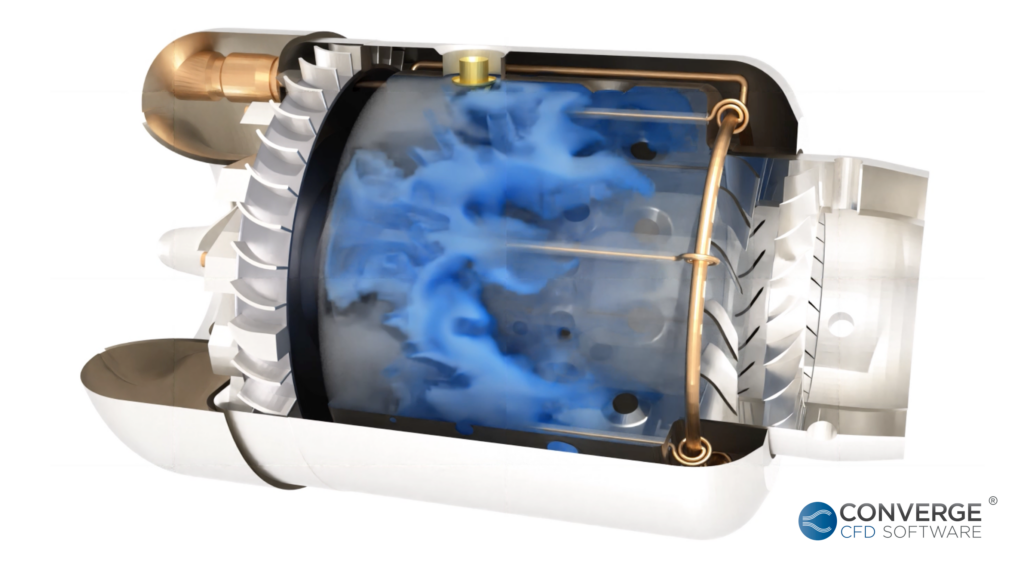
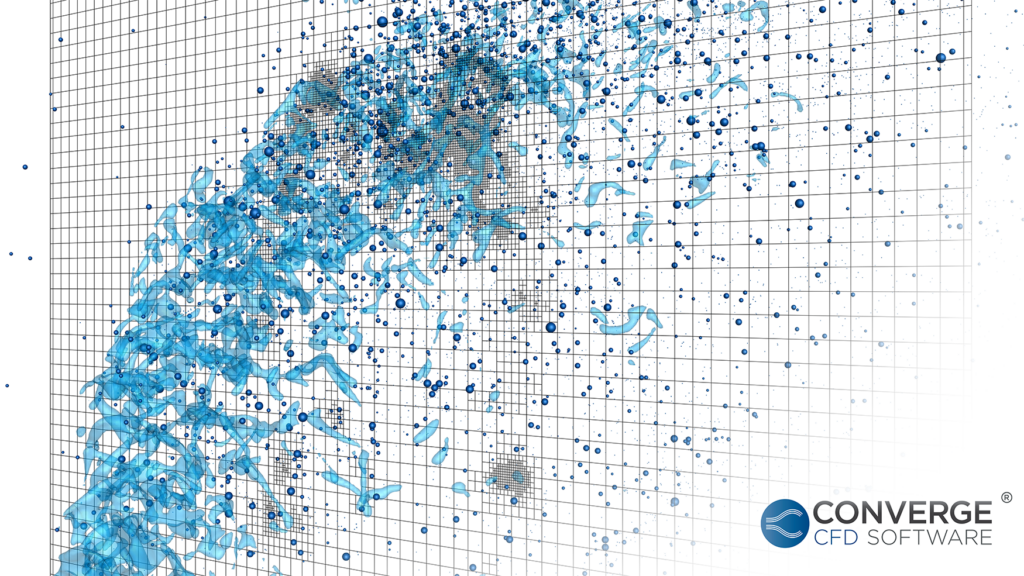


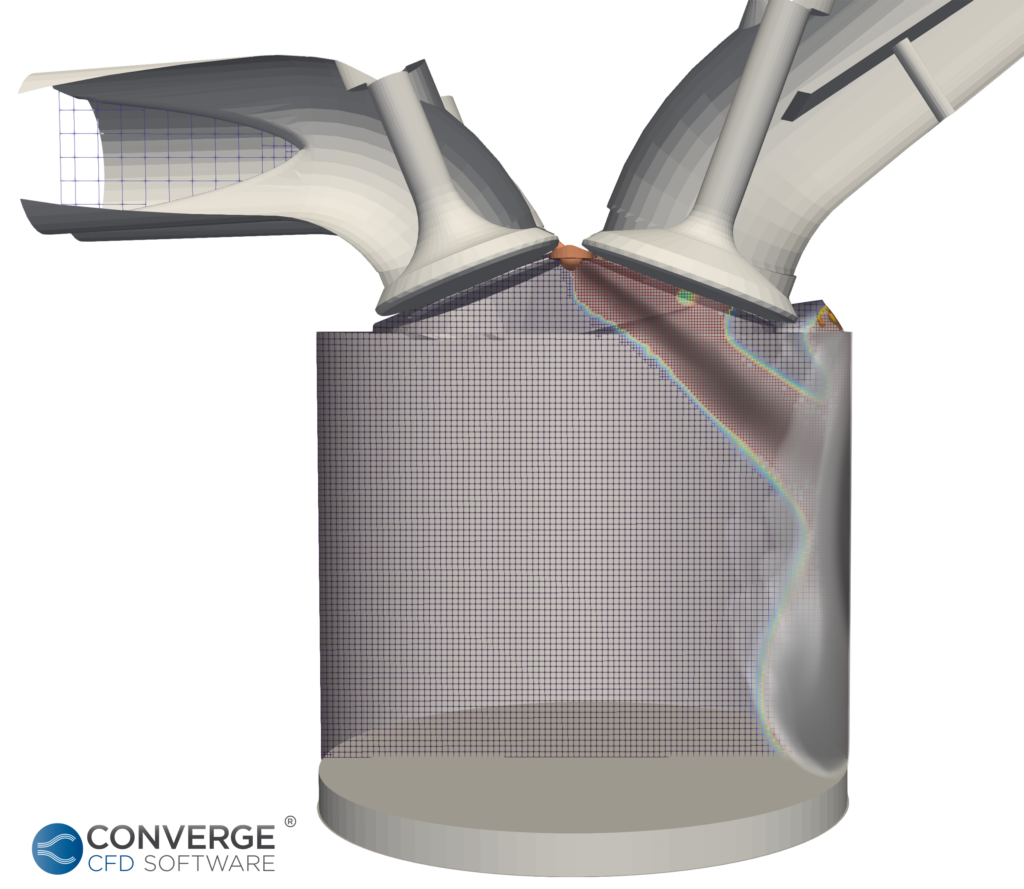

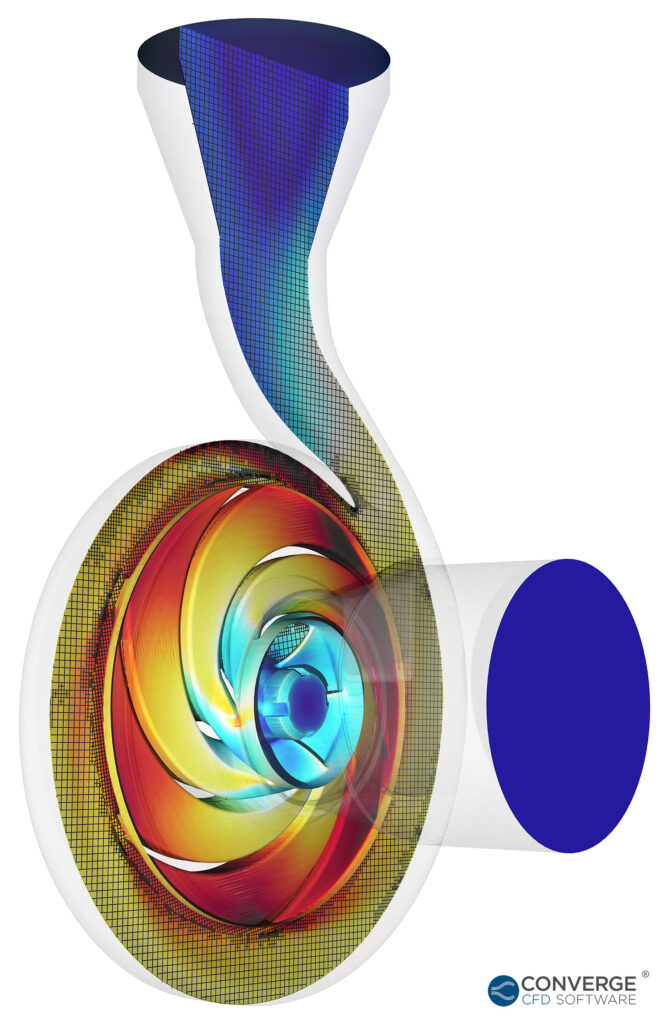



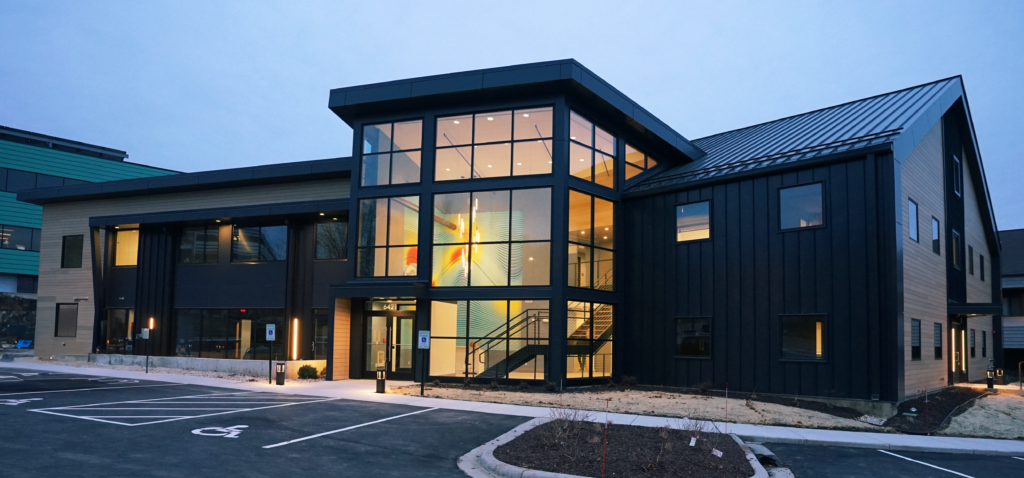
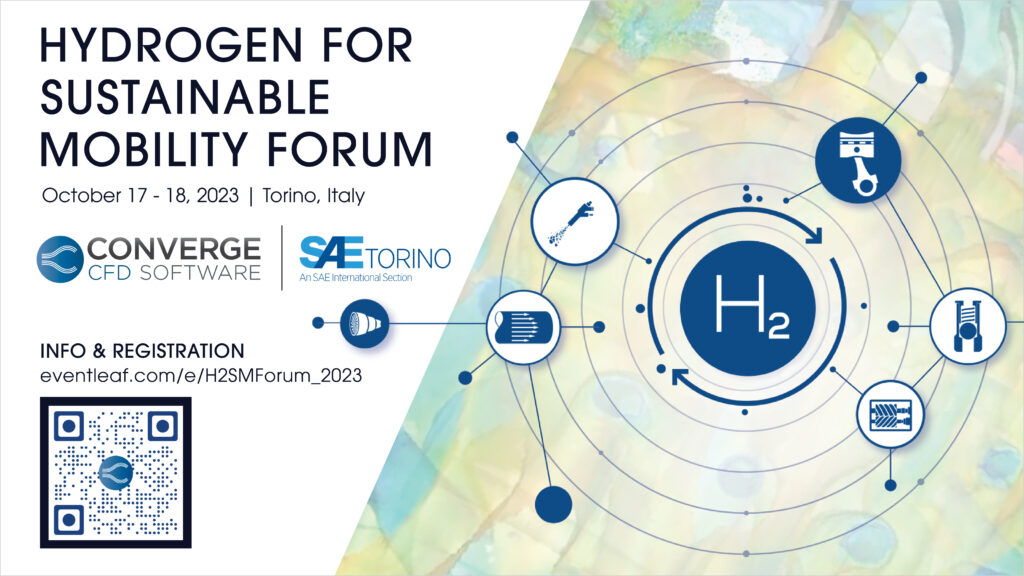
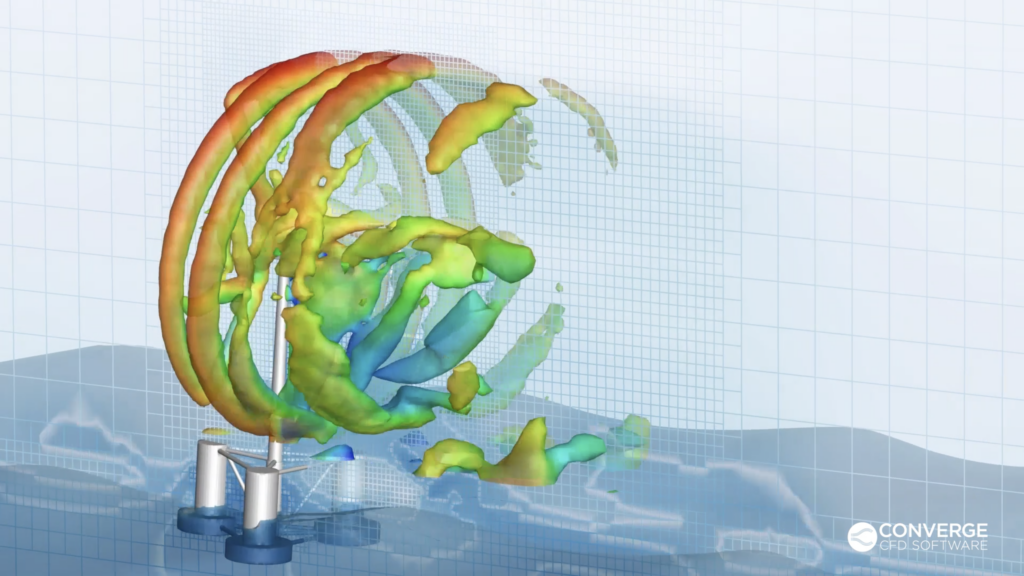




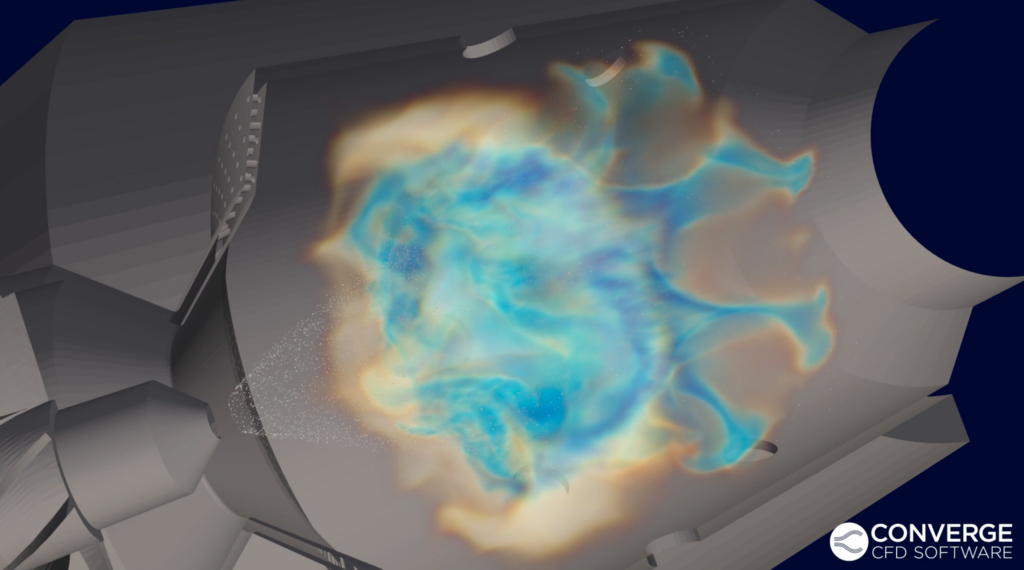
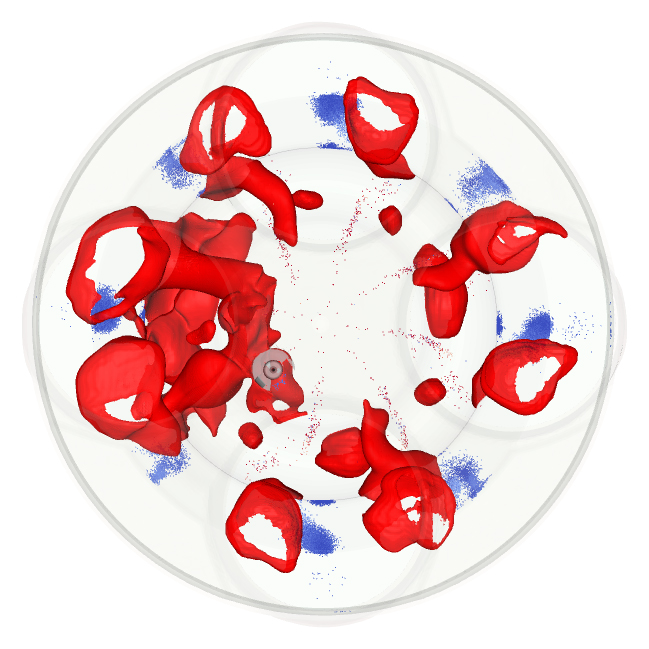
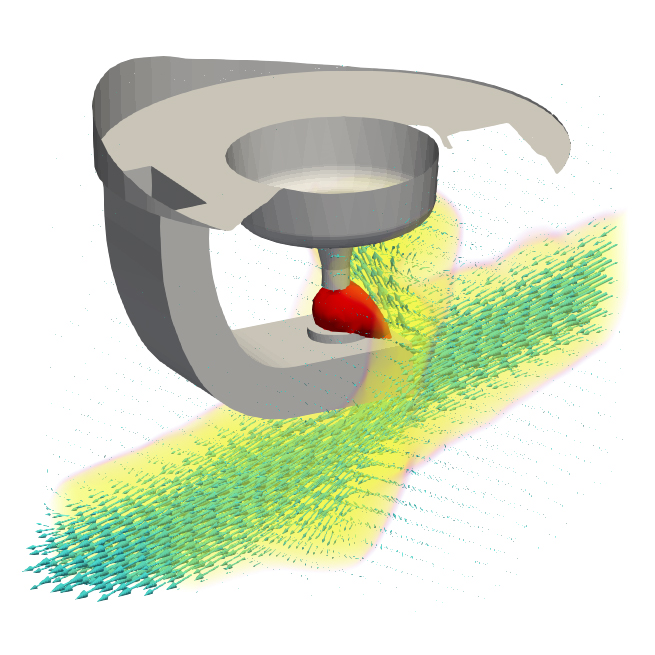
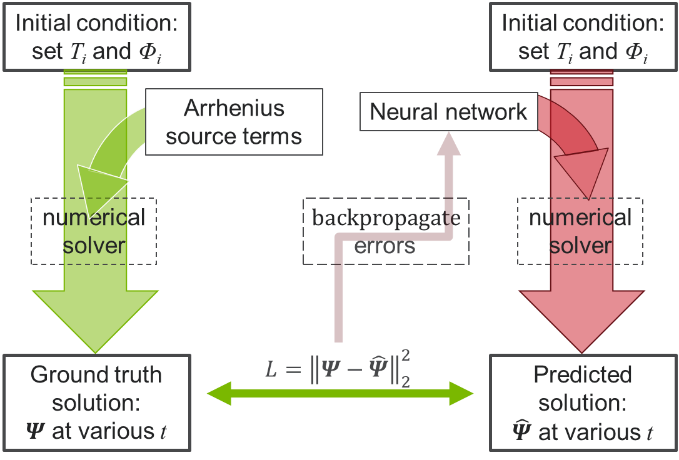
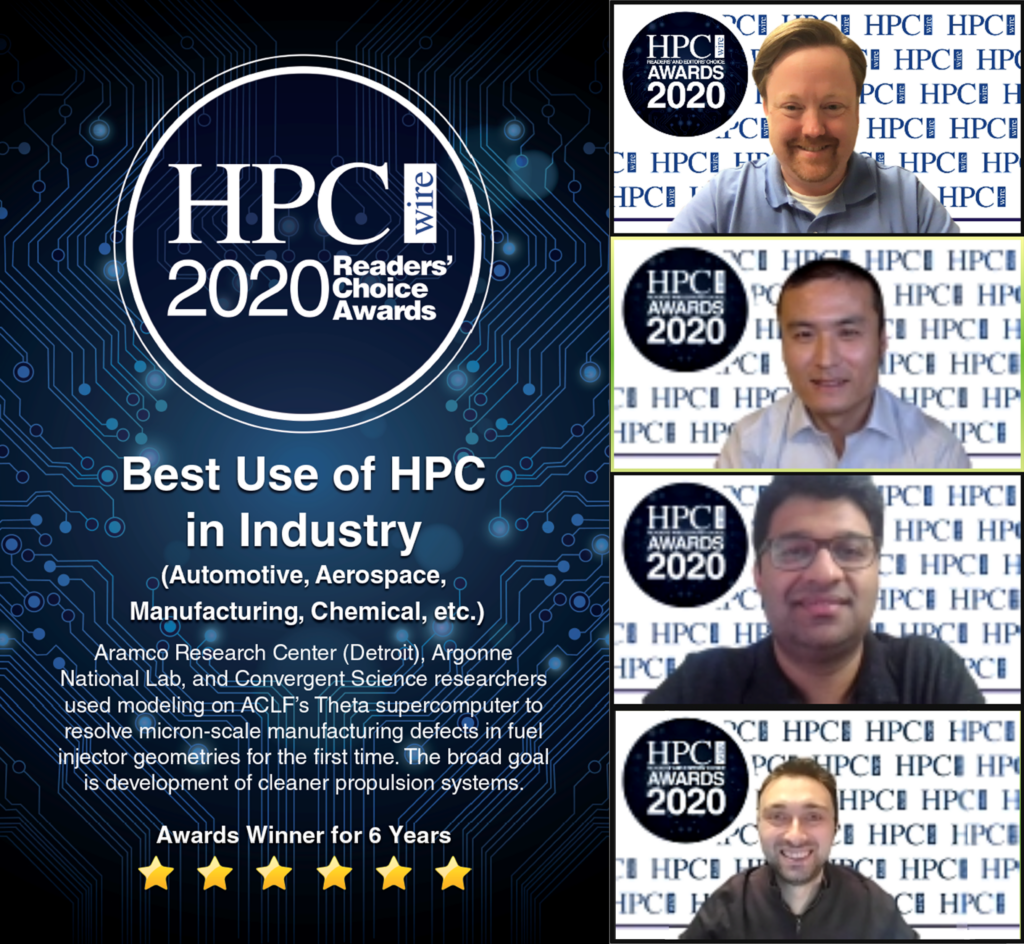
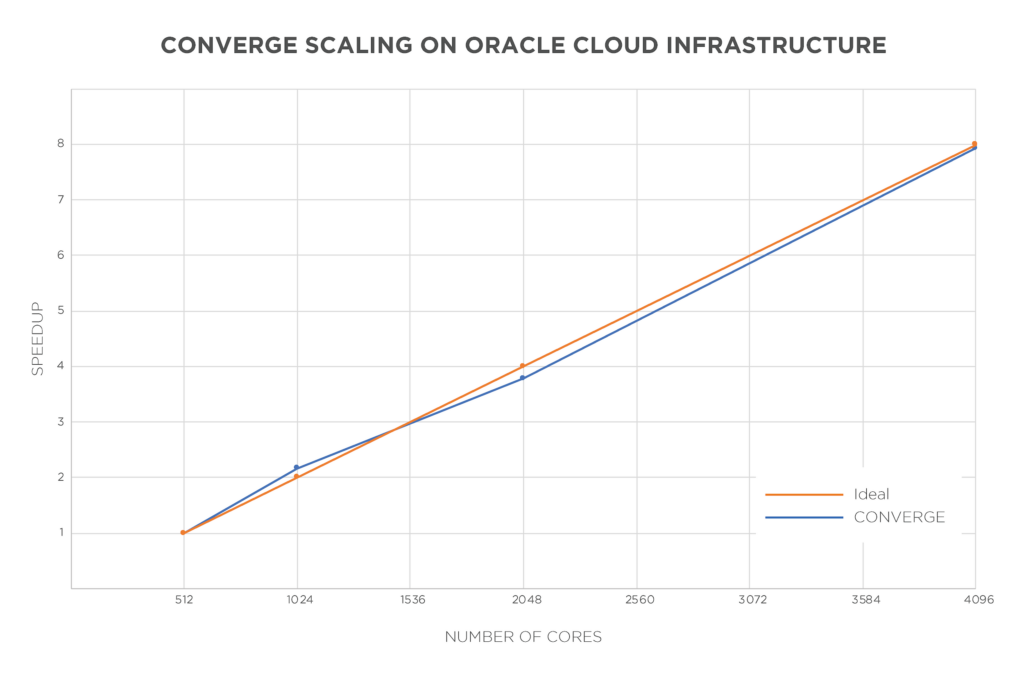
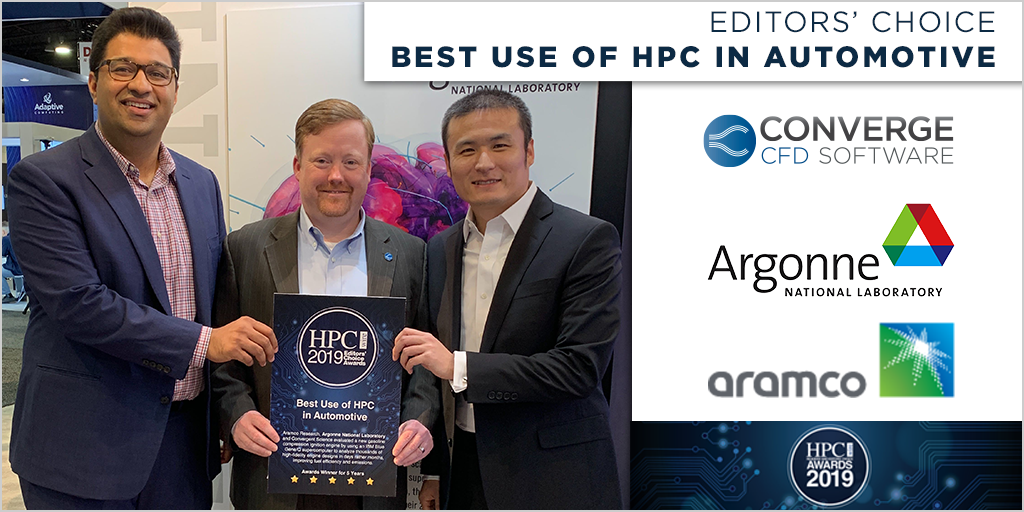
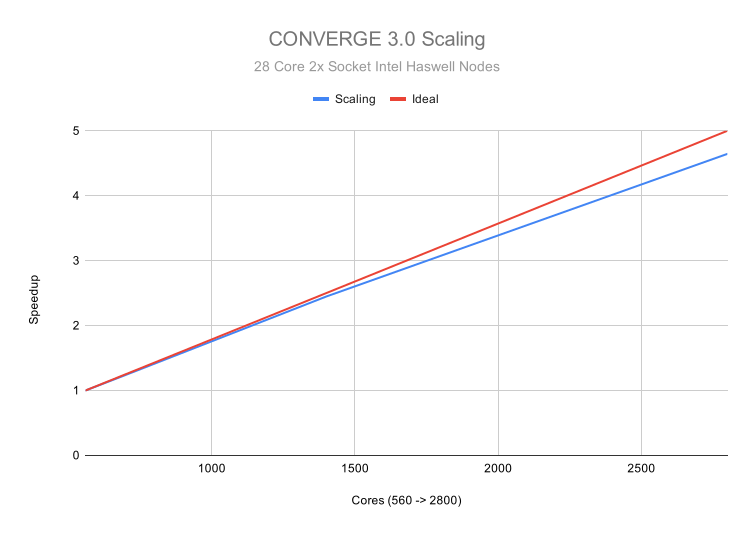
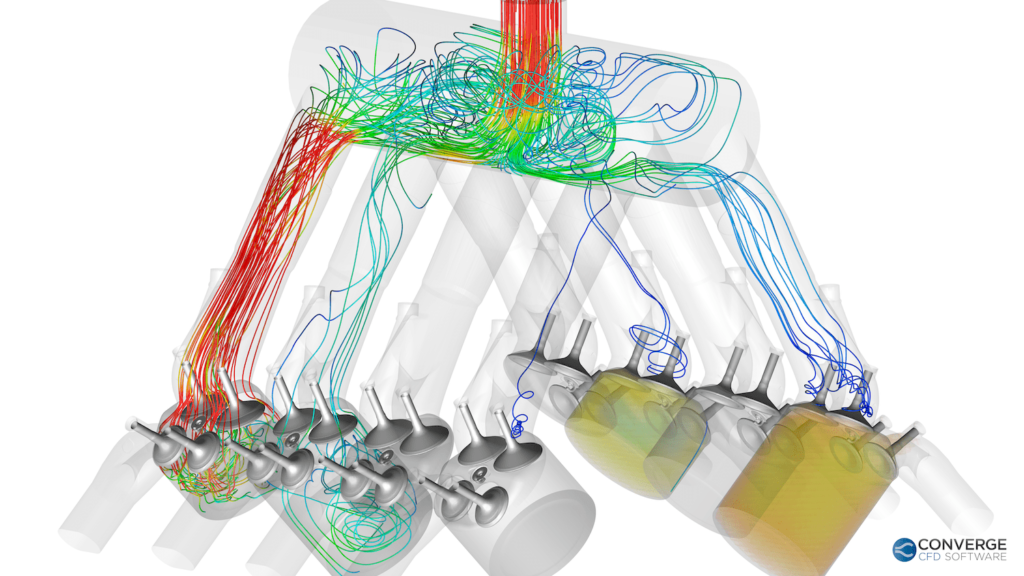

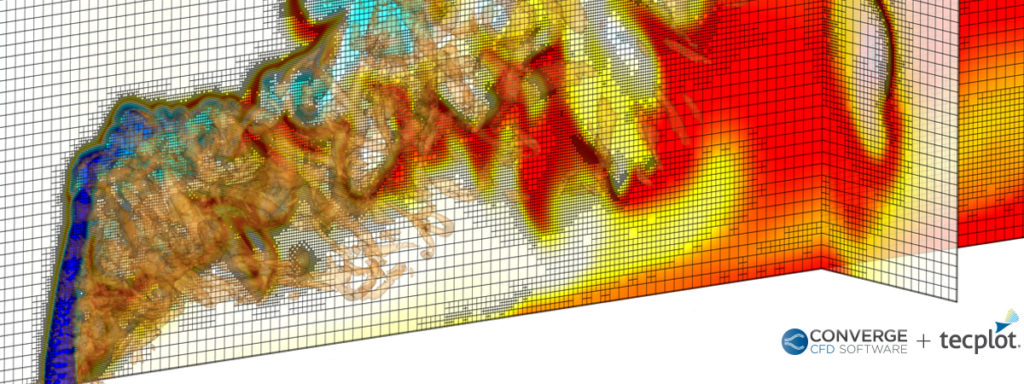
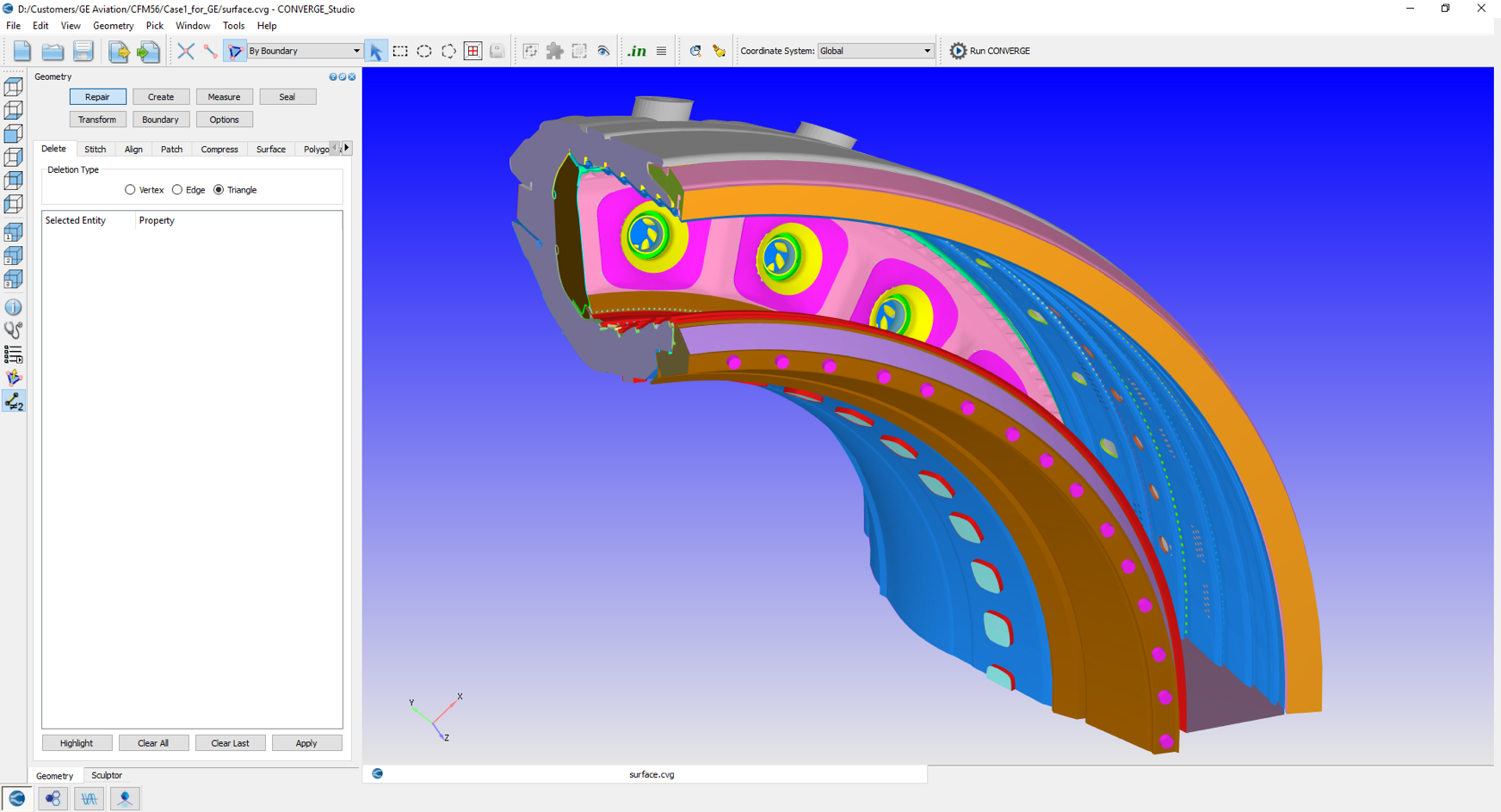
 CONVERGE, the innovative computational fluid dynamics software with autonomous meshing, will be featured in several ways at The American Society of Mechanical Engineers’ Internal Combustion Engine Fall Technical Conference. The conference will be held October 15-18 in Seattle.

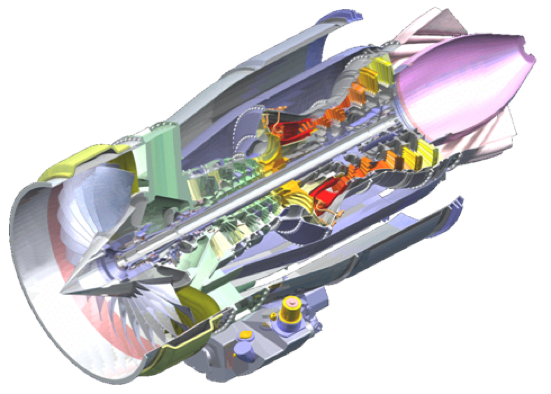
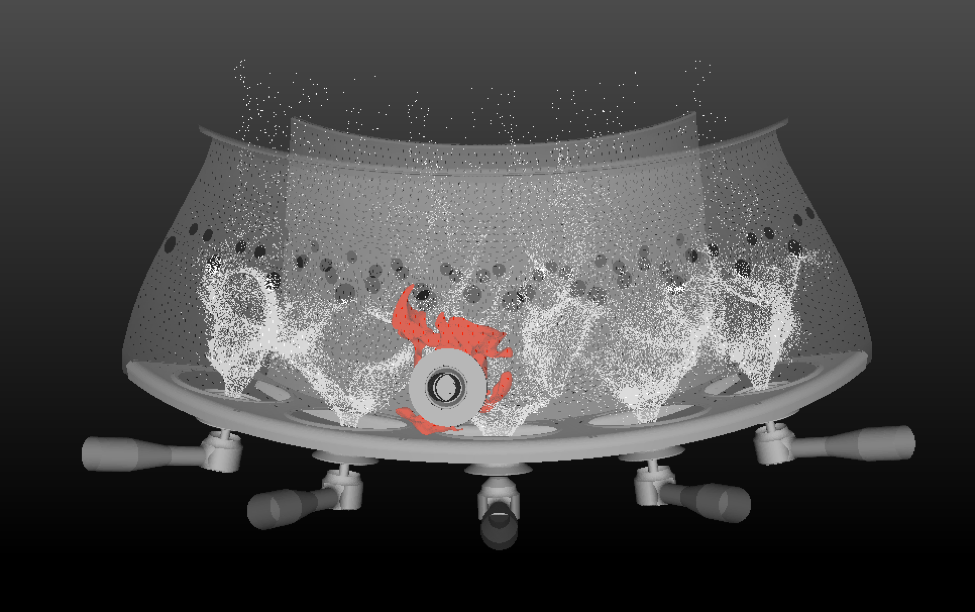
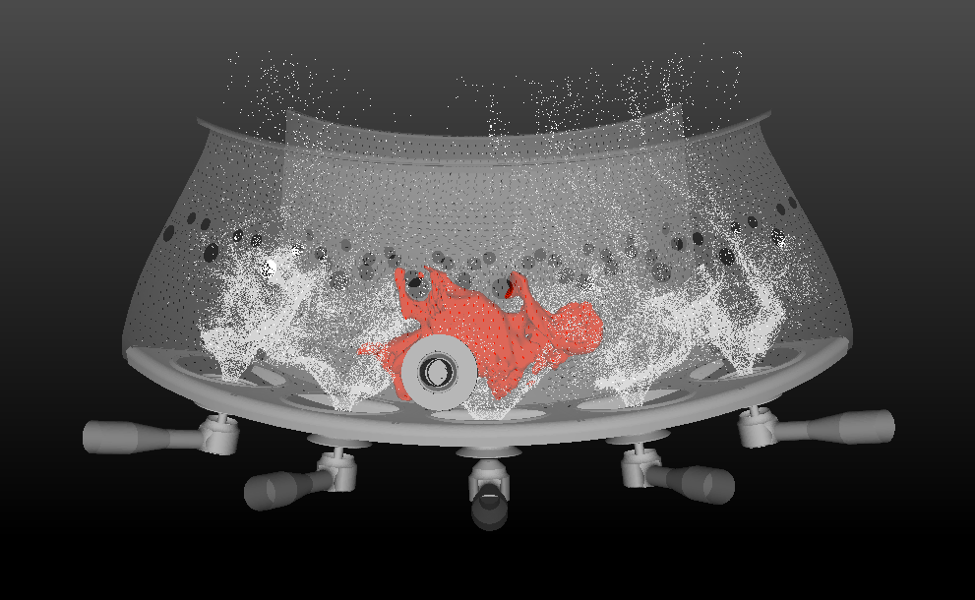
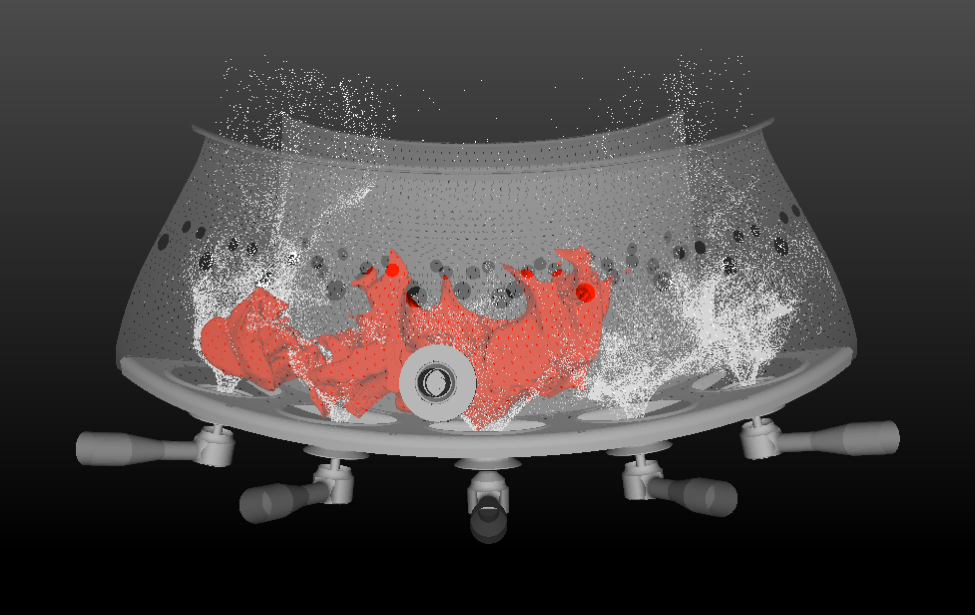



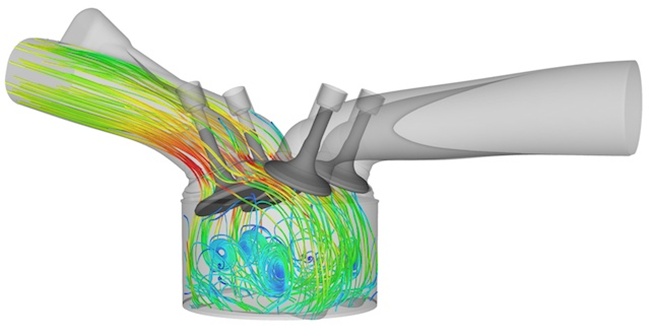



 Madison, WI – As previously announced at the CONVERGE User Group Meeting 2014, Convergent Science, Inc. (CSI) has acquired the majority shares in Ignite3d Engineering GmbH and renamed the company Convergent Science GmbH (CSG). CSG’s management includes Rainer Rothbauer, former owner of Ignite3d, as the General Manager. The company base is nestled between the Alps and the hills of Mühlviertel in Linz, Austria and overlooks the Danube River.


 On November 13th, 2014 in Yokohoma, Japan, IDAJ will host a “CONVERGE Conference Day” highlighting CONVERGE’s unique meshing process and its impressive placement in Japanese market. Frédéric Ravet of Renault is set to give his keynote presentation CFD with CONVERGE: Its Application to Design of a Combustion Chamber at 10:05a.m. Scott Drennan of Convergent Science will present New CONVERGE Developments in Gas Turbine and Urea/SCR at 11:25a.m. Daniel Lee, also of Convergent Science, will be presenting Introduction of CONVERGE 2.2 and Future Development Plan at 4:00p.m.
]]>
On November 13th, 2014 in Yokohoma, Japan, IDAJ will host a “CONVERGE Conference Day” highlighting CONVERGE’s unique meshing process and its impressive placement in Japanese market. Frédéric Ravet of Renault is set to give his keynote presentation CFD with CONVERGE: Its Application to Design of a Combustion Chamber at 10:05a.m. Scott Drennan of Convergent Science will present New CONVERGE Developments in Gas Turbine and Urea/SCR at 11:25a.m. Daniel Lee, also of Convergent Science, will be presenting Introduction of CONVERGE 2.2 and Future Development Plan at 4:00p.m.
]]>
 Argonne, IL (November 12, 2014) - On November 12th and 13th, VERIFI (Virtual Engine Research Institute and Fuels Initiative) will host a workshop (sponsored by Convergent Science and Cray) that focuses on using high-performance computing resources to perform high-fidelity internal combustion engine simulations with expanded boundaries (multi-cylinder) and higher spatial resolution (finer grid).
 Every Sunday, Monday and Thursday millions of Americans tune in to watch their favorite players throwing the pigskin down the field. Tensions and emotions rise and fall with each play, game, and season. No doubt if you’re a Peyton Manning fan you have felt these ups and downs, along with a few “What kind of pass was that?” comments. Manning openly admits that his passes are sometimes a little “wobbly”, but he also “throws a lot of ‘wobbly’ touchdowns as well.”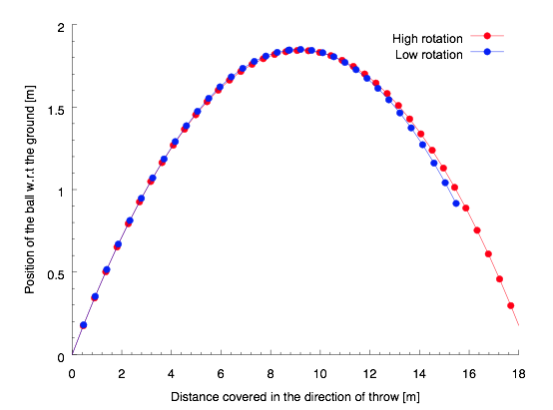
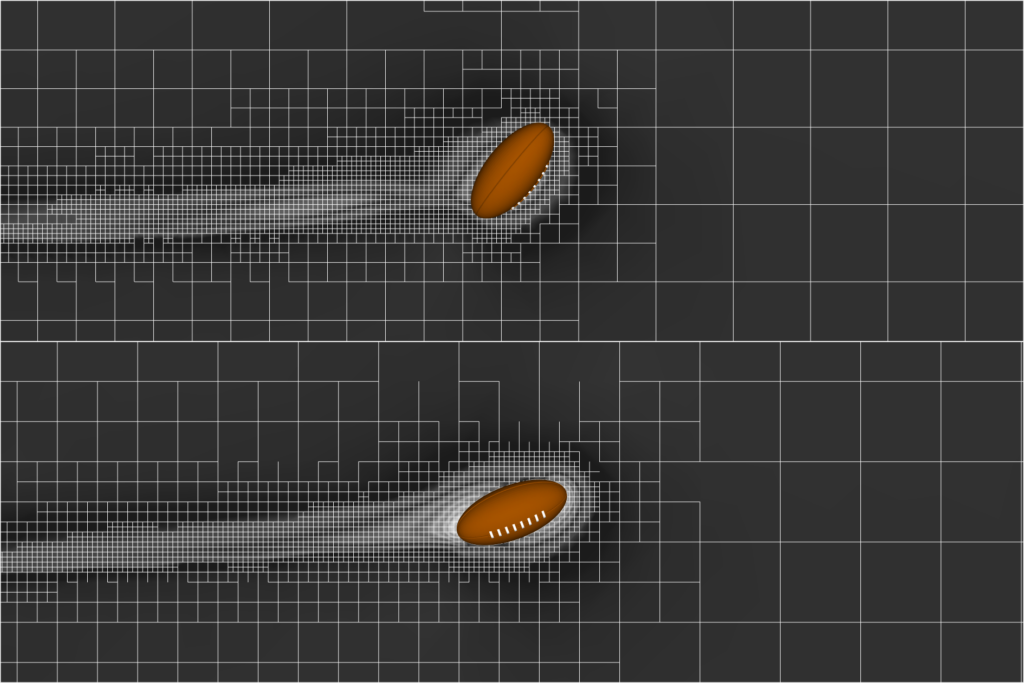
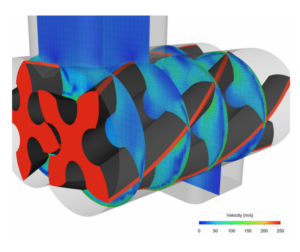 The rotary screw compressors we use today were invented by the Swedish engineer Alf Lysholm. This unique design uses a rotary type positive displacement mechanism that reduces the pulsation of flow, or surging, that is common in the more traditional piston compressors. Rotary screw compressors are used everywhere from large industrial applications to small power tools. The typical whining sound associated with a pneumatic grinder is a great reference to this unique constant positive displacement of air.
 This past June, the DOE held its annual Merit Review. As the meeting came to a close, an astounding 17 papers used CONVERGE to address a variety of analyses. Ford, GM, Oak Ridge, and GE all selected CONVERGE as their code of choice for their research. The topics of analysis included:
 Madison, WI (October 10, 2014) – Convergent Science, Inc. (CSI) hosted the first annual CONVERGE™ User Group Meeting (UGM) on September 22-26, 2014. Held in Madison, Wisconsin, the UGM consisted of three days of software training at their worldwide headquarters and a two-day meeting at Frank Lloyd Wright’s Monona Terrace. Over 140 users from across the globe represented organizations such as GM, Argonne National Laboratory, Caterpillar, Toyota, and several others. Keynote speakers included industry experts from Ford, Cummins, and Renault.
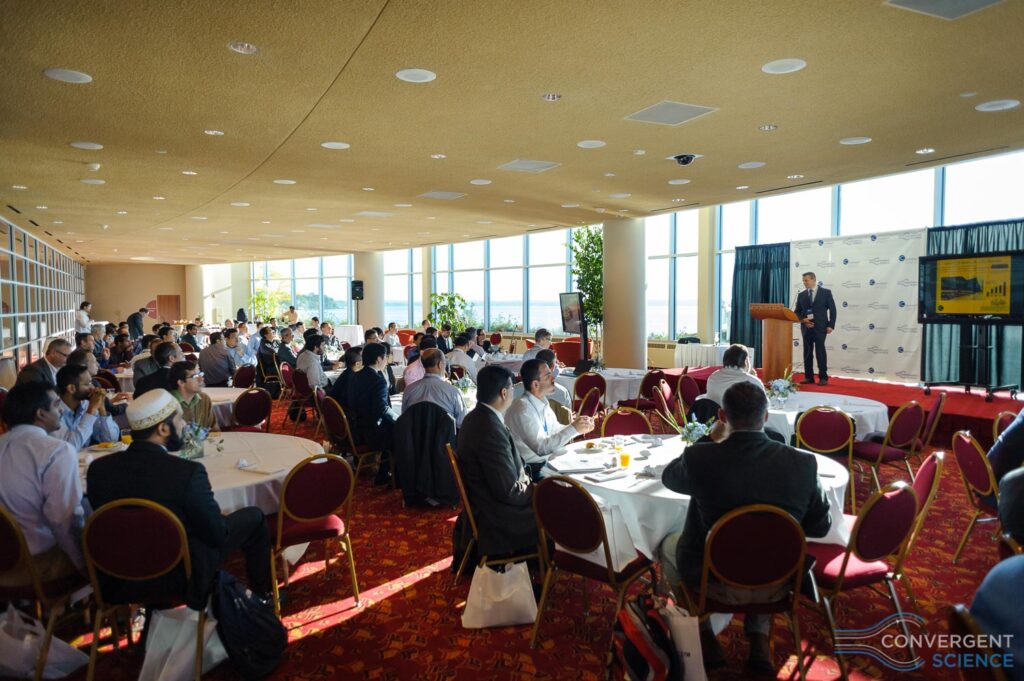
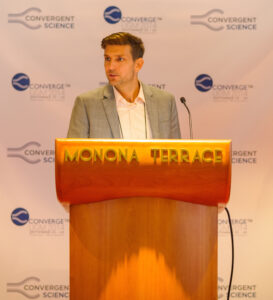
 Dinner, drinks and trivia at Cooper’s Tavern marked the close of two days of conference proceedings at the Monona Terrace in Madison, Wisconsin. Our trivia host for the night, Chris Lay, wrote a bit about our night on the Geeks Who Drink blog. Check it out!
 As part of its 2014 ASCR Leadership Computing Challenge (ALCC) awards of processor time (totaling more than 3 billion processor hours), the US Department of Energy’s (DOE) Office of Science has awarded 15 million hours on Oak Ridge National Laboratory’s (ORNL) Titan supercomputer to a project led by General Motors, and 17.5 million hours on Titan to a project led by ORNL with Ford and Convergent Science as co-investigators. Titan is current Nº2 on the Top 500 Supercomputer list, and offers 27.1 petaflop (PF) peak processing capacity, with about 300,000 compute cores.
 CFD simulations can be a powerful tool when designing an internal-combustion engine; however, the results of CFD simulations often change as the grid is refined. This is known as grid dependence. When grid dependence is observed, the traditional approach is to optimize the results by tuning grid sizes and model constants based on experimental data. This is a viable approach only in the presence of high-fidelity experimental data.
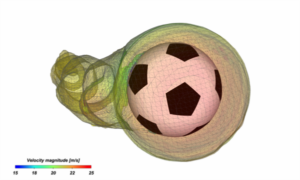 With the 2014 World Cup coming to a close, we’ve seen great shots and great saves. However, what is the science behind the curving shot that causes so much commotion and so many great goals. Rescale and Convergent Science teamed up to show how the cloud and computational fluid dynamics (CFD) can help us understand the science behind the spinning of the black and white ball that has so many of us asking, “How did they do that?”.
 ARGONNE, Ill ― Internal combustion engines are poised for dramatic breakthroughs in improving efficiency with lower emissions, thanks in part to low-temperature combustion regimes. Such regimes show great efficiency and emissions potential, but they present optimization and control challenges that must be addressed before they enter the engine mainstream.
 International Data Corporation (IDC) has announced the seventh round of recipients of the HPC Innovation Excellence Award at the ISC’14 supercomputer industry conference in Leipzig, Germany. Prior winners were announced at the ISC’11, SC11, ISC’12, SC12, ISC’13, and SC13 supercomputing conferences.
 The NAFEMS Americas Conference will be held in Colorado Springs, Colorado on May 28th – 30th, 2014. NAFEMS is the International Association of the Engineering Modeling, Analysis and Simulation Community and is dedicated to the advancement and improvement of engineering simulation and will address questions pertaining to the conference focus, ”New Frontiers in Product Modeling and Simulation.”
 WELCOME, N.C. (April 21, 2014) – ECR Engines has entered into a technical partnership with Convergent Science, Inc. to enhance its engine performance in NASCAR competition.
 Convergent Science is honored to be recognized as a Dane County “Made in Dane” business in this month’s In Business Magazine. From the magazine:
 Dr. Graham Goldin has joined Convergent Science as a Senior Project Manager – Combustion Development. Dr. Goldin will focus on further advancements of the combustion model suite in CONVERGE™ CFD software, with a focus on optimizing detailed chemistry methodologies using large mechanisms running on massively parallel environments. Dr. Goldin has over 20 years of industry experience in CFD combustion modeling of diverse applications. Dr. Kelly Senecal, Vice President of Convergent Science stated, “We are thrilled to add Dr. Goldin to our already talented development team. We are very confident that the experience he brings will allow CONVERGE™ to continue to be the industry leading CFD software for combustion modeling. We are looking forward to his contributions for internal combustion engine modeling, our historical core business focus, as well as in our growing business segments of gas turbine combustors and industrial burners. We enthusiastically welcome Dr. Goldin to Convergent Science, Inc.”
]]>
Dr. Graham Goldin has joined Convergent Science as a Senior Project Manager – Combustion Development. Dr. Goldin will focus on further advancements of the combustion model suite in CONVERGE™ CFD software, with a focus on optimizing detailed chemistry methodologies using large mechanisms running on massively parallel environments. Dr. Goldin has over 20 years of industry experience in CFD combustion modeling of diverse applications. Dr. Kelly Senecal, Vice President of Convergent Science stated, “We are thrilled to add Dr. Goldin to our already talented development team. We are very confident that the experience he brings will allow CONVERGE™ to continue to be the industry leading CFD software for combustion modeling. We are looking forward to his contributions for internal combustion engine modeling, our historical core business focus, as well as in our growing business segments of gas turbine combustors and industrial burners. We enthusiastically welcome Dr. Goldin to Convergent Science, Inc.”
]]>
 Next up in our webinar series, Convergent Science and Rescale partner up to detail when CFD in the cloud is beneficial to your organization as well as run through a demo of CONVERGE in the cloud.
 Convergent Science, Inc. is a world leader in Computational Fluid Dynamics (CFD) software. Their development teams focus on speed, precision and simplifying their workflows to get to market before competitors and keep customers happy – Allinea DDT plays a big role in achieving this.
 Convergent Science, Inc. is pleased to announce that they have joined the Direct-injection Engine Research Consortium (DERC). This partnership will allow collaboration with an impressive array of global thought leaders (both academic and industrial) of internal combustion engine design and modeling.
 Southwest Research Institute (SwRI) is an independent, nonprofit organization performing cutting edge research and development in many areas including internal combustion engines. SwRI has established two consortiums where experts can collaborate on internal engine research topics: