
Benefits












Advanced Physical Models
The Challenges of Simulation
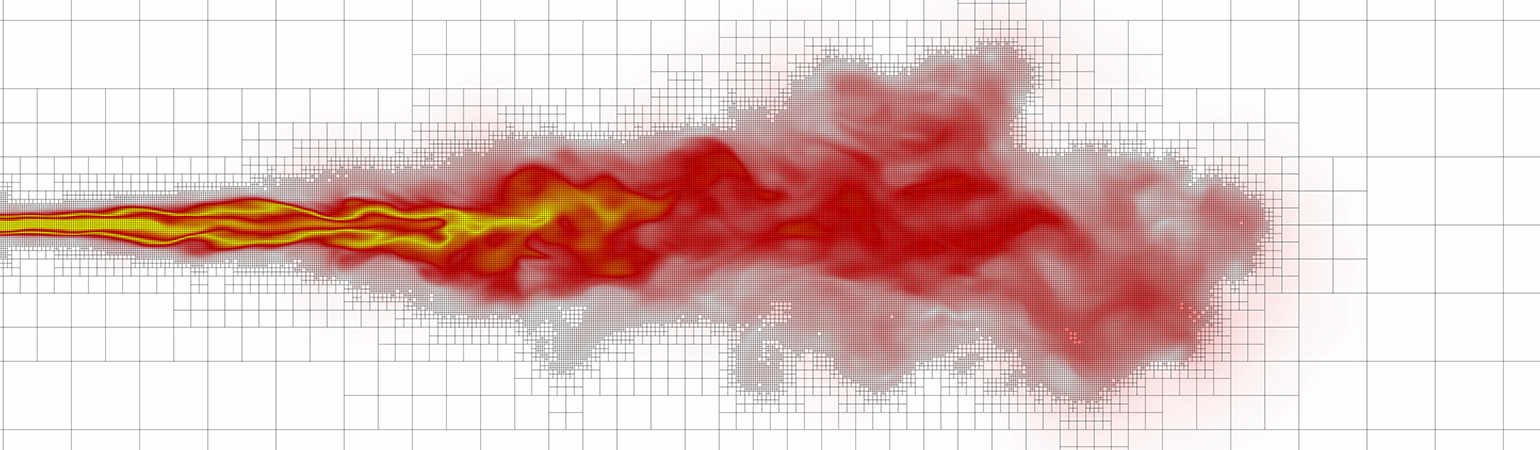
CFD modeling can be challenging, especially for cases with intricate geometries and complex physical phenomena. Real-world applications are never cut-and-dry, and the seasoned computational engineer knows to expect the unexpected. CONVERGE's wide assortment of advanced physical models can help you capture all the nuances in your simulation, covering everything from complex combustion and turbulent flow to thermal radiation, spray dynamics, and more.
Combustion and Chemistry
CONVERGE's SAGE detailed chemistry solver offers precise and reliable combustion modeling, effectively predicting ignition behavior, turbulent flame propagation, and more. SAGE can handle a wide variety of fuels, including traditional fuels such as diesel and gasoline; alternative fuels like methanol, ethanol, ammonia, hydrogen, natural gas, biodiesel, and e-fuels; and dual- and multi-fuel mixtures.
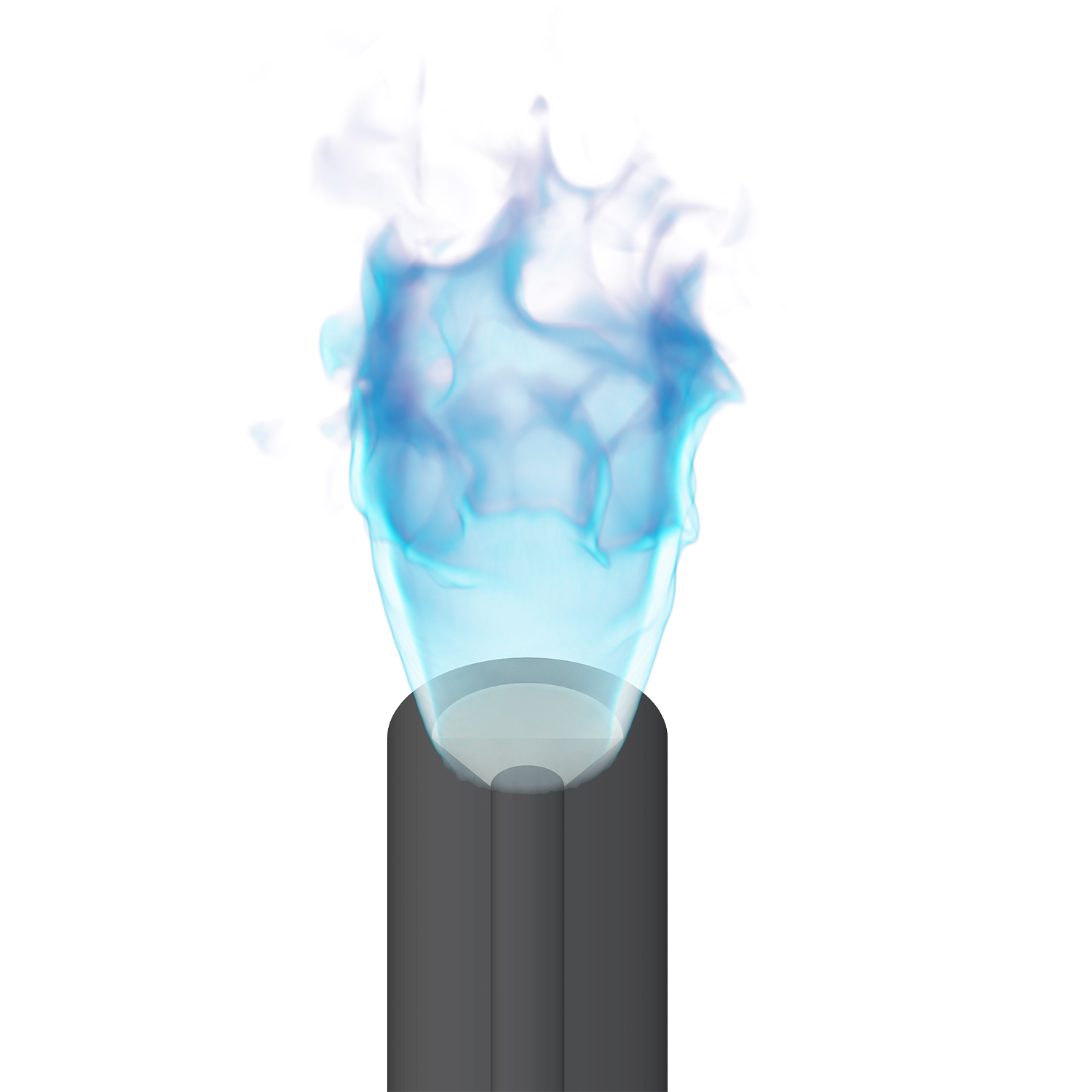
You also have the option to extract chemistry from the Computational Chemistry Consortium mechanism (C3Mech), which provides access to well-validated chemistry for a multitude of fuel components. For faster chemical calculations using the SAGE chemistry solver, CONVERGE users may employ adaptive zoning, which groups together computational cells of similar thermodynamic state and invokes the solver once per group instead of once per cell. This multi-dimensional zoning strategy ensures faster simulations without compromising on accuracy.
CONVERGE also includes a multitude of chemistry-related utilities that allow you to study reacting systems, select and manipulate reaction mechanisms, and generate data tables needed for certain simulations. You can learn more about these features on our Chemistry Tools page.
The Flamelet Generated Manifold (FGM) model is useful for systems that do not exhibit local extinction or slow-forming pollutants (e.g., gas turbines at full power). FGM can capture kinetic phenomena such as ignition, flame extinction, and flame quenching. By simplifying the chemistry to two scalars, FGM significantly reduces computational time while still providing accurate results for flame dynamics and fuel effects.
CONVERGE also offers many other combustion modeling options for both premixed and non-premixed combustion so that you can choose the most suitable model for your simulation needs. These simplified models, including ECFM, ECFM3Z, G-Equation, CTC/Shell, CEQ, EDM, and RIF, can provide high computational efficiency.
Some spark ignition engines, like gasoline direct-injection and lean-burn natural gas engines with high levels of dilution and tumble, can have issues with ignitability, flame blowout, and combustion stability. Engineers from Argonne National Laboratory and Convergent Science worked together to develop the hybrid LESI model, a line-source ignition model that takes into account local flow conditions when determining where to deposit spark energy, allowing you to mimic realistic engine spark conditions [1].
The Energy Deposition Spark Ignition (EDSI) model can be coupled with the SAGE solver and TFM to simulate spark ignition using an automotive spark coil [2]. CONVERGE deposits energy between two electrodes, where the amount of energy deposited depends on the inductive system in the spark plug.
Spray
For comprehensive information on CONVERGE's Lagrangian modeling capabilities, we encourage you to check out our Injectors & Sprays page. Lagrangian spray approaches track individual particles as they move through a flow field, accounting for forces such as gravity, drag, and buoyancy. CONVERGE includes spray breakup models (e.g., KH, RT, LISA), adaptive collision meshes to increase accuracy on coarse grids, turbulence models for capturing droplet dispersion, and evaporation models like Frossling and Chiang that track droplet size over time. We also offer coupled approaches, which combine the strengths of both Eulerian and Lagrangian modeling. For more information on these methods, including VOF-spray one-way coupling and Eulerian-Lagrangian Spray Atomization (ELSA), please visit our Eulerian Multi-Phase page.
Emissions
CONVERGE provides advanced tools for predicting emissions, such as nitrogen oxides (NOx), carbon monoxide (CO), unburned hydrocarbons (UHC), and soot. You can read about these features and their applications on our Internal Combustion Engines and Gas Turbines pages. SAGE offers high-accuracy emissions predictions by directly calculating pollutant species using modern fuel mechanisms. Detailed chemistry modeling can also predict phenomena such as hydrogen slip from incomplete combustion, hydrogen leakage from piston blow-by, methane destruction efficiency in gas flares, and CO2 emissions from combustors.
Soot emissions are modeled using empirical (e.g., Hiroyasu), advanced phenomenological, or detailed (e.g., PM, PSM, SSM) models, which capture soot formation, growth, and oxidation with varying degrees of detail and computational cost.
CONVERGE users can capture NOx emissions with the thermal NOx, prompt NOx, detailed NOx, or fuel NOx mechanisms. The thermal NOx model is based on the extended Zel'dovich mechanism and can predict high-temperature NOx emissions, which are commonly produced in gas-fired and high-temperature combustion systems. The fuel NOx model predicts emissions formed from nitrogenated fuels, such as NH3 or HCN. When these compounds are vaporized, they decompose into intermediate compounds that are subsequently converted to NOx emissions.
Emissions post-processing is an additional data analysis step that can predict detailed emissions from steady-state combustion simulations. After running simulations with simplified combustion models (e.g., FGM, ECFM, etc.), users can apply emissions post-processing to efficiently generate emissions data. In steady-state scenarios (such as burners, gas turbines, stoves, or boilers), fluid quantities like temperature, pressure, velocity, and density will stabilize over time, allowing simplified combustion models to capture their behavior. As a result, the emissions post-processing step is able to solely focus on solving for emissions, ensuring a faster project turnaround.
Aftertreatment
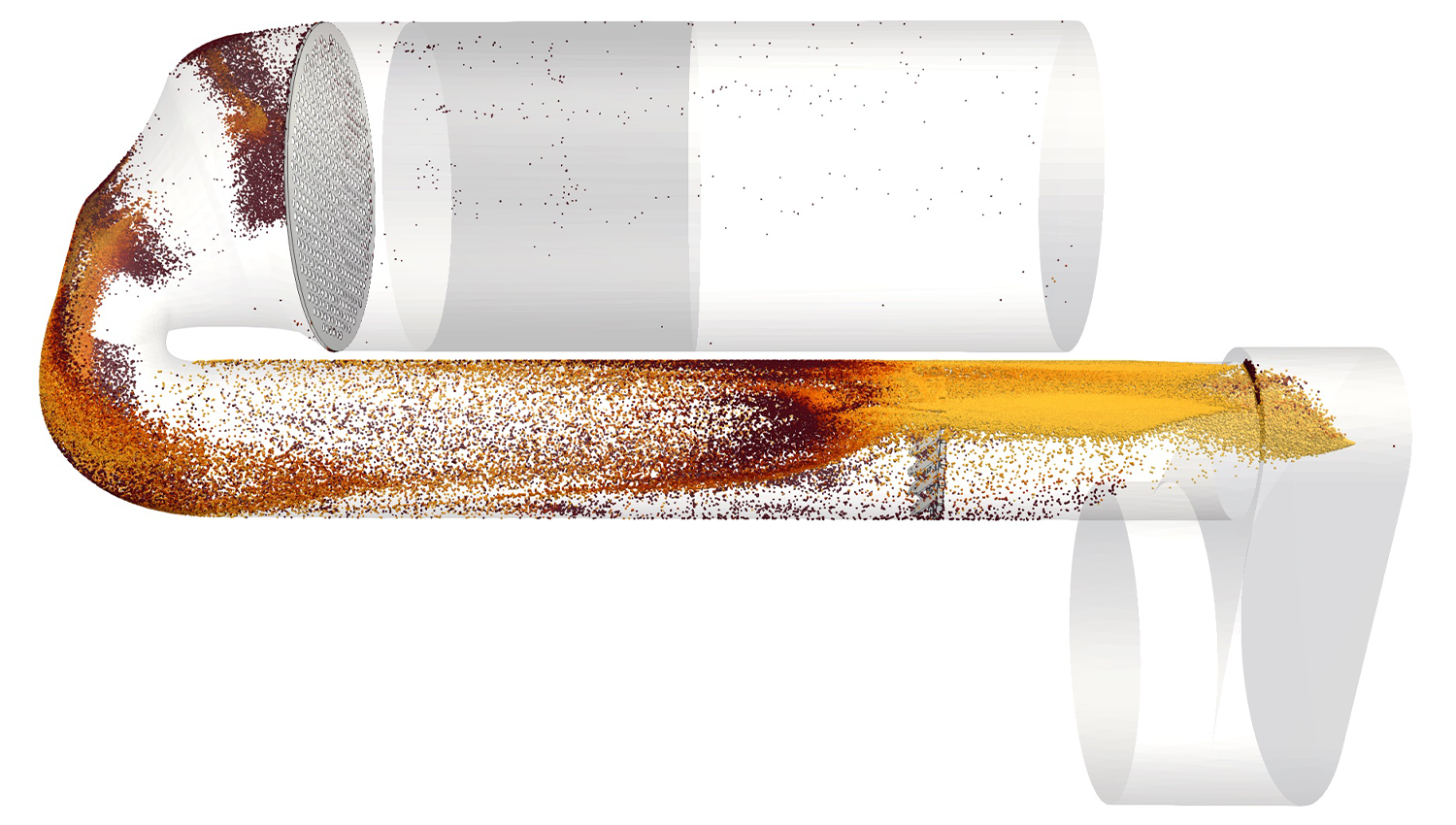
Aftertreatment systems are physical components that are added to engines to capture or convert harmful exhaust gases (e.g., NOx, particulates, UHCs) before they are released into the environment. Diesel engines typically incorporate diesel oxidation catalysts (DOCs) to convert CO, diesel particulate filters (DPFs) to manage soot emissions, and selective catalytic reduction (SCR) systems to reduce NOx. In contrast, gasoline engines often utilize gasoline particulate filters (GPFs) for particulate control and three-way catalysts (TWCs) to regulate CO, UHCs, and NOx emissions.
To support the modeling of these systems, CONVERGE offers a comprehensive suite of features designed to address specific aftertreatment challenges. It can accurately simulate urea-water solution (UWS) spray behavior, including primary and secondary liquid breakup, droplet dynamics, and coalescence, which are critical for SCR performance. Both simple and detailed urea decomposition modeling can capture the necessary thermolysis and hydrolysis reactions to predict ammonia availability and uniformity in SCR systems. Models for liquid-wall interactions and splash behavior help assess wall film formation that may lead to solid urea deposits, while the Wruck heat transfer model captures Leidenfrost effects under high-temperature conditions. For DPF and GPF systems, the solver tracks the backpressure and filtration performance of the filter and the soot loading dynamics both inside and on top of the wall substrate.
Conjugate heat transfer (CHT) and surface chemistry models are essential for predicting thermal and catalytic behavior across many aftertreatment systems, such as DOC, SCR, TWC, and others. CONVERGE's advanced meshing tools, like autonomous meshing, Adaptive Mesh Refinement (AMR), and fixed embedding, ensure efficiency and accuracy, while super-cycling, fixed flow options, and deposit extrapolation features accelerate computational simulations. Coupling with external tools like GT-SUITE or Axisuite allows for integrated system-level optimization, giving CONVERGE a sizable advantage for designing durable, compliant, and high-performance aftertreatment solutions across both diesel and gasoline platforms.
Modeling aftertreatment allows engineers to optimize system performance while meeting emissions regulations and ensure the system's effectiveness under various operating conditions.
Rotor Modeling, Cable Systems, and Aeroacoustics
Efficient rotor modeling is vital for capturing phenomena in applications such as wind turbines and propellers. CONVERGE offers several advanced hybrid techniques—the actuator-line model (ALM), refined actuator-disk model (RADM), and actuator-disk model (ADM)—to simulate rotor-fluid interactions. ALM provides detailed aerodynamic accuracy without needing to resolve the blades, resulting in faster simulations. RADM provides a lower-order alternative that reduces computational time and resource usage, making it well-suited for large-scale simulations. While ALM and RADM require detailed blade configurations as input parameters, ADM significantly simplifies the case setup, since it only requires the overall performance curves of the rotor (i.e., thrust and torque coefficients). Moreover, ADM is less sensitive to the grid resolution, making it suitable for simulations such as wind farms and ship propellers, which may employ coarse grids. ALM, RADM, and ADM can each be coupled with moving boundaries with either prescribed or fluid-structure interaction (FSI) motion.
While offshore wind turbines in shallow-to-intermediate waters are attached to monopiles, floating turbine platforms installed in deeper waters are constrained by mooring cables. The dynamic cable model in CONVERGE employs a finite segment method to efficiently calculate the applied forces from the mooring cables, which are then applied in the FSI calculations. This model may also be used in the simulation of bridges, towing operations, and power transmission lines.
Sound in fluids arises from unsteady flow motions and pressure fluctuations generated by turbulence, shock waves, or changes in boundary conditions. Directly simulating acoustic waves is computationally expensive for large-scale systems like wind turbines. To overcome this, CONVERGE provides reduced-order aeroacoustic models, including far-field models (e.g., Ffowcs Williams-Hawkings) for long-distance sound prediction, and near-field models (e.g., Proudman, Curle) for identifying noise sources within the flow.
Turbulent Flow
Turbulence is the chaotic motion that occurs in fluid flows, often marked by swirling vortices or rapid fluctuations in variables like temperature, velocity, and pressure. Accurately modeling turbulent effects is critical because they significantly impact drag, heat transfer, and the rate of mixing for momentum, energy, and species. A high mesh resolution is often required to resolve all turbulence length scales in a given simulation, which can be impractical. Instead of resolving all turbulence length and time scales, turbulence models can help approximate these effects, striking an important balance between accuracy and computational cost. CONVERGE offers a wide array of turbulence models, which can be categorized into RANS, LES, and hybrid RANS/LES models.
Reynolds-Averaged Navier Stokes (RANS) models focus on the mean flow behavior and account for all turbulent flow by averaging the fluid equations over time. k-ε models are often used for general-purpose turbulence modeling, especially in cases with free shear flows like jets. CONVERGE offers the standard k-ε, RNG k-ε, rapid distortion RNG k-ε, and the realizable k-ε models. These models differ in how they modify the transport equation for ε, the turbulent dissipation rate, to handle specific flow features such as swirling, separation, or high flow rates [3]. The v2-f and ζ-f models, two other k-ε models, impose different time and length scales near the walls to more efficiently handle fluid flow with lower Reynolds numbers. The k-ω models are another family of commonly used turbulence models. These models can be applied to boundary layer simulations without needing complex near-wall treatment, making them useful for resolving near-wall turbulence and boundary layers without wall functions. In CONVERGE, different k-ω models, such as the Standard k-ω (1998), Standard k-ω (2006), and the k-ω SST variants, modify the equations for the effective turbulent viscosity in distinct ways to better suit specific flow characteristics. The Reynolds stress model (RSM) directly solves for the Reynolds stresses themselves, presenting a more direct approach than the k-ε or k-ω models. Similarly, the Spalart-Allmaras model directly solves for the turbulent viscosity, making it a popular choice for aerospace applications.
Large eddy simulation (LES) models directly resolve large-scale turbulent motion through grid-scale filtering, while modeling small-scale (i.e., subgrid-scale) turbulent motions with closure approximations [3]. LES is especially popular in industries like aerospace, transportation, and energy, where it can predict critical transient phenomena such as combustion dynamics, aerodynamic forces, or boundary-layer turbulence. CONVERGE offers several options for LES turbulence modeling, including zero-equation, one-equation, and two-equation models. Zero-equation models, including the Upwind LES, Smagorinsky, Dynamic Smagorinsky, and Sigma models, are computationally inexpensive, but they lack adaptability to complex flow phenomena like back scattering and non-isotropic turbulence. One-equation models, like the one-equation viscosity, dynamic structure, and consistent dynamic structure models, can capture flow behavior more accurately since these models solve the transport equation for subgrid-scale kinetic energy. Finally, the two-equation model solves the transport equations for both subgrid-scale kinetic energy and subgrid-scale dissipation rate. While this option incurs greater computational cost, it can avoid unphysical abrupt changes in the eddy viscosity by continuously adjusting the turbulence length scale through the subgrid-scale dissipation equation. Applying AMR in conjunction with the two-equation LES model can lead to a significant increase in accuracy for flame front simulations.
Hybrid RANS/LES models balance the accuracy of LES with the efficiency of RANS. The delayed detached eddy simulation (DES), improved delayed DES, and stress blended eddy simulation (SBES) models combine the efficiency of RANS calculations for flow regions near the wall with the accuracy of LES computations for regions away from the wall.
Electrochemical Modeling
CONVERGE includes a variety of options for modeling battery heat sources. The battery equivalent circuit (BEC) model allows you to represent the battery as an electrical network (i.e., a RC circuit). For direct current (DC) applications, users can employ the 3D electric potential solver, which can predict the electric potential, current field distributions, and associated Joule and electrochemical heat generation. The electric potential solver can employ either the Single Particle Model (SPM) or the more detailed pseudo-2D (P2D) electrochemical model. Both the BEC and electric potential solver can be used with short-circuit modeling to assess fault currents and ensure system stability. In addition, CONVERGE can model the complex chain of reactions that occur during battery thermal runaway using Arrhenius-based chemical reaction mechanisms, like the Hatchard-Kim or Ren mechanisms.
Electrochemistry modeling is also essential for accurate fuel cell simulations. The electric potential solver can predict current field distributions and associated heat transfer by modifying the differential equations for the ion and electron fields. CONVERGE also offers the lumped electrochemical model, which is currently implemented as a user-defined function (UDF). This simplified 0D approach solves the electric potential balance equation at the cathode catalyst and can provide a faster turnaround time for fuel cell simulations.
Radiation Modeling
High-temperature systems may experience significant energy transport due to radiation effects, which are emitted by the local medium and involve the transfer of thermal energy through electromagnetic waves. Solid boundaries and other media (e.g., spray parcels, soot, etc.) may interfere with emission, absorption, scattering, and directional reflection. Modeling radiation enables a greater understanding of how the phenomenon impacts temperature distributions, chemical reaction rates, and material performance. Since reaction products that contain carbon are more optically active than those containing water, radiation modeling is especially useful for gas turbine or diffusive flame applications involving the combustion of high-carbon fuels.
CONVERGE includes several reduced-fidelity models that allow you to model radiation and the associated heat transfer at reasonable computational costs. These are categorized into two approaches: the spherical harmonics method and the discrete ordinates method.
The spherical harmonics method, which is also referred to as the PN method, approximates the angular distribution of radiation intensity and represents the source function as a truncated series to reduce the complexity of the radiative transfer equation [5]. These methods can make accurate predictions of radiative transfer in optically thick media.
As the optical thickness reduces, the PN method struggles to capture the anisotropic profile. As such, the discrete ordinates method (DOM) was developed to solve non-isotropic problems; however, this approach has a different drawback—it does not conserve radiative energy. CONVERGE offers the finite volume method (FVM), which corrects this non-conservation by discretizing the angular and Cartesian spatial terms from the original DOM equations.

To capture gas-specific radiation, FVM can be applied using simplified gas models, such as the gray gas and non-gray gas models. The gray gas model treats the gas as though its defining properties (e.g., emissivity, absorption coefficient, etc.) are completely insensitive to radiation wavelength, or in other words, as though it is gray. Non-gray radiation may be modeled in CONVERGE with the gray band model or the weighted sum of gray gases (WSGG) model. The band model will account for line-by-line spectral behavior, while the WSGG model prioritizes efficiency by limiting the spectral calculations to a few gray gases.
Radiation-spray coupling enhances predictive accuracy in combustion simulations by accounting for bidirectional interactions between radiative heat transfer and relevant spray dynamics. This helps capture realistic heat release patterns and flame stabilization mechanisms, especially in industries such as aerospace or environmental management [6]. By solving two additional equations, CONVERGE couples radiation modeling and Lagrangian modeling to capture the effect of parcels on radiation.
Collaborations and Continued Development
Our software engineers are continuously enhancing and expanding the physical models in CONVERGE, working closely with partner organizations to ensure our technology remains at the forefront of innovation. One such effort is our ongoing collaboration with IFP Energies nouvelles, focused on advancing combustion, spark ignition, and aftertreatment modeling capabilities. We are committed to equipping CONVERGE with the most advanced models available, enabling fast, reliable, and predictive simulation results.
References
[1] Scarcelli, R., Zhang, A., Wallner, T., Som, S., Huang, J., Wijeyakulasuriya, S., Mao, Y., Zhu, X., and Lee, S.-Y., "Development of a Hybrid Lagrangian–Eulerian Model to Describe Spark-Ignition Processes at Engine-Like Turbulent Flow Conditions," Journal of Engineering for Gas Turbines and Power, 141(9), 2019. DOI: 10.1115/1.4043397
[2] Colin, A., Ritter, M., Lacour, C., Truffin, K., Mouriaux, S., Stepanyan, S., Lecordier, B., Vervisch, P., "DNS and LES of spark ignition with an automotive coil," Proceedings of the Combustion Institute, 000, 1-9, 2018. DOI: 10.1016/j.proci.2018.08.021
[3] Arranz, G., Ling, Y., Costa, S., Gok, K., Lorano-Duzan, A., "Building-block-flow computational model for large-eddy simulation of external aerodynamic applications." Communications Engineering, 3(127), 2024. https://doi.org/10.1038/s44172-024-00278
[4] Yusuf, S. N. A., Asako, Y., Che Sidik, N. A., Mohamed, S. B. ., & Aziz Japar, W. M. A., "A Short Review on RANS Turbulence Models," CFD Letters, 12(11), 83–96, 2020, https://doi.org/10.37934/cfdl.12.11.8396
[5] Ge, W., David, C., Modest, M.F., Sankaran, R., Roy, S.P., "Comparison of spherical harmonics method and discrete ordinates method for radiative transfer in a turbulent jet flame." Journal of Quantitative Spectroscopy and Radiative Transfer, 296, 108459, 2023. https://doi.org/10.1016/j.jqsrt.2022.108459
[6] El-Asrag, H., and Iannetti, A.C., "Radiation-Spray Coupling for Realistic Flow Configurations," NASA Glenn Research Center, Cleveland, OH, U.S., NASA TM-2011-217111
Selected Bibliography
Georgia Southern University
Abianeh, S.O., "Study of a Turbulent Spray Combustion of N-Dodecane Fuel," Proceedings of the ASME 2015 Internal Combustion Engine Division Fall Technical Conference, ICEF2015-1018, Houston, TX, United States, Nov 9-11, 2015. DOI: 10.1115/ICEF2015-1018
Georgia Southern University,
Army Research Laboratory
Abianeh, S.O. and Bravo, L., "A comparison study of predicted pressure-based ignition delay time of n-dodecane fuel using various skeletal kinetic mechanisms," 46th AIAA Fluid Dynamics Conference, AIAA 2016-3961, Washington, D.C., United States, Jun 13-17, 2016. DOI: 10.2514/6.2016-3961
Georgia Southern University,
Shanghai Jiao Tong University,
Wayne State University
Abianeh, S.O., Levins, M., and Chen, C.P., "Pressure-Based Ignition Delay Times Of Non-Premixed Turbulent Jet Flames Using Various Turbulence Models," Proceedings of the ASME 2016 Internal Combustion Engine Division Fall Technical Conference, ICEF2016-9307, Greenville, SC, United States, Oct 9-12, 2016.
University of Illinois at Chicago,
Convergent Science
Aggarwal, S.K., Fu, X., and Wijeyakulasuriya, S., "Effects of Fuel Reactivity and Injection Timing on Diesel Engine Combustion and Emissions," International Journal of Green Energy, 13(5), 431-445, 2016. DOI: 10.1080/15435075.2014.961469
Indian Institute of Technology Bombay
Ali, F., Saha, V., Brijesh, P., and Sreedhara, S., "Effect of Compression Ratio and Inlet Conditions on the CI Engine Performance and NO Emission," Proceedings of the International Conference on Design and Advances in Mechanical Engineering, Tiruvannamalai, India, Dec 16-17, 2011.
For more CONVERGE papers, please check out the bibliography.
Events
Resources














Contact Us Today
Learn more about how CONVERGE helps you quickly and accurately solve your CFD problems.